By Babs Oyetoro, Clement Adeyi, Kenny Folowosele, David Lawani, and Cajetan Nmuta
Following Nigeria’s growing cost of governance, a strong controversy has emerged on how to contain the trend.
Expert opinions on this issue have unearthed cross-purpose opinions on reducing the cost of governing Nigeria, especially from the legislative angle.
Pundits, including socio-political and economic analysts, lawyers, academics as well as the media are attributing the perennial economic malaise bedeviling the country as well as the accompanying citizenry’s poor living conditions to the outrageous cost of governance.
Some are rooting the expensive cost of governance on profligacy and the government’s insatiable expenses henpecked on humongous activities.
Instances of these are cited in official trips, lawmakers’ salaries, allowances, and other government official engagements.
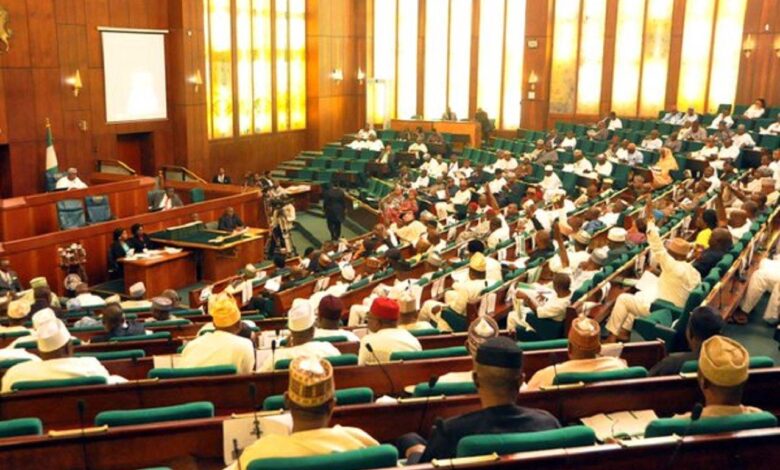
Recently, the House of Representatives slashed the N600,000 salaries of lawmakers by 50 per cent for six months.
These the authorities cited, are to support the Federal Government’s efforts at ameliorating the current economic hardship bedeviling the country.
Also of late, and in the wake of the worrisome cost of governance, Abia North Senator, Orji Kalu, recently proposed a part-time legislation.
He also called for an amendment to the constitution to reduce federal and state lawmakers’ plenary to four times a year.
But Nigerians are divided over the call for part-time legislation. While some are in support, others are against it.
They also spoke glowingly about the slashed Reps members’ salaries and applauded the gesture.
Others, however, like human rights lawyer and a Senior Advocate of Nigeria, SAN, Olisa Agbakoba, said the issue of the full-time or bicameral legislature had been taken care of in the Steven Oronsaye Report of 2012, and thus, needs no ‘over flogging’.
*Lawyers, varsity dons, activists speak
ThisNigeria’s investigation from different sources on the topic during the week unearthed a lot from pundits’ contributions.
Lawyers, university dons, activists, as well as socio-political and economic analysts bore their minds on the burning issues.
A professor of English at the Department of English, Obafemi Awolowo University (OAU), Ile-Ife, Gbemisola Adeoti, believes that the high cost of governance has made the current harsh economic situation in the country inevitable.
Tracing the roots of the malaise, he noted, “When you consider the kind of looting, wastage and reckless mismanagement of our national resources, from the military era to the second coming of Obasanjo in 1999, up to the recent years, the consequences could not have been different.
“An unrepentant wastrel is bound to experience misery, one day, and that one day is here already with Nigeria.”
According to him, apart from the outrageous cost of governance, “things are really hard with scarcity and inflation, compounded by the twain policies of subsidy removal and free subjection of Naira to market forces.”
Adeoti, however, noted that the government alone was not to blame because the citizenry, too, had its flaws that contributed to the crises that the country has been facing.
His words, “As we point fingers of blame in the direction of the people at the helm of affairs, we should also spare some for the citizenry.
“The greedy trader who is out to extort maximum profit from his goods and services and keeps changing prices every day, blaming the government and dollar; the transporter who arbitrarily increases fare, even when there is no reasonable justification for it, are to blame for the country’s present predicament.
“What is required is a kind of soul-searching towards a change of attitude on the part of the government and the governed. Let the changes we envision cut across social strata,” he added.
A professor of Marketing Communication and Head of the Mass Communication Department at Babcock University, Kolade Ajilore, while expressing his views on the cost of governance, refers to the monarchical system of government which, according to him, was less expensive, but effective.
He noted, “The monarchical political systems that dotted our various indigenous political empires were at little or no cost to the communities. Even though it thrived on dictatorship and totalitarianism, the natives relished the feeble elements of checks and balances that guaranteed its stability.
“Representative democracy was alien to our political culture. Despite its popular acceptance in modern times, many third-world countries, plagued by economic development challenges, would naturally weigh their gains in money and not in terms of the freedom it confers on them to determine how their society functions.
“Their negative assessment is, therefore, natural; a consequence of their present priorities: satisfy first their basic physiological and security needs.”
Deputy Vice Chancellor, Anchor University, Lagos, Prof Shola Oyero, who stressed the need to cut the cost of governance in the country, also advocated scrapping the Upper House (The House of Senate) to maintain a unicameral legislative system.
He opined that the House of Representatives is more suitable for Nigeria’s system of government.
He, however, pointed out that since the law-making body as an arm of government was the fulcrum of governance, it should not be run on a part-time basis.
He observed that the American model of the presidential system of government being adopted by Nigeria is alien to our political culture and highly expensive.
A senior lawyer, Olatunji Salawu, is in support of the unicameral legislature because it has the potential to address wastage and unbalanced representation at the lower house.
Salawu who advocated part-time legislation, noted, “The fact is that part-time legislation from the point of view of the constitution provides salary for legislatures in Nigeria; Section 70 of the constitution to be specific.
“What it means is that it has a fixed remuneration and it’s a full-time job. But if it provides for only allowances or sitting allowance, we can then say it is a part-time job.”
He added, “The practicability of the proposed unicameral legislature has to still do with constitutional amendment. So, for now, the Bicameral legislature is lawful as the constitution recognised it.
“Remember also that we model our constitution around the presidential system of government and not parliamentary, which would have made things different.
Also in support of part-time legislation, A Senior Advocate of Nigeria, Mohammed Ndarani, noted that it is practicable as obtainable in Ghana and many other developed nations of the world.
According to him, if adopted, it would grow Nigeria’s fledgling democracy, and reduce corruption and the cost of governance.
Ndarani added that now is the best time for a unicameral legislature given the nation’s current socio-political and economic conditions.
He called for the amendment of Nigeria’s constitution to provide for the system of government.
Ndarani said, “It is provided for in Section 4 (2) of the Constitution of the Federal Republic of Nigeria (1999) that the National Assembly shall have power to make laws for peace, order and good government of the Federation or any of its part concerning matters on the exclusive legislative list.
”We should ask ourselves, what does it mean to make laws for peace, order, and good government? How many days do they sit in a year? They officially sit for 130 days in a year.
“So, why should they be branded full-time legislators? The pace has already been set for part-time legislation by the precedence they have set by the attitude, body language, and expressed behaviuors of law-making business.
“This calls for a collapse of both houses so we can have only one house wherein, the members would be on part-time engagement.
The Chairman of the Board of Trustees of the International Society for Civil Liberties and the Rule of Law (InterSociety), Emeka Umeagbalasi, said government authorities must ensure a drastic cut of the huge allowances paid to lawmakers apart from their monthly salaries.
“Cutting the cost of governance either by slashing salaries of elected or appointed political office holders is not even where the problem or question lies. I say so because we have carried out investigations into the remunerations of political officeholders.
“There is a difference between remuneration and salary. The problem we have with lawmakers and other public holders has nothing to do with salaries which constitute less than ten per cent of their total earnings but their allowances,” he said.
“If you look at the tablet of the Salaries and Wages Commission, it was discovered that the salaries of lawmakers constitute about ten percent of the total of their remunerations.
“It’s amazing that even in this digital age, a senator or House of Representatives member collects millions of naira as newspaper allowance.
A senior lawyer, John Okoli-Akirika, attributed the high cost of governance to the wrong attitude of politicians and the position of the law.
“The law ought to be certain in fixing the remuneration and allowances of political office holders. Although the salary of the lawmakers is basic, other entitlements like wardrobe, visitors, car, newspaper, and other miscellaneous entitlements are not basic but overshoot the official salary.”
Okoli-Akirika expressed the need to legally regiment the salary payable to public office holders, especially the legislators.
A human rights lawyer, and Senior Advocate of Nigeria Chief Olisa Agbakoba (SAN), said the issue of full-time or bicameral legislature had been taken care of in the Steven Oronsaye Report of 2012.
On the need to cut the cost of governance, he appealed to President Tinubu to prune the 44 executive members of his cabinet.
“Generally and in the context of the dwindling national revenue, with massive borrowing, it makes sense for the government to review the public expenditure that would go into maintaining its bureaucracy.
“But I think Steven Oronsaye has already said in its report in 2012, that the government is too big and needs to be reduced,” Agbakoba said.
He added, “Now that they have difficult challenges in public expenditure, we need a legislature that would make things easier. We need to ask whether we need the House of Representatives and the Senate.
“We need to ask whether they need to be dull. But can’t it be part-time? If it is costing us X billion because all of them have to be given cars and overhead, can’t we save substantially from what we spend on the National Assembly and direct it to our health? That is beneficial to all Nigerians. After all, our national health issuance scheme is not working well.
“I am sure that if we think through it very well, we can make enough savings that can be put into critical infrastructure that will benefit all Nigerians. We must not only concentrate on the National Assembly.
“We should also talk about the executive. Is the 44-member cabinet necessary? Can’t we use 12 people? America has only 18. So what do we need a 44-member cabinet for?
“Are there not many other bureaucracies that we can look at? Do we need the Ministry of information? Do we need NTA? So there are many things that Oronsaye has reviewed.”
“I want President Tinubu to prune down the government. The cost of government is too high. So, if they implement the Oronsaye Report, it will bring down the cost of governance in Nigeria. It will free money up for Tinubu’s government to be applied to the relevant sector of the economy, then the looming strike and protest can then be averted.”