Tinubu stabilised sick economy, but hasn’t found cure- SDP’s Adebayo

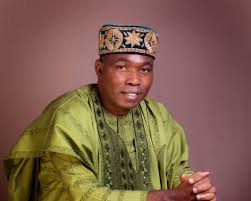
The 2023 presidential candidate of the Social Democratic Party (SDP), Prince Adewole Adebayo, speaks on the state of the economy, the legacies of Buhari’s administration, and the policy direction of President Bola Tinubu. In this interview, Adebayo challenges narratives by political leaders such as Yakubu Dogara and Atiku Abubakar, explaining why macroeconomic figures mean little without translating into improved livelihoods for ordinary Nigerians
Recently, former Speaker of the House of Representatives Yakubu Dogara stated at a public lecture that President Bola Tinubu inherited “a dead baby” in the form of the economy from the Buhari administration. If you had won the 2023 election, you would also have inherited the same situation. Should Nigerians take his description as fact?
The economy Buhari inherited was poorly managed. I would compare it to a patient rushed into the emergency room. Recovery depends on a proper diagnosis by the doctor. If the doctor correctly identifies the illness, he can prescribe the appropriate treatment. What President Tinubu has done so far is to stabilise the patient, but he has not found the cure. He has not fully identified the underlying ailment. Some of his initial steps even worsened the situation, although he has also had one or two wins. For example, he has improved government revenue collection and reduced domestic borrowing compared to the Buhari era. On paper, that gives him a stronger balance sheet. However, in real terms, inflation has eroded the value of that revenue, making it challenging to finance significant infrastructure or government spending. Secondly, they rebased inflation and started counting differently. So when they say inflation has dropped from 21.7% to 20.7%, it is not because the economy is improving, but because the methodology changed. We will only know the real impact when the 2025 budget is implemented. Thirdly, food inflation, a major driver of overall inflation, has decreased slightly. However, ordinary households are not yet feeling relief because prices remain far above what they can afford. It is like lowering a bag of rice from 10 feet to 8 feet — it is still out of reach. So yes, the numbers today look slightly better than last year, but Nigeria is still far from recovery. Our inflation is the fourth-highest in the world. Neighbouring countries like the Benin Republic are below 2%, Senegal below 3%, Tanzania at 3.3%, and even South Africa and Morocco are under 5%. Nigeria is still at 20.7%. Until we reach around 7%, we cannot speak of a real recovery.
Dogara also accused the Buhari administration of printing and injecting ₦22.7 trillion into the economy through “ways and means,” saying it destroyed the value of the naira. How do you view this?
The question Nigerians should ask is: what was the National Assembly doing when this was happening? These revelations are coming from the same people who came to power in 2015. They knew, they watched, and at the end, they even retroactively legalised the ₦22.7 trillion instead of impeaching Buhari. This is not new. Each government has had its own abuse. Under Abacha, it was debt swaps. Under Jonathan, it was crude-for-petrol swaps. Buhari became notorious for the dual exchange rate, which granted privileged access to foreign exchange that was later resold at a considerable profit. Tinubu says he ended that, but his government is also creating new practices that are questionable. The real issue is governance. We should not be celebrating the end of one illegality while introducing another. The Central Bank must return to its constitutional duty of managing inflation, stabilising the naira, and conducting monetary policy, while the Ministry of Finance focuses on fiscal discipline. I will acknowledge that Tinubu is a better revenue collector than Buhari, but that is faint praise. Our revenue-to-GDP ratio remains abysmally low, and appropriation is neither transparent nor fully constitutional. Buhari’s time was chaos; now it is somewhat better, but far from adequate. The National Assembly cannot claim innocence. They were complicit. If they had acted responsibly, Buhari’s unauthorised “ways and means” would have been stopped, not legalised.
The National Bureau of Statistics has published new figures showing slight improvements in inflation and borrowing. Do these numbers give Nigerians hope for better days?
Numbers alone don’t tell the story. Economics has two sides, macro and micro. Macro is GDP, inflation, and debt. Micro is what ordinary Nigerians feel when they buy bread, pay transport fares, or send their children to school. The government discusses GDP growth but rarely mentions job creation. They discuss reduced borrowing, but never household affordability. That’s why I constantly challenge them to publish job creation numbers with every report. That is the only way Nigerians can measure whether their lives are improving. Yes, it helps that borrowing has decreased, the Dangote Refinery has reduced petroleum imports, and we are in a harvest season. But these are temporary. After harvest, prices may rise again unless transport and storage infrastructure are fixed. So the government must direct resources into job creation and cost-of-living relief. Otherwise, the numbers they celebrate will mean nothing to families struggling to buy a loaf of bread.
Dogara praised Tinubu’s tax reforms as revolutionary, stating that ₦14.27 trillion in tax revenue demonstrates progress. Do you agree Tinubu deserves credit here?
Tinubu has always been a tax collector- that is his strength. Compared to Buhari’s chaos, his system is more organised. But the truth is being exaggerated. The ₦14 trillion collected this year does not have the same value as ₦7 trillion collected last year. Inflation has eroded the purchasing power. Although the numbers appear substantial, in reality, the government cannot do more with them. A good tax policy must drive productivity. If you tax people out of business without reinvesting in infrastructure and jobs, the economy shrinks. People stop spending, companies cut staff, and growth stalls. I have a better tax plan, one that would be fairer, more equitable, and would grow GDP by expanding productivity. The government’s current approach is better than Buhari’s, but it is not the kind of reform that will take Nigeria to prosperity.
Former Vice President Atiku Abubakar recently warned that the current hardship could lead to a revolution, similar to the #EndSARS movement or the Arab Spring. Do you share his fear?
I do not believe revolution is the answer. Nigeria’s problems are serious, but they can be addressed through better governance, rather than violence. Yes, people are frustrated. There is hunger and unemployment. However, instead of pushing for uprisings, we should demand more innovative and more accountable policies. If young people are given jobs and opportunities, nobody will answer a call for revolution. The real danger is not revolution, but policy failure. What Tinubu is doing is not enough, but it can be corrected. I would aim to grow GDP at a rate of no less than 12% because that is the level required to reduce poverty meaningfully. I would focus on investing in people, as the Brazilian Workers’ Party did, instead of pursuing budgets that overlook the masses. Atiku is right about the suffering, but wrong about the solution. What we need is better governance, not unrest.
Moving into the second half of this administration, what would you do differently if you were in President Tinubu’s position?
My priorities would be threefold: revenue, infrastructure, and jobs. Tinubu has increased revenue collection, but the real value is weak. I would ensure that revenue translates directly into visible infrastructure — roads, power, transportation, and housing. I would focus heavily on agriculture because food drives inflation. If we reduce transport and storage costs, food becomes more affordable, inflation decreases, and disposable income increases. Most importantly, I would make job creation the centre of every policy. The government should not only count GDP but also track job creation. Nigerians want to see their children gain employment and have stable incomes. That is the accurate measure of economic success. Tinubu is taking some steps, but he is moving too slowly, and his policies are not bold enough. Nigeria needs urgent, people-centred reforms if we are to escape this economic trap.