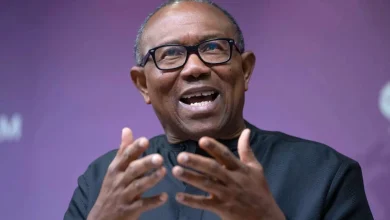
Nathaniel Zaccheaus
The Association of Professional Bodies of Nigeria (APBN), has stressed the need for incoming administration in Nigeria at the federal and state levels next year to engage the group while forming their cabinet.
The APBN lamented that unethical practices by professionals, either self-motivated or influenced by the political class, were responsible for poor governance in Nigeria.
The group’s President, Manason Rubainu, stated this in Abuja at the weekend during his investiture as the 18th president of the association
He said though the political class is populated by poor leaders, this was not enough explanation for poor service delivery being witnessed in different sectors.
He said the responsibility of implementing laudable policies and programmes fell squarely on professionals either in the public or private sector.
He, however, assured that the association was determined to address the ethical issues among professionals.
He said, “There are enough professions in Nigeria at the disposal of government organisations to provide quality services to Nigeria and Nigerians. We are ready to assist in the process of cabinet formation.
“Nigerian professions, like all over the world, have codes of conduct that control the individual personal behaviour and professional conduct that ensure good quality of services delivery. It is worrisome to witness the failure of governance to meet the needs of Nigerian society.
“We are quick to point at the politicians for this failure. The political class indeed seem to be occupied by poor leaders and people who cannot mobilise the instruments of governance for quality services delivery to the populace.
“This, however, is not enough explanation for the stated failure. Politicians do not sign checks, they do not raise certificates of valuations, and they do not design, value and construct structures that collapse regularly in Nigeria.
“They do not care for the sick or design disease prevention and control programmes. All these are done by professionals.”
The theme for this year’s investiture, delivered by Maiyaki Bala, SAN, was titled, “Professionals and Governance in Nigeria, The 21st Century Expectations.”
Bala called on professionals to acquaint themselves with digital technology to support the government effectively in policy design and implementation.
The former president, APBN, Mr Akinloye Oyegbola called on members of the association to get involved in political activities to promote professionalism in governance.
In the meantime, the Nigerian Institute of Town Planners (NITP) has advocated the creation of the Federal Ministry of Physical Planning for proper for proper use of land resources
The institute also lamented the non implementation of the law on urban and regional planning, which was enacted in 1992.
NITP stressed the need to set up relevant structures to promote the planning and development of human settlements.
NITP National President, Mr. Nathaniel Atebije, made the call at a quarterly press conference at the weekend in Abuja.
He said in the past 18 months, the institute had gone around 27 states, and held town hall meetings and press conferences to call on all stakeholders to adhere strictly to town planning law but they had all paid deaf ears to physical planning.
He said without physical planning, economic planning and development would remain a mirage, while the country’s population continues to grow exponentially.
This, he said, may result in a disaster of high magnitude.
Atebije said, “We are faced with insecurity, insurgency, lack of safety, flooding, desertification, diseases, slum, environmental filth and squalor making it difficult for Nigerians to live a good life.
“And because the leadership of Nigeria has paid deaf ears to physical planning, they have opened their ears to being reactionary by standing by to combat disasters through humanitarian services. This is a grossly misplaced priority.
“Prosperity is achieved where the environment is orderly, functional, aesthetically pleasant and safe. These are the attributes that any planned space is endowed with.”
He, however, said the institute would continue to engage governments at all levels to develop and implement national, regional and local area master plans respectively to tackle and mitigate flooding and other environmental disasters.
Atebije also enjoined both federal and state governments to ensure that land should not be dispensed and shared among people as a reward for political patronage.