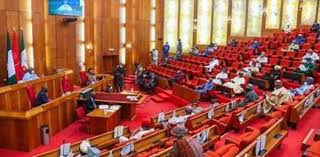
The ultimatum, handed down yesterday by the Senate Committee on Public Accounts, compels the Group Chief Executive Officer (GCEO), Engineer Bayo Ojulari, to appear alongside former GCEO, Mele Kyari; former Chief Financial Officer, Umar Ajia; Dr. Bala Wunti; and the company’s external auditors.
The directive followed mounting frustration among lawmakers over what they described as persistent failure by the national oil company to provide satisfactory explanations to audit queries covering the period from 2017 to 2023.
Chairman of the committee, Senator Aliyu Wadada (Nasarawa West), said the Senate would no longer tolerate what he termed “vague and generalized responses” on issues involving such huge public funds.
Wadada noted that of the N210 trillion under scrutiny, N103 trillion was broadly classified by the NNPCL as “liabilities” without adequate details.
“This committee is not satisfied with the blanket explanation given by NNPCL on the N103 trillion said to be liabilities,” he said.
“Liabilities are not a single line item. They include retention fees, legal fees and audit fees. The exact figures for each component must be clearly stated and justified,” he added.
He also faulted the company’s explanation of the remaining N107 trillion, said to have been spent on Joint Venture Cash Calls and debts allegedly linked to unnamed defunct financial institutions.
“Detailed explanations must be provided on the N107 trillion reportedly spent on JV cash calls and funds tied to defunct banks whose identities have not even been disclosed,” Wadada added.
The committee disclosed that it had earlier raised 19 separate audit queries, but lamented that the responses received from the NNPCL fell far short of expectations.
“Explanations given to the 19 queries are unacceptable. Nigerians deserve clear and convincing answers on how resources of this magnitude were managed,” the chairman stated.
Consequently, the panel granted what it described as a final two-week window for compliance, stressing that failure to honour the summons would attract legislative sanctions.
“NNPCL is hereby given an additional two weeks to appear before this committee unfailingly. The deadline is Wednesday, April 29, 2026,” Wadada declared.
Lawmakers also expressed concern over what they described as a growing trend of public officials ignoring invitations from the National Assembly.
Senator Abdul Ningi (Bauchi Central) urged the committee to adopt a tougher stance, warning that continued disregard for legislative summons undermines democracy.
“We must treat this matter with utmost seriousness. The strength of democracy lies in the authority of the legislature,” Ningi said.
“It is troubling that individuals now feel comfortable ignoring invitations from the National Assembly, leaving lawmakers almost helpless in enforcing compliance.”
Similarly, the motion that led to the committee’s resolution was moved by Senator Osita Izunaso (Imo West) and seconded by Senator Adams Oshiomhole (Edo North), both of whom stressed the need for accountability and transparency in the management of the nation’s oil revenues.
The Senate’s latest move signals a more aggressive oversight posture as it seeks to unravel discrepancies in the financial records of the NNPCL, a critical institution in Nigeria’s economy.
With the April 29 deadline fast approaching, attention has shifted to whether the summoned officials will comply with the directive or face the consequences of defying the National Assembly in what could mark a significant test of legislative authority.