Courts are responsible for uncertainty in our elections – Olurode, former INEC commissioner

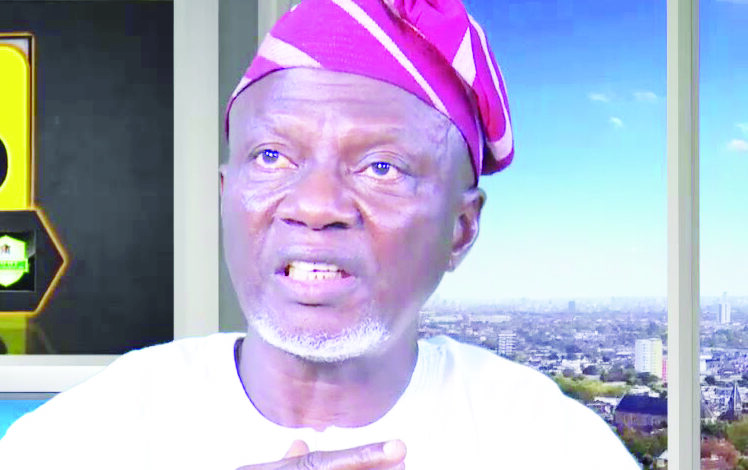
A former federal commission in the Independent National Electoral Commission, (INEC), Prof Lai Olurode, in this interview on Channels TV Sunrise Daily, monitored by Linus Aleke, says the courts are causing lots of uncertainty in our elections. He also, spoke on other issues bothering the forthcoming general elections, especially as it affects the candidates, electorate, political parties, and the electoral umpire
Stakeholders have been raising concerns over election security, vote buying, and others, are you worried about these negative factors as we move near the elections?
I think the first point is to recognize INEC’s dogged determination to deliver a better set of elections to the country. I think INEC is determined psychologically, and in terms of logistics, INEC seems to be prepared. Of course, that is not to say that there are no challenges, but again, it seems to be more overwhelming now, than when Prof Attahiru Jega was the chairman of the commission. Particularly, because of the simultaneous attacks on INEC assets, and these are the foundations for credible elections. These attacks have deliberately undermined the premise of good and transparent elections. I don’t think it will be too hospitable to think that the preparations would not be affected one way or the other.
During your days in the commission, do we have this level of agitation and restiveness towards elections or is it a new trend we are developing as a people?
Elections have always been traumatic and people have always been agitated. Recall that we have to postpone one election. Usually, it is the same, the only thing that has changed, perhaps, is these attacks, were not there. There were other acts of sabotage, but this one is overwhelming, and they are hitting the root and so close to the elections, the election will hold in less than 40 days from now.
Is the length of time for the campaigns, contributory to these upheavals we witness in our elections?
I should not think so, in fact, we can say that from one election to the other, people are always campaigning. It is not any new thing at all. People are used to the same information that has been dished out to them. We can even campaign up to the day of the election itself, the campaign still goes on.
Most electorates are confident that their votes will count this time around because of the use of BIVAS, do you also share these sentiments with them?
I would like to say that election technology has consistently been deployed, generally speaking, for our elections. It is just the tempo now because it is very massive. I get worried myself, but at the same time, INEC has done very well by making sure that it tested the BVAS. This is not even new, INEC viewing the results is not new because it was deployed in Ekiti and Osun and it worked. INEC now has a plan to do a kind of mock testing for this technology. We should not forget, that while INEC is deploying this huge technology into the electoral process, usually there is a backup, and apart from the backup, we are not eliminating the manual thing itself. It is not going to be eliminated one day. The human agency will still be there, there will always be human intervention. What we are trying to do is to minimize the degree and the scope of human discretion in the electoral process, which I think will make sense, especially, in terms of results. You should recall that from one polling unit to the ward level, and there could be attacks, there could be a hijack of results. We now, use technology to mitigate all that. Human intervention is reduced, but at the same time, we are going to do whatever manual process, we can still recall the BVAS and upload it and see what it contains, just to make sure that there is proper tallying.
Because the country could go under if things are not done properly by the electoral umpire, how do the staff manage this delicate situation during elections?
It is a national project and the only equivalent which is not equivalent in terms of what is at stake is the national census. Because, the national census has to also, take place simultaneously. How I wish it is possible to isolate the troubled part of the country and do their elections separately. But again, it is going to affect the other elections, because when people get to know that this is the trend, this is where the results are tilted, and it is most likely going to affect the outcome. But I think that the national commissioners definitely cannot sleep well, just as the candidates, I pity the candidates as well.
Why do you pity the candidates?
Because it is a whole burden on them and their supporters. Each time I go to the field while I was in INEC, I should not be emotionally involved, but we are humans, it is just to get the process right. Just tump printing, sometimes in a competitive election, just one ballot alone can cause a disaster, in terms of sorting, where should this ballot go? So, I don’t see, how any of the national commissioners can sleep well till after the elections.
Is there something we can do about it?
Look at the role of the court in our elections, it is huge. The role of the court brings a lot of uncertainty. How I wish INEC have a final decision as to who the candidate will be. There is always all kind of surprises on INEC, they cannot be too certain about anything. A candidate’s name is on the ballot today and the court rules at one level and asked INEC to remove the name. At another level, the court rules again and asked INEC to reinstate the name again.
What do you think can be done to downplay all these things?
What makes our elections to be filled with this high sense of trepidation, anxiety, and fears, as well as the question, will the country make it? Is just because of the power conundrum. I look at a governor of a state, and the power he exercises, look at the President of the country, look at how many parastatals, that is why those of us who are positive about this country believe that there is no way we can reduce tension at elections until we do something about the power equilibrium in this country. It is so massive, why should a president exercise so much power, what for? At the end of the day what is important for the country is peaceful coexistence, getting food on the table, and getting employment for the youths. Look at the massive participation of the youths, and look at how many youths have been captured in the registration. Almost 75 percent of the youths in this country. All the elections are in their hands now, because those aged 18 to 50, constitute 75 percent of the voters.
You said that you pity the candidates, but yesterday (last week Tuesday) you launched a program that intends to hold candidates accountable for their electoral promises, will that not put them more on the edge?
It was not even me, I was invited as a guest speaker at the forum and the thing is that, when you look at campaign promises like we agreed yesterday, it is like marriage vows, oh! I will love you till death. Candidates will even promise to deliver the moon to your house. They will promise to deliver stars but they are never serious about this. They just say anything, and we are suggesting that look because campaign promises are not justiciable, it is creating challenges and people are going to vote. What the candidates are after is to have votes delivered to them, but these promises are made to the ordinary electorates who will jump at them and wish that it would be fulfilled and then cast their ballot in that line. But if they cannot be held accountable for those promises, where is the electoral accountability? Where is governance? I think that we might have to begin to think of what we can do to hold candidates accountable for what they promise the country and now force the to document their campaign promises and attach them to the documents they are going to submit to INEC. Of course, we need to now start thinking of constitutional amendment because there are so many things in the constitution that are not actionable. Look at the section that talked about the primary purpose of government, that the government of the federation shall be based on democracy and principles of social justice. Where is social justice, where is equity and where is the full participation by the people? So, it is just a way of escalating and making sure that governance is taken more seriously. But one of the candidates, I wouldn’t want to mention his name has promised that he is going to deliver on all his promises, and some people, I know are documenting, those promises now.
What in your opinion are we doing well in terms of the expected quantum of voters’ education that should precede these elections and what are your expectations in this regard?
Voter education is very expensive. INEC will do its own to the best of the funds that are made available to it. Political parties are also, expected to be involved in voter education, the same thing applies to media houses, as well. But I don’t think we are getting the people out there to also access information that is required to make informed choices when it comes to elections. For example, look at people who are residents in the remotest part of the country, in the villages. In areas that are very difficult to access, they are not accessible by road. How do we deliver voter education to them, because, when we look at casting the vote, wrong tump printing of ballot papers? Then you conclude that there is no sufficient voter education out there. Of course, we have so many media houses, but the possibility of delivering voter education through online means, by dishing out information through mobile devices is. That is not going to be accessible to the majority of Nigerian voters because of the level of literacy level in this country. And how much can INEC do, the onus is on those who are looking to harvest votes. The candidates and the political parties. INEC as much as possibly can do the minimum, in terms of delivering voter education, but the bulk stops at the table of the candidates and the political parties. And of course, media houses can do voluntary voter education, because without proper and adequate voter education, people will not be able to make informed choices and when wrong choices are made, the country is going to be worse for it. If we have a culture of volunteers, I don’t think we should be talking about the paucity of voter education. Any little support from the people, they will demand monetary rewards, and where money culture is so rampant, we cannot get volunteers to come out there to ask what they can do for their country. If I may ask, how many Nigerians had gone out voluntarily to give information to the public, to marketplaces, in the churches, in the mosque, just to enhance voter participation in the electoral process?
Considering the huge cost of conducting elections in Nigeria, is it not wise for the country to adopt the proposal of a single term of seven or eight years for elective officers in the country to curtail this tension that also accompanies elections?
You cannot be talking about matters that touch on the amendment of the constitution of the country right now. That will be a debate for another day, what we should be concerned with is how we can reduce the possible tension in the environment. How do we make the electoral environment to be friendlier? The Federal Government needs to do more.