By Linus Aleke
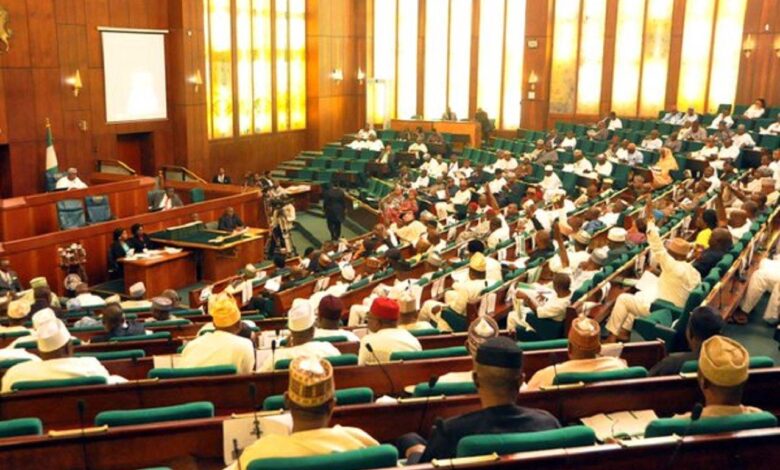
The House of Representatives, on a redeeming mission, recently announced plans to hold a Legislative Security Summit to find lasting solutions to the growing insecurity across the federation.
The Speaker, Tajudeen Abbas, announced this plan in late January, at the resumption of plenary, while lamenting the rising insecurity in the country.
He said, “In light of these challenges, I propose convening a National Legislative Security Summit. This Summit will serve as a crucible for ideas where stakeholders from diverse sectors; including security, traditional and religious institutions, academia, civil society, and more, will forge enduring solutions to our security woes.
‘’It is time to harness our collective expertise, to break the silos that have hindered our progress, and chart a new course towards peace and stability.”
He also promised to hold the security agencies accountable for every penny allocated to them to tackle the security challenges facing the country.
The Speaker further assured Nigerians across all walks of life of the House’s readiness to address the challenges of hunger, inflation and the general hardship currently bedevilling the nation.
He noted that there has been an upsurge in cases of killings and abductions in virtually all parts of the country.
The Speaker, who also observed that the current security strategy of the government is not working, tasked President Bola Tinubu to consider a change of strategy to deal with insecurity.
He charged the President to demand more from the service chiefs and take tough decisions if need be.
Abbas, who premised his call for a Legislative Security Summit on the worsening insecurity in the country, referenced the killing of over 200 persons and destruction of properties in Mangu and Bokkos local government areas of Plateau State on Christmas Eve, by yet-to-be-identified gunmen.
He recalled that earlier in the year, several persons were kidnapped in the Federal Capital Territory (FCT), with some of the victims losing their lives, adding that very recently, two traditional rulers were murdered in cold blood in Ekiti State.
However, while some have expressed concern over the prevailing culture of zero implementation of resolutions and recommendations of similar summits in the past, others see the summit as a conduit pipe for moving public funds into the pockets of cronies and friends of those in corridors of power.
A particular reference was made to the 2014 National Conference, held during the administration of former President Goodluck Jonathan.
The conference congregated no fewer than 492 delegates in Abuja and made far-reaching recommendations that if diligently implemented by the government, hold the potency to move the country to the path of progress and economic growth.
Regrettably, critics have said that resolutions and recommendations of the confab, and many like it, including the Legislative Security Summit held by the 9th House, have remained largely unimplemented by successive administrations in the country.
Nevertheless, writing on the outcome of the previous summit held by the 9th House under the chairmanship of former Speaker, Femi Gbajabiamila, his Chief Press Secretary, Musa Abdullahi Krishi, denied the notion that the resolutions of previous summits were not implemented.
He said the best takeaway from the previous summit was the show of the determination by the leadership of the House to carry the issue forward.
Krishi, who is the incumbent Special Adviser on Media and Publicity to Speaker Abbas, in an article published in Daily Trust, averred: “On June 8, 2021, the then Speaker, Gbajabiamila, kept the promise of coming up with proactive legislation that will change the way and manner security matters are handled in the country.
“At the plenary, nine bills arising from the security summit were presented. In announcing this, Gbajabiamila said the bills arose from the contributions received from Nigerians during the summit.”
The newly introduced security-related bills, he said are, “the Armed Forces Act (Amendment) Bill, 2021; Police Act (Amendment) Bill, 2021; National Security and Civil Defence Corps Act, 2003 (Amendment) Bill, 2021; National Security and Civil Defence Corps Act, 2007 (Amendment) Bill, 2021; ECOWAS Convention on Small Arms, Light Weapons and Ammunition (Ratification and Enforcement) Bill, 2021, among others.”
*Summit not necessary, gather experts to brainstorm, say Otubanjo, others
A research professor of International Relations and Strategic Studies at the Nigerian Institute of International Affairs (NIIA), Lagos State, Femi Otubanjo, further invalidated the notion of non-implementation of resolutions of conferences, national or otherwise.
He said, “I am not sure that it is correct to say that the resolutions and recommendations have not been implemented, we don’t know that.
“There have been continuous reforms in the security architecture of Nigeria, and some of those seminars have been helpful.”
He, however, noted that his major concern was that he was not sure if the House needed to call a conference or seminar at this material time.
Otubanjo argued that all it needed to do was to call experts at the committee level to get information from them about what they plan to do.
According to him, “What they are not doing and why they are not doing is simple. We don’t need a conference for that; we have a security system in Nigeria, made up of the police, the military, the Nigerian Security and Civil Defence Corps (NSCDC), and all other kinds of paramilitary organisations.
‘’What we need is an academic workshop within the confines of the committee on security to get the best information. The only good thing that I can see coming out of the kind of thing that the House is planning is that it will draw national and global attention to the problem of insecurity in Nigeria, and that may be a push on the government to address the problems more urgently and more comprehensively.”
The research scholar partially agreed with the pessimists who believe that the summit is a means of wasting limited resources.
Otubanjo said, “I think that it is going to be a big waste of resources to do it that way. I don’t see the wisdom in doing it that way; the better way is to call in the experts get their inputs and then work out a position paper.
The point for the House in holding a conference, maybe that they might decide to utilise their resolutions during constitutional amendment to change the way Nigeria is policed”.
He noted that one of the essential elements about our security is that the policing system is a centralised one, which of course, is against the core principle of federalism.
“We need a police force. We need a police force that is on the concurrent legislative list in our constitution. So, maybe the House, maybe taking the first step towards drawing attention to the need to amend the constitution so that it would fully reflect our federal state. If that is the purpose then, it is to be commended.”
Also speaking with ThisNigeria, a security expert and President of the African Council on Narcotics (ACON), Rekpene Bassey, said, that if only the summit could yield results other than the routine refrains, it might make good sense for the National Assembly to host any such activity.
Bassey, who is the author of a popular book, ‘Policing and Crime Prevention in Nigeria’, also queried, how many of such summits have been previously organised. And what happened thereafter?
To answer the question directly, the President of ACON said the proposed security seminar is merely another enrichment drainpipe for a select few persons.
He said, “Believe it or not, nothing new will come through it. However, it suffices it to note that everything about insecurity in Nigeria is encapsulated in corruption practices.
“The day we find an antidote to corruption is the day we will find a solution to our security and other problems. Truth is that corruption has become so endemic and entrenched in the deepest parts of our societal fabrics that nothing will work well in the country if we can’t solve that problem”.
Going forward, he said only an act of parliament making corruption a capital offence with the death penalty for convicted offenders can solve the problem.
Regretting that those who live in glass houses don’t throw stones, the security expert challenged the lawmakers, if they are serious, to enact a law making corruption a capital offence.”
In her views, the Executive Director of the Balm for the Bruised Foundation, Princess Ekwi Ajide, expressed optimism that the legislative security summit will lead to an end to the incessant abductions and killings currently going on in the country, especially in the South-East, if its recommendations were faithfully implemented by the government.
She noted that the renewed interest of the House on security issues should be applauded by Nigerians because the rising insecurity affects in no small measure the lives of those they represent, the resolutions reached at the end of the summit may go a long way in changing the narrative.
On whether the summit might be a drainpipe for corruption as expressed by others, Ajide said, “I see the summit as an avenue to brainstorm and come up with a sustainable solution to the rising security threats across the federation.”
On the alleged culture of lack of implementation of confab resolutions by successive administrations in Nigeria, the executive director said, “That is just my fear, because many times in Nigeria, we make laws without implementation plans. I’m praying hard that the resolutions and recommendations of this security summit do not end up only on paper like previous ones.”
She noted that the legislative security summit was a means of getting to the root of the problem of insecurity in Nigeria and finding lasting solutions.
She queried, “Don’t you know that insecurity has contributed to the hunger and high cost of living in Nigeria? Take, for instance, farming contributes to food sufficiency, but owing to insecurity.
‘’Farmers no longer go to the farm as they should, thereby limiting the quantity of food produced annually. This is because some of these farmers who are women are raped, maimed, or killed on the farm.
‘’Also, for a trader of foodstuff, the story is the same as they are afraid of travelling from one point to another because they may be kidnapped along the way. Our everyday life is affected by insecurity. So, I wouldn’t say that the House is looking for a faster means to tackle the menace before it gets out of hand.”
Also, a retired Nigerian ambassador to Mexico, Ogbole Amedu-Ode, said the security situation in Nigeria was worrisome for everybody, high and low, across our national space.
The issue of insecurity, he said, is beginning to get out of hand, and it is touching everybody.
The retired envoy, however, averred that the attempt to convene a security seminar by the House is a genuine and sincere effort towards providing their contribution to finding permanent solutions to the hydra-headed security challenge in the country.
“In my opinion, it is a sincere effort. Nevertheless, how do legislators by calling a confab of themselves and experts in the security field to discuss the issue translate to legal instruments on security?
’Are they going to legislate the security solutions into being, after listening to security experts? Again, I think that why people are suspicious of the intentions of the House because of what is on record or what is obtainable in Nigeria.
“People don’t seem to trust the authority of our social capital in Nigeria, which is abysmally low, especially social capital if it is defined to mean the trust between the ruled and the rulers.
“That is why people are casting aspersions that this is another way of siphoning public funds into their pockets. Be that as it may, I believe that they should be given a chance to let us see what they can do.”