Nigeria’s tax reform has reduced more than 50 revenue collection items previously administered by state and local governments to nine, the Joint Revenue Board has said.
The reform has also eased the tax burden on low-income earners and micro-scale businesses while eliminating multiple and overlapping levies, according to the Executive Secretary of the JRB, Olusegun Adesokan, in a statement on Friday.
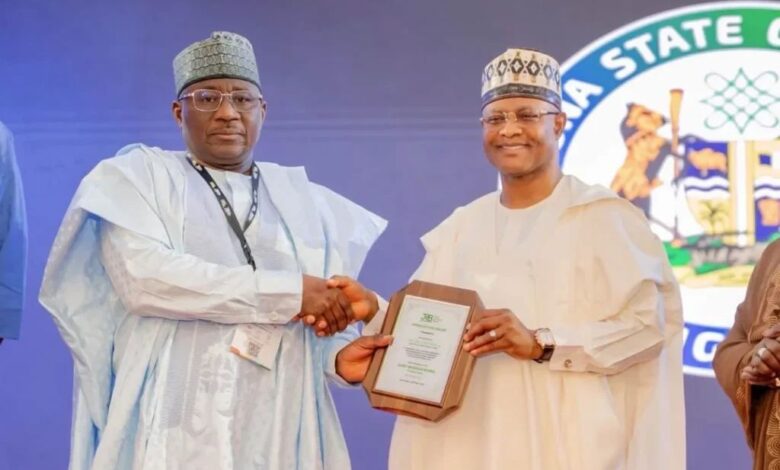
Adesokan disclosed this while reviewing the progress of the tax reform one year into its implementation at the 160th meeting of the Joint Revenue Board in Kaduna State.
The meeting, held under the theme, “One Year of Reform: Assessing Progress and Addressing Challenges,” brought together revenue authorities to evaluate the impact of the new tax regime and consider challenges affecting its implementation.
Adesokan said the reform had addressed concerns that the new tax regime was increasing the burden on Nigerians with lower incomes.
“Addressing the misconception that the tax reform has increased taxes, the reform has rather reduced the tax burden on low-income earners, eliminated multiple nuisance taxes while providing reliefs for low-income earners and micro-scale businesses,” he said.
He said 18 state Houses of Assembly had so far domesticated the Model Harmonised Taxes and Levies Law, which was introduced to tackle multiple taxation and overlapping revenue collection across the country.
According to him, the law had consolidated more than 50 collection items previously administered by state and local government authorities into nine sub-heads.
He added that the reform had also abolished cash collection and the use of roadblocks for revenue generation, measures aimed at improving transparency and reducing harassment associated with revenue collection.
The JRB executive secretary said the changes had contributed to greater harmonisation of tax administration across the subnational governments.
The Kaduna State Governor, Uba Sani, who declared the meeting open, said the reform had created greater opportunities for domestic resource mobilisation and strengthened the country’s ability to finance development.
Sani urged revenue authorities to identify bottlenecks affecting collection, institutional weaknesses that create friction between taxpayers and revenue agencies, and areas where technology could improve tax administration.
He said the success of the reform should not be measured by how much government collected alone, but also by how easy it was for taxpayers to comply.
“The objective of the reform should not be simply to collect revenue; it should be to build a tax system in which compliance becomes easier, enforcement becomes more intelligent and voluntary compliance becomes a norm,” the governor said.
Sani also expressed support for the reform, saying its impact extended beyond eliminating duplication of taxes to improving revenue generation.
He said national tax revenue had increased significantly in recent years, rising from about N10.1tn in 2023 to N21.6tn in 2024 and approximately N36.8tn in 2025.
However, the figures cited by the governor were presented as part of the broader revenue trend under the current reform period.
The meeting’s chairman, Dr Zacch Adedeji, who was represented by the Executive Director, Finance and Corporate Services of the Nigeria Revenue Service, Muhammad Lawal Abubakar, said the gathering was an opportunity for revenue authorities to assess the progress of the reform and address outstanding challenges.
Adedeji said the ultimate test of the reform would be its ability to improve revenue mobilisation while increasing compliance and creating a better experience for taxpayers.
He also stressed the importance of ensuring that the additional revenue generated translated into stronger contributions to national development.