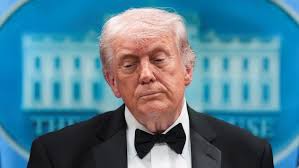
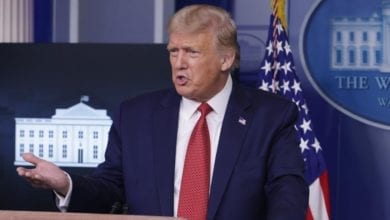
United States President Donald Trump has blamed Republican candidates for the party’s losses in Tuesday’s midterm elections, insisting that his absence from the ballot and their failure to motivate voters contributed to the outcome.
Trump made the remarks during an interview with Fox News anchor Bret Baier on Tuesday night, as Democrats recorded major victories across the country and secured control of both chambers of Congress.
Rejecting suggestions that his leadership or political influence contributed to the Republican defeat, Trump argued that his supporters remained enthusiastic but were not sufficiently inspired by the candidates seeking their votes.
“They didn’t like the candidates,” he said, referring to his supporters.
He added that some of the candidates he endorsed had previously opposed him and failed to establish a strong connection with his political base, particularly supporters of his Make America Great Again movement.
“They just didn’t inspire the people to get out and vote,” Trump said.
The president also defended his campaign appearances in support of Republican candidates, arguing that the large crowds at his rallies showed that his political movement remained popular.
He maintained that the party would have secured a decisive victory if he had personally contested the election.
“I wasn’t on the ballot. If I was on the ballot they would have got down,” he said.
Trump had earlier expressed a similar position on his Truth Social platform, writing, “I wasn’t on the Ballot and if I was, we would have won IN A LANDSLIDE!”
His comments came as Democrats secured victories in several states, including Texas, North Carolina and South Carolina, while defeating prominent Republican candidates in closely contested races.
The results dealt a major blow to the Republican Party and Trump’s administration, with Democrats taking control of both chambers of Congress, potentially complicating the president’s legislative agenda.
The outcome has also renewed scrutiny of Trump’s role in shaping the Republican Party, particularly his influence over candidate selection and his support for contenders closely aligned with his political agenda.
In Texas, Trump backed Attorney General Ken Paxton in the Republican primary against incumbent Senator John Cornyn. Paxton went on to lose the general election to Democrat James Talarico.
In North Carolina, Trump-backed Michael Whatley also lost to former Governor Roy Cooper, while Democrats secured an upset victory in South Carolina.
The White House also sought to distance Trump from the party’s poor performance, with an unnamed administration official telling NewsNation that the candidates bore significant responsibility for their defeats.
“President Trump did a better job promoting many of the candidates on the ballot than the candidates did themselves,” the official said.
The official further argued that Trump was not on the ballot and that his supporters typically turned out in greater numbers when he was personally contesting elections.
However, voter dissatisfaction over the rising cost of living, the economy and the administration’s handling of the conflict with Iran have also been cited as factors behind the Republican losses.