Kaduna state has suffered too much, too long from violent conflict, El-Rufai laments


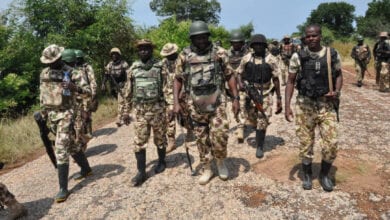
The Governor of Kaduna State, Malam Nasir Ahmad El-Rufai has lamented that bandits and other insurgents have unleashed fear and anxiety in communities across the state adding that his state has suffered too much and too long from violent conflict.
The governor also said that the bandits have killed people, steal property, burn houses, harass farmers, and rustle livestock.
The governor made this known at the launch of the Conflict Early Warning and Early Response System (SEWERS) yesterday.
He also said that ‘the reports of various commissions of inquiry that were constituted to establish the causes of various episodes of ethnoreligious and communal crises in the state make for sober reading and invite a commitment to say never again.
He went on to say that ‘the mission to prevent and resolve communal conflict remains a priority. This state has suffered too much and too long from violent conflict. An early warning and response system will no doubt contribute to helping our state to overcome such a baleful legacy of conflict.
NSIP: FG expends N28bn in Niger – Official
He said: The 2020 security incidents report issued by our Ministry of Internal Security shows that banditry is a problem across the state and that it is also complicating communal relations in our more diverse communities.
Victims of the depredations of these criminals often turn on those they believe share ethnic or religious affinity with them. Stopping the bandits is an essential contribution to ending the communal conflict.
El-Rufai commends the leadership of the Kaduna State Peace Commission on the major milestone of developing and deploying the Conflict Early Warning and Early Response System (CEWERS) saying that ‘the acquisition of such a powerful tool provides another validation of the mandate of the Peace Commission, and the contributions the agency is making to peace and security in Kaduna State.
He also said: ‘The mission to prevent and resolve communal conflict remains a priority. This state has suffered too much and too long from violent conflict. An early warning and response system will no doubt contribute to helping our state to overcome such a baleful legacy of conflict.
Bandits and other insurgents have unleashed fear and anxiety in communities across the state, The criminals kill people, steal property, burn houses, harass farmers, and rustle livestock.
The 2020 security incidents report issued by our Ministry of Internal Security shows that banditry is a problem across the state and that it is also complicating communal relations in our more diverse communities.
Victims of the depredations of these criminals often turn on those they believe share ethnic or religious affinity with them. Stopping the bandits is an essential contribution to ending the communal conflict.
The governor went on to commended individuals, bilateral, multilateral, and civil society partners that have supported the state in conflict mitigation efforts leading to the creation of the Peace Commission in several ways from day one such as Governor Simon Bako Lalong of Plateau State, General Martin Luther Agwai, the Amir of Birnin Gwari, the Centre of Humanitarian Dialogue (HD), Alice Wairimu Nderitu then of HD, now a special assistant to the UN Secretary-General in New York, Dr. Yakubu Sankey of HD, Ford Foundation, MacArthur Foundation, UKAID/DFID/FCDO, the Government of Norway, United States Institute of Peace (USIP), USAID, the British Council, OSIWA, CLEEN Foundation, Plan International, Mercy Corps, NERI, UNDP and indeed the UN system in Nigeria and others too numerous to mention.
Adding he hailed: His Grace, Reverend Dr. Josiah Idowu-Fearon, chairman of the Kaduna State Peace Commission, Priscilla Ankut, Dr. Saleh Momale, and Hajiya Khadija Hawaja Gambo, co-chairmen Apostle Emmanuel Kure and Sheikh Ahmad Gumi, and members of the House of Kaduna Family, for their contribution to peacebuilding in Kaduna State.