By Cross Udo, Abuja
The Nigerian National Petroleum Company Limited (NNPC Ltd) has acknowledged that the country’s refineries have become financial black holes, losing between ₦300m and ₦500m every month, despite years of costly rehabilitation efforts.
Group Chief Executive Officer Bayo Ojulari disclosed on Thursday that the company was now seeking a partnership with a “professional refinery company” to halt the losses and reposition the facilities for sustainable operations.
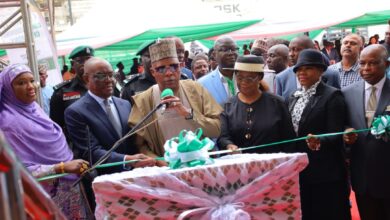
He made this known while receiving members of the National Executive Council of the Petroleum and Natural Gas Senior Staff Association of Nigeria (PENGASSAN) in Abuja.
Ojulari painted a grim picture of decades of abandonment, likening the Port Harcourt refinery to “an old car parked for years without oiling or greasing.”
According to him, although technical reviews of the three state-owned refineries had been completed, a commercial audit of the Port Harcourt plant revealed that operating it without private sector expertise would result in endless losses.
“We were pumping around 50,000 barrels of crude into the refinery, but less than 40 per cent was coming out as product. That was why we stopped. Continuing would only mean throwing money away,” he said.
He explained that the refineries had suffered chronic neglect over the years, making rehabilitation efforts costly and unreliable.
“A lot of money has been spent on these refineries. However, it’s been very challenging to translate that into profitability. When you fix one thing, another breaks down. That’s the reality we met,” Ojulari stated.
*Denies political cover-ups, says attacks, sack plots won’t derail reforms
Ojulari stressed that the current administration had not pressured him or NNPC to keep the refineries running for political optics.
According to him, halting operations was a deliberate decision to prevent further waste and pursue sustainability.
“Tinubu did not put pressure on me to do the wrong thing. There was no negative political interference. The baseline mandate is simple: ensure whatever we do is sustainable. There’s no point pretending. Running at a loss just to show activity would have been wrong,” he said.
He added that the decision to freeze refinery operations was taken in the national interest to avoid wasting taxpayers’ resources.
The GCEO also alleged that there were “formidable plans” to remove him from office, revealing that he and other top management staff had been targets of coordinated harassment and attacks.
“NNPC is under attack. I have faced several attempts to remove me from this seat. Several members of our leadership team have also been under attack. Our staff are distressed, many are frustrated, but we are staying focused,” Ojulari disclosed.
Despite the internal strife, he maintained that the company would not be distracted from its reform mandate.
“Let’s not get false hopes that these attacks will stop. We must build resilience. Darkness may reign for years, but once light comes, it wipes away the darkness,” he said.
Ojulari appealed to Nigerians, contractors, and stakeholders to be patient with the temporary shutdown of the refineries, promising that jobs and operations would resume once the facilities became viable.
“My commitment is that when these refineries are reworked, everyone will return to work. But for now, we all need to cooperate to ensure whatever we put in place is sustainable,” he assured.
*PENGASSAN’s position
Earlier, PENGASSAN President, Comrade Festus Osifo, commended the NNPC management for improving pipeline performance since Ojulari’s assumption of office, noting that output had increased.
He pressed for clarity on the shutdown of refineries but pledged the union’s support for reforms.
“We know that managing institutions like this comes with ups and downs, but we are solidly behind you. The stability of NNPC affects our members directly, and we will collaborate with you and your team to keep the system vibrant,” Osifo said.
He added that with improved capacity, Nigeria could achieve its target of producing 2.6 million barrels of crude per day by 2026, up from the current 1.8 million barrels.
Nigeria has spent over $25bn on refinery maintenance and rehabilitation since 1999. Yet, its four state-owned refineries, located in Port Harcourt, Warri, and Kaduna, have failed to operate at a meaningful capacity.
Successive governments have promised “revamp and turnaround maintenance,” but the plants have remained moribund, forcing the country to rely almost entirely on imported refined petroleum products.
The move by NNPC Ltd. to bring in an external professional refinery partner is seen as a tacit admission that decades of public-sector-led efforts have failed.
Analysts say it could either mark a turning point for Nigeria’s downstream sector—or another costly cycle if transparency and accountability are not enforced.