All NewsNewsTop News

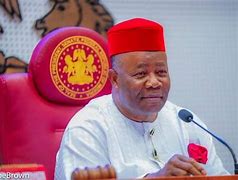
Wike: Mr Project Adds another year

...And he keeps marching on

A THISNIGERIA SPECIAL REPORT

As the candles go up, the cranes, graders and concrete mixers of Abuja and Port Harcourt tell the real story of a man who has turned “project delivery” into a personal creed.

There are no invitation cards, neither are there glossy posters announcing a ballroom celebration. But the city that really captures the mood as Nyesom Ezenwo Wike adds another year is not the banquet hall; it is Abuja itself.

Drive through the Federal Capital Territory today and you feel it in the newly asphalted carriageways, the fresh road markings, the glow of streetlights, the scaffolding around schools, hospitals and public buildings. The once-sleepy stretches of the capital are suddenly a construction site again. From early morning until late at night, the soundtrack of the city is the growl of heavy-duty trucks and the whine of concrete mixers.

It is this frenetic rebuilding, this stubborn insistence on “finishing and commissioning”, that earned him the sobriquet that has stuck from Port Harcourt to Abuja: Mr Project.
This birthday, therefore, is less about the cake and more about a career defined by concrete, steel and political grit – from his days as chairman of Obio/Akpor Local Government, to two terms as governor of Rivers State, and now as the minister driving an infrastructural revolution in Nigeria’s seat of power.

From the Creeks to the Capital

If Port Harcourt was Wike’s original laboratory, Abuja has become his national showcase. When President Bola Ahmed Tinubu shocked the political establishment by naming the fiery former Rivers governor as Minister of the Federal Capital Territory, tongues wagged. The FCT had not had a southerner in charge for decades. Many saw the appointment as a risky political experiment. Others viewed it as a bold statement that performance, not origin, would be the new currency.

Tinubu, however, was betting on one thing: that the same man who turned Rivers into a rolling advertisement of completed flyovers, bridges and hospitals could replicate that energy in the capital.

Barely months into office, Abuja residents began to understand why he was called Mr Project. Major roads that had been left to decay were suddenly cordoned off for rehabilitation. Access roads to key districts were redesigned. New contracts rolled out in a flurry of briefings: 12 new road projects across the territory, with two completed access roads already billed for commissioning as part of a broader urban renewal agenda.

In typical Wike fashion, he did not restrict attention to the manicured city centre with its ministers’ quarters and diplomatic homes. Satellite towns and outer districts long treated as poor cousins of the capital – places where residents watched the city’s glitter from a distance – started getting long-denied attention. Grimy, potholed streets in these communities are now being graded, tarred and lit.

It is this push into the periphery that has now earned him the “Infrastructure Minister of the Year” award from FCT indigenes, who say their communities are finally feeling the impact of Abuja’s billions. For once, they insist, the FCT is not just about the three arms zone and highbrow districts; the villages and resettlement areas are on the map too.

For Wike, this is familiar terrain. As he often reminds audiences, he did not learn governance in air-conditioned conference rooms. He learnt it in the creeks and congested streets of Rivers State, where expectations are high, tempers are short and patience is famously thin.

Rewriting Abuja’s Infrastructure Story

One statistic captures the scale of the new push: in barely a year and some months, the FCT Administration has commenced rehabilitation of over a hundred public schools, with the minister ordering the fixing of more than 105 dilapidated facilities and announcing plans for at least 40 more.

The message is that infrastructure is not just about fancy flyovers or imposing city gates. In Wike’s Abuja, “project” also means classroom blocks with new roofs, functional toilets, perimeter fences and desks for children who previously studied under leaking ceilings and broken windows. It means giving dignity back to public education, one school at a time.
On the roads, his imprint is even more obvious. From the Old Keffi Road – a 15-kilometre lifeline linking Kado Village to Dei-Dei – to new arteries connecting Wuse and the Central Area, Wike has unleashed a network of contracts aimed at eliminating notorious bottlenecks and opening new corridors for business and housing. Motorists who once budgeted hours for short trips now speak of reduced travel times.

Old, tired roundabouts are being re-engineered into modern interchanges. Drainage systems, long blocked and ignored, are being cleared, expanded and rebuilt to cope with the floods that periodically torment the capital. The once-dark stretches that used to frighten residents at night are now bathed in streetlights.

In a city where land is currency, he has also moved aggressively on land administration. In one sweep, the minister signed some 5,481 Certificates of Occupancy, promising that allottees who had fulfilled their obligations would receive their documents within weeks, not years. For a territory where file movements used to be a long-distance race and land files could disappear into backroom vaults, that singular decision signalled a new urgency and a subtle warning to rent-seekers within the bureaucracy.

Security, too, is getting a dose of the Wike treatment. Under his watch, the FCT Administration began work on a central control centre to harmonise intelligence gathering and information-sharing among security agencies – an attempt to give physical infrastructure the software of safety. For him, there is no point building gleaming roads and beautiful estates if residents cannot sleep with both eyes closed.

These moves have not been without controversy. Market demolitions that cleared long-standing informal settlements, the enforcement of ground-rent payments and the pulling down of illegal structures have provoked anger and applause in almost equal measure. Traders who lost shops complain bitterly; urban planners applaud the restoration of right-of-way.

But love him or loathe him, even critics admit that the FCT has regained a sense of urgency. And in a country where officialdom is often synonymous with indifference, urgency is itself a radical project.

“He Is a Performing Minister”: Tinubu and Others Speak

In an era when many ministers work in quiet anonymity, Wike has become one of the most visible faces of the Tinubu administration. And the president has not hidden his satisfaction.

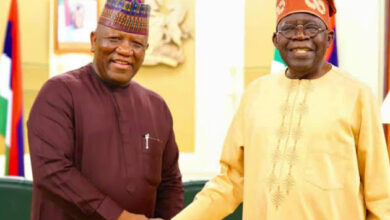
At public events in Abuja, Tinubu has repeatedly described his FCT minister as “a good man” and “a performing minister”, even joking that he doffs his cap when he sees the volume of work going on in the capital. It is rare, in Nigeria’s hyper-sensitive politics, for a president to publicly single out a minister this frequently and this warmly.

On another occasion, as political cross-fire raged and critics sharpened their knives, the president urged Wike to tune out the “busybodies” and focus on his mandate, telling him in front of cameras to continue the good work and ignore onlookers who contribute nothing but noise.

It is not just Tinubu. National Assembly leaders have applauded the transformation of Abuja’s skyline, with Senate President Godswill Akpabio reportedly remarking that the minister has “turned Abuja into a model city” and saluting a man he said had moved from opposition politics to national service with visible impact.

Civil society voices have joined in. Not always a choir of praise – they have urged political actors to leave Wike alone to deliver for residents, warning that constant distractions could derail much-needed development. For a group known for its internal disagreements, that statement was a significant gesture.

And the original owners of the FCT, often resentful of being pushed aside by government and developers, have chosen to honour him this year precisely for what they call his “significant contributions” to previously neglected outer city districts. For a long-marginalised community, recognising an outsider minister is not a casual move.

For a man whose politics has provoked divergent views, the broad consensus around his work in Abuja is striking. It suggests something simple but powerful: even in a divided country, visible performance can still command huge respect across party lines.

Port Harcourt: Where Mr Project Was Born

Yet, to understand Wike’s Abuja? You must go back to his Port Harcourt.

As governor of Rivers State from 2015 to 2023, Wike turned his obsession with projects into a governing philosophy. By the time he left office, he had overseen the construction of several flyover bridges in Port Harcourt and its environs, alongside extensive road dualisations that opened up once-isolated communities.

These were not just prestige monuments thrown up to impress visitors. The flyovers unknotted murderous traffic jams at key junctions, cut travel times and – perhaps most politically important – gave Rivers people visible evidence that their oil money was returning home. To residents used to hearing of multi-billion naira allocations vanishing into thin air, concrete pillars and tarred roads were a tangible reassurance.

Health and education felt the impact, too. His administration delivered specialised Mother and Child hospitals, zonal hospitals in Bori, Degema and Ahoada, and upgraded secondary schools like Government Secondary School, Abua. Judges got new quarters and vehicles; the Federal High Court complex in Port Harcourt became one of the architectural showpieces of the Niger Delta.

In Bonny, the establishment of a Federal Polytechnic of Oil and Gas added a new layer to the state’s knowledge economy, while the creation of a Faculty of Law at the University of Port Harcourt helped expand professional training for the region. These projects were calculated not just to build roads, but to build human capital.

Wike’s government also poured money into roads leading out of Port Harcourt – to Ogoni, Opobo/Nkoro, Ikwerre and other local government areas – arguing that projects must “open up the state for economic prosperity”. For him, a road was not merely a ribbon of asphalt; it was a corridor for trade, investment, agriculture and social integration.

Of course, politics was never far away. But even many of his detractors concede one point: under Wike, Rivers became a massive project site, with an unusually high ratio of announcements that actually translated into completed, commissioned infrastructure.

It was in those years that the nickname “Mr Project” took hold – first as a political catchphrase coined by allies, then as a grudging acknowledgment of a governor who preferred to cut ribbons than cut deals behind closed doors.

Style: Bulldozer in a Bowler Cap

Project delivery, for Wike, is as much about style as it is about substance.
He is not a back-office technocrat hiding behind memos. He is a street-level politician who relishes inspection tours, media cameras in tow, berating contractors, querying civil servants, threatening to revoke contracts and, often, returning weeks later to ensure compliance. Supporters see this as hands-on leadership; critics call it theatre. Either way, it gets results.

In Abuja, that style has not changed. Residents now know that when they see a convoy screech to a halt at a construction site, the minister may soon emerge in a traditional cap, gesturing firmly at engineers, demanding deadlines, and sometimes stopping work on the spot if he suspects foul play.

His public speeches mix humour with seriousness. One moment he is joking about “busybodies”; the next he is reminding developers that illegal structures will not be tolerated, no matter whose name is on the signboard. It is this mixture of charm and strictness that has allowed him to push through politically sensitive actions like mass demolitions and aggressive tax enforcement, while keeping presidential backing firmly in his corner.

He is equally comfortable in the political war room and at a project commissioning, where he often reels out contract figures, completion dates and the names of contractors from memory. That combination – political astuteness and project manager – is part of what makes him difficult to ignore in any setting.

His critics argue that his combative style can choke dissent and create unnecessary enemies. But his supporters counter that in a system weighed down by lethargy and sabotage, a bulldozer temperament is sometimes what is needed to move files, break cartels and keep projects on schedule.

Awards, Honours and a Growing Legacy

Beyond the applause of Abuja’s elite and Rivers’ political class, formal recognition has followed.

In 2023, Wike was named among the “100 Most Notable Peace Icons in Africa”, alongside entertainers and business leaders, in recognition of his contributions to governance and conflict management. It was a nod to the paradox of a man often seen as combative, yet repeatedly involved in brokering political deals.

Universities have also joined in. The University of Calabar recently honoured him with an honorary degree in Political Science, citing his “landmark contributions” to infrastructure and public administration. For a man who has spent most of his life in the arena of rough-and-tumble politics, campus recognition is a reminder that governance is also an intellectual enterprise.

Now, with Abuja indigenes preparing to decorate him as Infrastructure Minister of the Year, the man who once governed only Rivers finds his legacy stretching far beyond the banks of the Bonny River into the very heart of Nigeria’s power structure.
Each plaque, each honorary gown, each citation adds another layer to the story of a politician who has built his brand not only on rhetoric, but on projects that people can touch, drive on, school in and get treated in.

Controversy, Courage and the Politics of Projects

To celebrate Wike without acknowledging controversy would be to tell only half the story. He is a figure that provokes diverse passions and positions. His role in the 2023 elections, his feud with his party, his high-voltage interventions in Rivers politics after leaving office, and his unapologetic alliances with President Bola Tinubu of the ruling All Progressives Congress have earned him fierce enemies. Newspapers and social media timelines have frequently dripped with accusations and counter-accusations around his ‘style of politics.’

Yet, even amidst the noise, one thread runs through his public life: an insistence that leaders must show their work.

For Wike, birthdays are not just about speeches and cakes; they are about commissioning. It is no coincidence that many of his most high-profile projects in Rivers were unveiled around symbolic dates – democracy days, anniversaries, party celebrations. The message was always the same: leadership should be measured in kilometres of roads, number of schools fixed, hospitals built, bridges standing.

In Abuja, the script is repeating itself. As he marks another year, contracts are being flagged off, schools are under rehabilitation, new roads are rising over old traffic nightmares, and the city’s blueprint is being rewritten under his watch.

He may quarrel, he may clash, he may dominate headlines for reasons beyond infrastructure, but beneath the drama is a simple creed: leaders must leave something concrete behind.

A Birthday Beyond Politics

So what does this birthday mean for Mr Project? For his supporters, it is a moment to say thank you – for the flyovers in Garrison, Rumoukoro and Rebisi; for the zonal hospitals that brought healthcare closer to rural communities; for the schools in Abua and across Rivers; for the new roads and schools now springing up in the FCT’s satellite towns.
For Abuja residents, it is a reminder that their city is finally, once again, a work in progress in the best sense of the phrase: plans on paper becoming asphalt under their tyres, scaffolding turning into finished buildings, promises translating into projects.

For the political class, it is a case study in how performance can sometimes soften even the sharpest partisan lines. In a deeply divided polity, a president from one party publicly hailing a minister who made his name in another says something about the power of visible results. It suggests that in the long run, voters may remember what was built more than who shouted the loudest.

And for Wike himself? Perhaps it is an opportunity to take stock – to look back from Obio/Akpor council to Government House, Port Harcourt, and now to the imposing tow

Related Articles

Leave a Reply

Back to top button