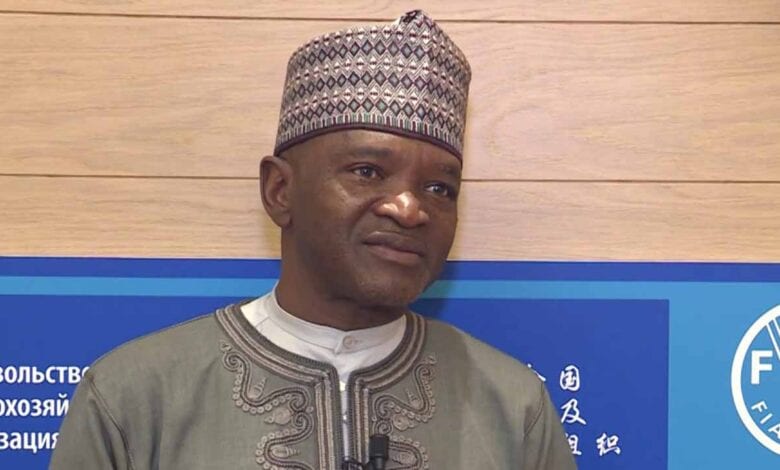
The Federal Ministry of Environment has inaugurated the project steering committee on the phasing out of the chemicals that deplete the earth’s ozone layer.
Stage II of the Hydrochlorofluorocarbons Phase-out Management Plan (HPMP) was aimed at protecting the ozone layer.
Inaugurating the committee on Tuesday in Abuja, Dr. Mohammed Abubakar, Minister of Environment, said the stage II project was aimed at achieving a complete phase-out of ozone-depleting blowing agents and refrigerants in the foam and refrigeration sector.
He noted that the HPMP stage II target was to phase out 51. 35 percent of the ozone-depleting refrigerants consumption by 2023.
“Having successfully completed stage I of our HPMP, stage II of the project was approved by the Executive Committee of the Multilateral Fund for the implementation of Montreal Protocol with the aim to achieve the complete phase-out of ozone-depleting blowing agents and refrigerants.
” The overall commitment of HPMP Stage II is to phase out 51.35 percent of ozone-depleting refrigerants consumption by 2023.
WHO condemns violence against healthcare workers
“The project will be executed by my ministry in collaboration with United Nations Development Programme as lead implementing agency, UNIDO, and the government of Italy, a bilateral agency,” he said.
He_therefore, charged the committee members to work closely with the National Ozone Office of the ministry to achieve the 51.35 percent reduction of ozone-depleting refrigerant in the country by 2023.
Earlier, the Minister of State, Federal Ministry of Environment, Sharon Ikeazor, had called on the inaugurated members to ensure they worked together to achieve the desired results.
She congratulated them and urged them to work for the good of the country.
“I wish to acknowledge with thanks, the efforts of our implementing agencies, UNDP and UNIDO for effective collaboration and support we have enjoyed in the implementation of the HPMP project.
” I also acknowledge the role of our regulatory agencies such as NAFDAC, Nigeria Customs Services, and other relevant agencies in the implementation of the project, ” she said.
The UNDP Resident Representative, Mohamed Yahya, said its focus was to assist Nigeria to achieve the targeted agreement it had with MPS in phasing out ozone-depleting substances in the country.
Represented by Mr. Lealem Dinku, UNDP Deputy Resident Representative, he promised that UNDP would assist Nigeria to see through the end of stage II, just as it did during stage I.
The HPMP is a project under the Montreal Protocol on Substances that deplete the ozone layer designed to phase out ozone-depleting substances to protect the Earth.
This phase-out plan includes both the production and consumption of ozone-depleting substances.