Big InterviewsTop News

Kano Emirate wasn’t created by FG, it existed even before Nigeria’s amalgamation- Emir Sanusi

The 16th Emir of Kano, Alhaji Muhammadu Sanusi II, speaks after his recent reinstatement from the ancient Kano Emirate, his period of interval when he was deposed as the 14th Emir by the Umar Ganduje-led administration, the need to bridge the educational gap in the north, the economy, and other sundry issues, in this interview with select journalists, Mudiaga Affe, was there


What are those practical lessons that you learnt, while away from the throne that you would like to bring to the fore now that you have been reinstated as the 16th Emir, to move the emirate to the next level?

Well as you know life is always a continuous process of learning and relearning. Me, I had always believed as they say that we should not waste a crisis, and my crisis presented an opportunity for me to do something else. In the last four years, I have not been idle, I just completed writing a PhD thesis at the University of London, a week before I returned to Kano. I will return next month to conclude some things because I will graduate in September. Let us just take that as an example, the PhD thesis I wrote was on the codification of Islamic Family Law as an instrument of social reform. This was one of my major projects as you know, as an Emir, trying to codify Islamic law to deal with several issues around child marriage, domestic violence, child spacing, women and children’s rights, and so on. And because I did a PhD on the subject matter, some of the things I learnt made me rethink some of the premises upon which we are passing that law and if I am to reconstitute the committee, I will have different areas of emphasis and I have a different understanding of some of the issues now. So, I will give an example; we always talk about child marriage as a problem and we think that the solution is to have a law that says that every girl must reach the age of 18 before she gets married, but the reality is that the solution is in what you came to Kano to do yesterday. You have to be at the schools, you have to provide them with what they are going to do. We did some research and we found out that within Kano city and its environs, we don’t have child marriage, because there are schools all over. Parents can send their children to school, they can go to secondary school, and they have teachers. If you go to the villages and there are no schools and a girl is 11 or 16 years old, and there are no schools and teachers and nothing to do, the father marries her off. It is not religion, it is not culture, it is just a failure of the state to provide development. So, many of the things that we have taken as either religious misunderstanding or culture are issues of governance and development and the failure of the state. We want to have a minimum age like the Arab states, fine, but do we register a birth? If we don’t start registering everybody, how do we know the age of the child, how do we enforce that in a court of law? These are just some of the examples. Part of my work was that I gathered data from nine Sharia courts from the three Senatorial Districts in Kano and asked, what are the major marital problems faced by women in Kano? We started from the premise of what is a global discourse on the problem because every society has its issues. Do you know what we discovered? More than 40 per cent of all the court cases have to do with men not providing maintenance for their families, it is poverty. Men are not providing food or accommodations, or they have divorced the women and are not taking care of the children. So, many of these socio-cultural problems have their roots in economics and therefore, this whole issue of providing an education, especially for women, and providing them an opportunity to earn a living, is the solution. So, when we write the law, we must bear in mind these things. Now, some of the things I have seen in the speech of the governor, from yesterday are the kind of things that other states had said in the past because my thesis also did a comparative analysis with Morocco. What do they do in Morocco? They built the schools, they invested in school transportation just like we are now talking about school transportation. The girls would be moved from villages to the nearest schools. They also invested in school feeding and they equally provided financial support to the poorest families who are ready to send their sons and daughters to school. So, they don’t need to earn a living to send their kids to school. If a parent is below a certain poverty line, and he allows his daughter to go to school, the government will still have to give him some money, so that he does not have to marry his daughter off. He doesn’t also have to get her to trade, she goes to school, and the parents get some compensation for sending her to school. Now, that allows the girls to get an education and earn a living at the end. For me, the PhD was a major eye-opener and as I said earlier, I am not the kind of person who just sits in one place and says okay now that I am not emir, let me sit until I become something else, no, I do something with my time and I have moved. For me, I knew I was in transition, I was a governor of Central Bank. I was told to move and I moved, people have jobs and they resign, former this or that is nothing. I moved on but now, God decreed that I must come back, it is a new transition. But I have improved myself, when I finish my PhD hopefully, I will approach Bayero University to grant me the opportunity to once in a while go and give academic lectures, and postgraduate seminars on Islamic law, but I would not have the time to give a full course or to mark. But all this research and data that I had gathered, in Kano need to be shared with the younger generation. The second thing is that we need to realise that we are in a very difficult place as a country because of many years of economic mismanagement and you all know that for the past 10 years, I have been talking about it. People are talking about NNPC and all revenues and the dollar but look, how long have I been talking about this? 2011, 2012, 2013, this was exactly what we were trying to avoid. I was listening to the debate about subsidy, and I remembered that I said, people don’t know what an economic crisis is until they get into one and that is what we are in now. Crimes, this is exactly what we knew would happen. Food becomes unaffordable, people’s income gets wiped out, and wages cannot no longer get people anywhere. This is why the management of the economy is crucial. What can I do? I advise the government as much as I can, on how to manage resources, and also see to the best of my ability how to get the private sector to come in to build the economy because the government alone cannot do everything. It is fantastic for the 30 per cent budget on education, we also need the private sector to come in, and we need to build infrastructure, even in the educational sector. Kano has produced two richest Nigerians, maybe two richest Africans, we need to start to seriously talk to those people to come and invest in education and skills in Kano. So, part of my job as emir is to call these citizens of Kano and other well-meaning Nigerians to see how they can come in and address these problems. For me a transition is a transition, I have never been hounded by an office, and not being in Kano has never stopped me from continuing to do service because, at the end of the day, that is what matters not the title.


How are you going to galvanise and collaborate with other traditional rulers across the federation to build the nation despite the mismanagement of our diversity?

I am very grateful to God that the traditional institutions in Nigeria have a very rich representation of people with experience from diverse backgrounds. I know that many people outside just look at us as relics of the past culture. But look at it, Sultan of Sokoto was a military General, the Shehu of Borno was a Permanent Secretary, the Etsu Nupe was a General, the Emir of Zuru was a General, the Emir of Zazzau was an Ambassador, I was the governor of Central Bank of Nigeria, Emir of Fika, DSS, Oba of Lagos, AIG of Police, Oba of Benin, an Ambassador, Obi of Onitsha, a banker. The reality is that whichever way you look, security or academia, we have that wealth. That also goes into the quality of advice that we offer. So for us, we see ourselves as partners to the government on how to give the best advice based on our experience and how to manage things. I will give you an example from my experience in Kano the last time, the previous government wanted to borrow $1.8bn from China to build 75 kilometres of rail and the forex then was N197 to a dollar, and as a trained economist and former governor of Central Bank of Nigeria, I could see the growth in money supply and I was sure that the Naira was not going to remain in that artificial level of N200 for a long time. Part of my job was to advise the government, to look at the amount of money you want to borrow if the naira depreciates to N500 to the dollar, this money will become N1trn. Your internally generated revenue is not up to N20bn, you will need about N100bn per annum just to service the debt. It is not sustainable, if you go down this part, you are going to leave Kano with an unsustainable burden for the next 30, to 40 years, and generation after generation, and the government will not be able to earn enough to service the debt. This was advice I gave quietly, three, four, and five times, and the government refused to listen. Some people told me then this my job was to advise, and I had advised, so if they did not do it I should just keep quiet. For me, I could not sit in all conscience and allow that to happen because the government will go and for the next 40 years our children and grandchildren would suffer for it. Today, if that loan had been taken, this government would not be able to even pay salaries. So, all these 30 per cent educational budget, the money would not be there because the money would be going to service debt and look at the exchange rate today, N1500 for a dollar, that means that the money would have become N3trn to build 75 kilometres of rail. In the end, I took the nuclear option of going public to stop it and that was how I almost lost my throne. But for me, if I had remained on the throne by keeping quiet and for the next 40 years, the government could not provide employment, education, healthcare, infrastructure, and the like, it would have thrown Kano into a crisis, so it was not worth it. I think that part of the challenges that we have is this whole issue of where we draw the line. We have to give advice, sometimes on minor issues, and even when the government gives deaf ears and we are not happy we can ignore it. But there are fundamental existential issues that we have to have the courage as the conscience of the people because we are the ones who will be here, the government is there for just four or eight years, if we live long enough like our predecessors, fifty years, so we have to think about the lives of these children. I think that when Governors understand that we are partners and we advise them based on our experience and they respect it, we will generally get along very well. An assumption is that we are all working for the same people. We have a situation where the focus is different, I am interested in the people somebody is doing something else. So we have these challenges and the rest, we don’t have a constitutional role, but so long as the people love us and respect us. I mean, you come out here every day and you see hundreds of people coming to pay homage. I don’t give them money, I don’t give contracts, I don’t give employment and I cannot jail anybody, so what are they coming for, just love. What do I owe them, I did not create them but God placed me in this position and gave me honour, the least I can do for them is to speak up for them. Or you have an election and the people vote, we tell politicians, that Government office is not a human right, nobody has the human right to be a president or governor or senator or councillor. The right is for the people to vote for who they want, it is the people who have the right. If you elect a governor and somebody takes it and gives it to someone else, it is not the right of the Governor that was taken, it is the right of the people who voted. If they vote for X give them X, if they make a mistake, after four years they will correct it themselves.


Why did you not challenge the law creating the additional Emirates in Kano in court?

I did not because of several reasons. I am one of hundreds of princes in Kano emirate, God chose me and if God says that I should leave, I will take it that God knows better than me why I have to leave, so, I would not even think about it. Let us say I went to court, let us even assume that we have a justice system where a state high court will dispense justice with fairness. But what happened was that I just got a letter from the state government that I was dethroned for insubordination. I had never been queried for insubordination, the detail for insubordination was not given and I was never given a chance to defend myself. It was just clear that both the state and federal government had just decided that it was time for me to go. So, let us even assume that the court said that I should come back, do you think that I was looking forward to working with that Government? Would I have been happy as emir in the last three years working with that government? You are under a governor, the law gives him the power to be on top. He has said that he does not like you, he has made it clear he does not want you. If I came, he would just make my life miserable. One fake story after the other, one social media story after the other, insult and what have we, and in my position, I cannot respond. For me, I had a happier life in Lagos with my friends, publishing my books, doing my PhD, doing my UN work, doing my Tijaniyya work, than sitting here in a constant fight with the government. Secondly, look at Gwandu Emirate, the Emir of Gwandu, Jokolo, was removed under Obasanjo, how many years now, almost 20, the state high court said he was illegally removed and ordered his reinstatement. There was an appeal, the appeal court arrived at the same conclusion. The case is now at the Supreme Court and the apex court is still adjudicating the matter. Do I have to endure for 20 years, fighting through the judicial process to recover the throne? I had been emir for six years, to God be the glory. I had done what I did, at least the only reason I would have gone to court is if they had removed me on allegations that harmed my reputation because the only currency I have is my integrity. If they had accused me of say, fraud, I would have gone to court to clear my name. But they said insubordination, then the question was asked, what were the reasons for insubordination? They said that I am invited to certain meetings and I don’t honour the invitations. So, I did not have to defend myself to any well-meaning Nigerian who read that story because if you are going to remove an emir and the only reason you have is that you invite him to some meetings and he did honour it, nobody will take you seriously. I had always felt that if it was God’s will that I would come back to the throne, sure I would and finally it happened. I only went to court to challenge their attempt to keep me in exile and under house arrest, which violated my fundamental human rights. But I didn’t go to court to challenge the removal because I didn’t have to, because it was self-evident from the face of it that this was just a political act, and that was why I didn’t challenge it.


What is your opinion on the current move to recapitalize Nigerian banks?

You know I had sat on the seat of Central Bank of Nigeria before now as the governor, when you are on that seat, you have a lot of information that other people don’t have. So, I will be a little reluctant to make a quick judgement on this subject matter because I don’t have the current data, which of course is at their disposal. The only thing I will advise is for us to always exercise caution. When you are recapitalising banks and you are raising that huge amount of capital, you need to be careful not to make the timeline too short because we had the same experience under Governor Soludo, where in an attempt to meet 25 billion, we had a lot of other capital which later led to a banking sector crisis. Many of these banks are sitting on a lot of capital, especially those that have foreign exchange business, based on forex appreciation which they could use because, at the end of the day, the devaluation of currency has given them a lot of unrealized capital. So, there is a lot of capital sitting in the banks that they could use, imagine turning those dollars into naira and taking the profits that go into their capital. I think that there is a conversation going on and I do talk to the governor but have not discussed this particular issue with him and with this government. I do have a direct conversation with the governor, deputy, and finance minister, with the president and vice President as well. I would rather not make public comments on this issue because of my views and the advice I give them privately. The only reason that I was making a public comment during the last government was when I was invited to give an economic lecture in which case I had to express my view or I felt that the advice was given and it was not listened to by authorities or that I felt that the path being taken was too dangerous for some of us and history will not forgive us. If I start talking today about the last government’s economy, they would as, where I was when they were doing it, some of us have to speak out so that history will record it. We at least spoke, when we should speak, it is very easy when someone leaves office to come and abuse the government. So, many of them who are criticizing Buhari today were defending him when he was in power, so I would rather not make public comment on this, they are all my friends.

READ ALSO: NDLEA bursts warehouse, seizes N4.7b drugs

Kano state declared a state of emergency in education and dedicated 1/3 of its annual appropriation to education to salvage out-of-school children, whereas other states in the region are not doing the same what is the implementation of that for the region and Nigeria at large?

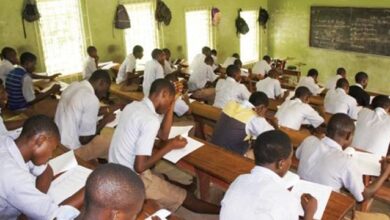
You know that we need to have more and more governors in Northern Nigeria have education as the number one priority. If you look at the history of the north, check PRP, NEPU, Abubakar Rimi, and Nasir el-Rufai. The first sign of a progressive northern governor is a focus on education. I use that as a rule of thumb, once you have any governor in the north today and his primary focus is not education, I write them off, because that is the heart of the problem, even in dealing with all these family issues. If a girl in the village gets married at 12 or 13 and gives birth to eight children, it increases the dependency ratio. It increases the poverty level, she doesn’t have an education, and she doesn’t pay attention to nutrition, so you have malnutrition numbers in the north. Today, 50 per cent of under five are malnourished, almost, all goes down to lack of education. The women themselves are anaemic, they don’t go for antenatal. You continue repeating inter-generational poverty. You continue producing children that will not have nutrition, that will not have education, that will not have earning capacity, and therefore poverty continues to increase. The only way to put a stop to that is to educate, keep them in school educate them, with education, they will be able to earn a living, and with the education, they will know how to take care of themselves, space, and children. They will be able to educate their children, and then we will begin to reverse that process and as they begin to have fewer, a total fertility rate comes down, you then have a demographic dividend because the only way you are going to have that dividend is when those who are earning exceed those who are dependent on them. And we must have that turnaround from when we are having seven and eight children to when are going to have two or three children and those seven and eight that you had, each of them have two or three children and they are earning and can take care of themselves and that is how it can decrease. But so long as you all know, for every one of us who is earning, there are 20, 30 people who are dependent on us from wives to children to grandchildren, some have even graduated and they don’t have work. You are not going to have extreme poverty, so for me, I think that what the government has done is good. I remember that in Kaduna, under Nasir el-Rufai, there was a similar thing and this administration in Kaduna State I think has continued with that, so gradually, will get more and more states to begin to do the same thing and hopefully, if it continues for eight or 16 or 24 years, we would begin to get results. The real problem is consistency, I think in Kano, it has happened but then you have a change in government and it is abandoned and then you have to restart. So, the real challenge is how to continue with this.

What is the aberration in this democracy that you want the political elite to review for us to move forward?

I think we have a democracy, but it is a process in which we keep making progress and reversals, again I would like to go back and forward, and my views are known. I think several fundamental structures need to be addressed. I will give you an example; the cost of governance, the constitution we have makes it impossible for us not to have a high cost of governance. You are a small county, you have a president and a vice president, and the constitution said that at least, you must have 37 Ministers. You have 109 senators, and 360 members of the House of Representatives, we have 36 states, each one with a governor and a deputy governor, commissioners, advisers, and special assistants. Then we have 774 local government areas, each one with a chairman, councillors, secretary, and vice chairman. Just take the cost of that, their salaries, their allowances, their staff and you will know that the bulk of the revenue that comes to this country will be consumed by this. Let us ask ourselves, controversially, I will say, why do you need to hold elections in every local government? You are a federation of states, if you started from there, why don’t you allow the state governors to appoint the administrators of local government, and competent civil servants, and give them a budget to take development there? I know politicians will not like it but you will cut off many expenses. But look at the quality, if the state governors are to take direct from the civil service to go and run a local government, that will be a much higher quality than the local government chairmen that we elect and we will get better results because that is the way to go. How many states have you seen elections where the ruling party did not get 100 per cent of the seats? I mean, it is a farce. Even if you talk of the economy, you give them money, the governors will take the money and spend it the way they want. If he orders them to bring back the money, they will bring back the money. To be honest, we need to look, at why we need to have a bicameral legislature, why do we need two houses in Abuja? Why not one? Why must we have a minister from every state? Even if we don’t need them, why? Why do we keep pandering to these things? I think, there are several things we can do to address those structures because at the end of the day if we allow the state governor to run the thing we won’t succeed. With devolution we have 36 states, if only half of the governors are good, we have half of Nigeria that has good governance. There is also too much power at the centre and too much of resources at the centre. The centre does not do primary education or primary healthcare, that is where the vast majority of Nigerians are, those resources come to the State they should then have the responsibility to do those things instead of everybody going to Abuja, what is happening in Abuja? So, there are several issues that we need to look at, and then simple constitution and federalism. Even respect for the separation of powers. Take for example, what is happening in Kano today, chieftaincy matter is 100 per cent a state matter. What is the involvement of the federal government in a chieftaincy matter? We have the rules and we must be able as Nigerians, to abide by the rules that we have. Politicians say that they want to have an election, let them be honest enough to say let us allow the system to work. Today, if you have an election and Mr A wins the election, and INEC declares Mr B as the winner, who should we be suing? Mr B and his party or INEC? We should start suing INEC because INEC is the one that declares results, it is not Mr B’s fault that INEC declared him or rigged on his behalf even if he went and paid them. We should hold INEC responsible for their results. What do we have, when we go and sue Mr B, INEC becomes his ally, because they now have to help him defend his victory. No, we should start with the electoral body that did not apply its own rules and let INEC defend itself in all these elections. So, there are certain simple things that we can do to improve democracy.


How would you like to be remembered?

How would I like to be remembered? All I hope for and pray for is that when I leave this world when people remember me, they will not be cursing me, but they will pray for me. How that happens, I don’t know. But my prayer is that the people of Nigeria and Kano will remember me and say, he was a good man, God have mercy on him. When you are in a leadership position, you will end up in one or two ways – everybody is cursing you, blaming you, I don’t want that. How I want to be remembered is that I would like to leave this world and have the people who I leave behind remember me and pray for me for good.

Related Articles

Leave a Reply

Back to top button