By Clement Adeyi, Seyi Odewale, Linus Aleke, and David Lawani
Experts have condemned the payment of school fees in Nigeria in dollars instead of the officially recognised naira. They have attributed the dollarisation of payments for services in Nigeria as part of the reasons why the naira depreciated to its lowest level of nearly N2000 recently.
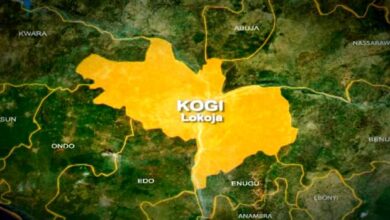
Their reactions stemmed from the alleged payment of $720,000 by the immediate past governor of Kogi State, Yahaya Bello, to an American school in Abuja for his children’s tuition. But Bello has since denied paying $720,000 from the state treasury for his children’s tuition fees as claimed by the Economic and Financial Crimes Commission.
The EFCC had after the claims anti-graft agency placed some international schools charging tuition in dollars and other foreign currencies under surveillance as part of measures to reduce the pressure on the naira.
The Commission cautioned establishments such as schools, supermarkets, hotels, and others, against the practice.
*Experts decry escalating trend, urge Finance Minister, EFCC, security agencies to act fast
A Professor of Accounting at the Federal University, Lokoja, Emmanuel Onoja, said some Nigerians who pay their children’s school fees in dollars might have thought that doing so was a personal choice, their right, or as a way of demonstrating ostentatious living, not knowing that their decision has continued to pose challenges to the Nigerian economy.
He said, “Many people might submit that paying school fees in hard currency is a personal choice or a show of richness, however, the economic implication is what we have witnessed in our dear economy from January 2024 to date.
“Payment of school fees in foreign currency is one leg or factor, and payment for goods and services is the second leg. These are the major catalysts for inflation and depreciation in the value of our currency.”
He condemned the propensity of privileged Nigerians to pay their children’s school fees in dollars at international schools in the country, calling on the country’s financial policymakers as well as economy managers to initiate policies that would checkmate the trend and ensure that all transactions are done in the naira instead of the dollar.
Through this, Onoja said, the naira would regain more recognition and value and the benefit would trickle down to a drop in inflation.
“The way out, one might say, is for the managers of our economy to ensure that all payments or transactions are done using our currency, instead of the dollar,” he said.
A Professor of Economics at the University of Abuja, Peter Siyan said, “Nigeria’s policymakers, particularly the legislators, must put policies in place to stop any form of trade with the dollar because it is not known to the Nigerian law.
“Dollarisation of the Nigerian economy is a huge offence because only the naira is recognised as the official trading currency in the Nigerian constitution.
“The incessant penchant to spend dollars within the Nigerian economy is seriously putting pressure on the Naira. That is why inflation has become a trend, leading to the acute hardship the country is facing currently.”
While stressing that Nigerians should not be spending dollars in Nigeria, being a country that is facing economic challenges, noted, “The Central Bank of Nigeria (CBN), by Section 20(5) of the CBN Act 2007, stipulates very clearly that the Naira remains the only legal tender acceptable by the law of the federation.
“Trading in any other currency (ies) as the case may be, contravenes the constitution of Nigeria. Thus, the dollarization of the financial system of the economy must be resisted because it puts pressure on the naira.
“The managers of the economy should resist the dollar’s dominance on the naira through the revitalisation of national production, encouraging home or domestic production and building up our foreign reserve.
“The managers should go back to history to learn from what was done by their counterparts in the 1970s and early 1980s before the introduction of the World Bank and IMF structural programmes.
“About 43 years ago, the exchange rate was: $1 = 0.80k. In those days, the naira had more value than the dollar because Nigeria was far more productive in 1980 than it is today. The key reasons for this economic feat were that we produced and consumed our goods and exported the surplus.
“For instance, we were a net exporter of refined petroleum products. But today, we import all our refined petroleum products. The countries we export from determine the prices of all imported refined products.
“Similarly, Nigerians used to ride in our locally assembled cars, buses, and trucks. Peugeot cars were assembled in Kaduna, Volkswagen cars in Lagos, and Leyland-produced trucks/buses in Ibadan. ANAMCO in Enugu also produced buses and trucks, and Steyr in Bauchi produced our agricultural tractors.
“Most of them were not just assembled in Nigeria but were also producing many of the components. Some of the components produced in Nigeria include Vono products in Lagos producing vehicle seats, and Exide in Ibadan producing batteries for entire West African countries. IsoGlass and TSG in Ibadan produced the windshields. Ferrodo in Ibadan produced brake pads.
“Our electricity was flowing through cables produced by the Nigerian Wires and Cables, Ibadan.NOCACO was in Kaduna, while Cablemetal was in Lagos and Port Harcourt. We were mainly flying our Airways, (Nigeria Airways), to most places in the world. The Nigeria Airways was about the biggest in Africa at the time.
“Today, we import everything. Now you can see the source of the terrible exchange rate we are experiencing today and everyone reading this has a critical role to play in reversing this very ugly trend. Our economic managers should start to play a critical role in fixing the Nigerian economy,” Siyan said.
*’It’s illegal to spend dollars locally’
A research Professor of International Relations and Strategic Studies, at the Nigerian Institute of International Affairs, Lagos, Femi Otubanjo, said it was illegal to spend dollars locally in Nigeria.
According to him, anybody who violated the law on the use of currency ought to be arrested, adding that the legal instrument was often violated because of the weakness of our institutions.
He said, “These violations are done in the open. If an American school is charging dollars as school fees, all that the Nigerian authority must do is ask them to return the hard currency they are collecting. The school has committed a huge criminal offence. It ought to be closed.
“But unfortunately, it is those who are empowered by the state to enforce the law, one way or the other that have their children in the school and pay the fees in dollars. Children of powerful people in the judiciary, the legislature, and the executive are the ones patronizing the school.”
He continued, “A former governor in Nigeria took money while still in office against extant laws of the land that he swore to uphold to pay his children’s school fees. He even did so in advance. Anybody spending dollars openly should be arrested. That is a part of the law that EFCC was enforcing when it arrested and jailed Bobrisky.
“They are currently trying Cubana Chief Priest. It is the same law that covers dollars. You cannot spend a dollar in Nigeria. You cannot trample on the naira. You cannot mutilate the naira. The dollar is not a legal tender in Nigeria. Anybody spending it is committing an offence. So, why are we allowing it?
“Why do we have Bureau De Change and banks changing money? It is because we are expected to change whatever dollars we have into naira to enable us to spend it here,” he added.
Otubanjo further explained that those who spray naira do so because they have stolen it, or they are drug barons.
“They have made the money illegally and they want to show that they have money. That is a psychological problem that we have in Nigeria. Is it not even better to exchange your dollars for naira before spending it?
“Our greatest problem is the enforcement of the law, but we must not allow it to continue. EFCC alone cannot fight this fight, we have a finance minister who is not talking. Even security agencies are quiet.
“Dollar is not a legal tender in Nigeria. Just last Tuesday, there was a World Book Day, and some Indians came to exhibit books at the Nigerian Institute of International Affairs and denominated them in dollars. I was with the Director-General, who pointed out that it was criminal and could not be done in the Institute and they removed it immediately.
“So, the laws are there. It does not need to be posted on the wall. Those charged with the responsibility of enforcement should do their job. The American school that charges dollars ought to be closed down,” Otubanjo said.