By Babs Oyetoro
A political debate at the 66th Annual General Conference of the Nigerian Bar Association (NBA) in Port Harcourt on Monday descended into a sharp exchange among presidential contenders and their representatives, as Omoyele Sowore challenged the records of former office holders while Rotimi Amaechi mounted a spirited defence of his years in government.
The session, which brought together politicians seeking to shape Nigeria’s political direction ahead of the 2027 elections, became particularly heated when Sowore questioned the performance of former governors and ministers, including Amaechi and Peter Obi, and criticised their positions on fuel subsidy and public-sector policies.
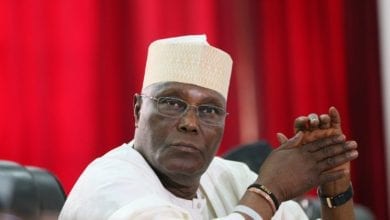
Amaechi, the African Democratic Congress (ADC) vice-presidential candidate and former Rivers State governor, was representing presidential candidate Atiku Abubakar at the event. Sowore is the presidential candidate of the African Action Congress (AAC), while Obi is contesting on the platform of the NDC.
Sowore argued that Nigerians should scrutinise the records of politicians who have previously held executive power rather than relying on campaign promises ahead of another election.
He said his opposition to the fuel subsidy removal had remained consistent, accusing politicians who now defend the policy of having changed their positions after years of resistance.
“If there’s anyone who has been consistent about not removing our subsidies, it has been me. And it took Amaechi and his principal almost 10 years to catch up with me.”
Sowore said the central issue was not merely whether subsidy should exist, but who ultimately benefited from government intervention and who bore the cost when such support was withdrawn.
“The question about subsidies is: Who are you subsidising? You are subsidising the elite. You are subsidising the government.”
He argued that the increase in revenues available to state governments following subsidy removal had created beneficiaries within government while ordinary citizens continued to grapple with the consequences.
“The only people who are doing well since they removed subsidies are the governments of states.”
Sowore also questioned the repeated promises made by successive administrations whenever subsidy removal was announced, pointing to decades of economic hardship despite assurances that the policy would produce better outcomes.
“I was a student in 1988. And in 1989, they removed subsidies. In 1990, they removed subsidies. They said Nigeria would be better. We are in 2026. They are still removing subsidies.”
He then turned the argument towards the records of politicians seeking power in 2027, saying those who had previously governed should be prepared to answer questions about their performance.
“I love one thing that Amaechi said. He said, apart from Sowore and Adebayo, the rest of us have been in government and we have failed.”
He added, “No people are coming back. You guys should be apologising to the Nigerian people.”
Sowore subsequently brought transportation into the subsidy debate, arguing that an efficient railway system could have reduced the pressure of fuel costs on Nigerians.
He specifically challenged Amaechi over railway projects undertaken during Amaechi’s tenure as Minister of Transportation under former President Muhammadu Buhari.
“We have a former governor of Rivers State, Amaechi, who built the railway line that went nowhere.”
Sowore argued that a functional railway network would have provided an alternative mode of transportation and reduced the burden of rising petrol prices.
“If that rail line were working, subsidy would have been working for the people of Rivers State.”
He insisted that his criticism was based on the public records of politicians who had previously held office.
“I am not attacking you. But your records are here in Rivers State. And we cannot ignore that most of you have governed before.”
The exchange became more personal when Sowore’s criticisms drew a response from Amaechi, who defended the infrastructure delivered during his tenure as Rivers governor and his record in the federal cabinet.
Amaechi pointed to railway operations during his time as transportation minister and questioned why some of the infrastructure was no longer functioning as he claimed it had previously.
“Lagos-Ibadan railway, is it working or not? At my time, it was working. I don’t know what is happening under Tinubu. There is the Abuja-Kaduna railway, working or not?”
He then challenged Sowore to examine his record in Rivers State before passing judgment on his administration.
“Where are Rivers lawyers, please, take Sowore around. Sowore, I said I built that road, I built this road, I built this primary school, I built that primary school. What is your experience?”
The former governor’s response culminated in the sharpest moment of the session when he told Sowore to stop interrupting politicians addressing the gathering.
“When politicians are talking, close your mouth.”
Amaechi also criticised Obi’s record as Anambra governor, particularly over industrial disputes involving workers in the health and education sectors.
“Peter Obi, for example, did not subsidise education in his state. Lecturers and doctors went on strike for 13 months. You can like him as a person, but he did not perform as a governor.”
Obi, who was present at the political session, maintained that his record in Anambra remained available for public scrutiny and assessment.
“My records are there to verify.”
The NBA conference, themed “Beyond Limits,” has provided a prominent platform for political figures to engage lawyers and other stakeholders on the country’s political future.
The conference continues in Port Harcourt through August 28.