Tobi Adebayo
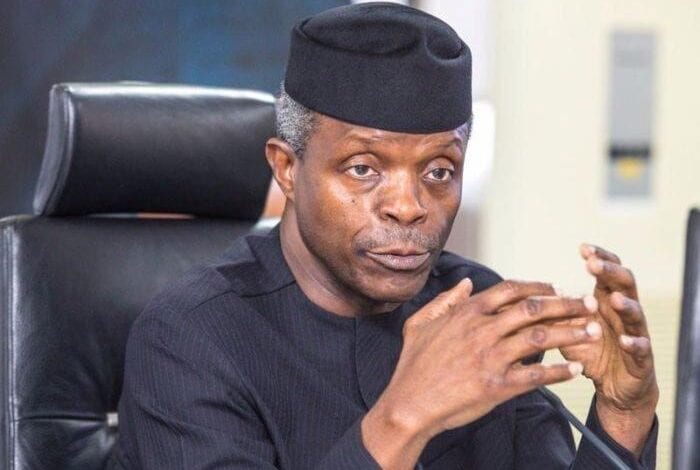
Nigerians have reacted to Vice President Yemi Osinbajo’s declaration to run in the 2023 presidential race.
Osinbajo had announced his intention in a 6-minute long video posted on his social media pages on Monday.
“I’m announcing that I’ll be running for Presidency under the All Progressives Congress, APC.
“If I’m given the opportunity, I’ll provide an opportunity for businesses to fly.
“I’ll make sure the government agencies serve the businesses and also enhance our social investment and complete the task of lifting 100m Nigerians out of poverty.
“I seek the support of every Nigerian to work together by the grace of God to achieve a greater Nigeria.
“I seek the support of every Nigerian to work together by the grace of God to achieve a greater Nigeria,” his speech read in part.
Reacting to the news, a Twitter user, @royaltyuso wrote “Osinbajo said, “I have served as V.P under a true Nigerian patriot”. How false! If an aspirant starts his speech with this level of manipulative truth, I am worried.”
Another Twitter user, @chika_cutesy tweeted: “Pakistan just impeached their prime minsiter, Mexico did a recall election for their president. California 4 their governor my mayor here will not seek re-election bcos the power grid collapsed twice. But this incompetent buffon want to still be president.”
JUST IN: Osinbajo declares for 2023 Presidency (VIDEO)
@adewumicollins tweeted “I feel destiny calling and as I see, a future of endless possibility stretching before us. I am close to tears learning the VP has decided to contest the 2023 presidency. This is a time to be alive.”
@adedeji_o tweeted: “The Only Problem I have with this #OsinbajoDeclares is that; Let this not be a ploy by the APC to assemble all our favourite aspirants and then Unanimously rig primaries for someone else as is thier Usual Custom. I Stan Osinbajo but I don’t trust Nigerian Politics.”
@adejumokabir2 tweeted “Vice President #OsinbajoDeclares in a 7-mins video clip filled with nothing but lies laced with phonetics. He spoke glowingly about insecurity & his visits to victims of crisis without talking about efforts made to end this. He can’t do better than his mentor @MBuhari.”
@belshagy tweeted: “The few days VP Osinbajo was fully in charge, he took drastic actions, which demonstrated his courage and determination to put things right without fear or favour. Till today, those actions have set him against a group. Now that is what we need!”