Woe to rebel unionists in ASUU – COEASU leader, Olugbeko


Dr. Smart Olugbeko is the President of Colleges of Education Academic Staff Union (COEASU) and a lecturer at the Adeyemi College of Education, Ondo State. In this interview with Ben Ogbemudia, he laments the shortage of teachers in the Nigerian basic education sector and the problem of out-of-school children due to insecurity and condemns the activities of the authorities in stifling unionism in the university education sector. Excerpts
Who, in essence, is the president of COEASU?
I am Dr Smart Olugbeko, the president COEASU, from Adeyemi College of Education, Ondo State.
The Federal Government recently presented a sum of N470 billion as a budget proposal for salary enhancement and others for tertiary institutions in 2023. As the president of COEASU, do you feel that is adequate?
The presentation of the budget has not at any point in time elicited joy because we understand what a budget is. Budget is a proposal, and a yearly ritual the government does. Most of the time, whatever a budget is presented, it has not actually been implemented, until the level at which it is brought to the doorsteps of the people. This year’s budget is a major proposal of N20.5 trillion, and they allocated 10 per cent of the proposals to education, which is about 2.5 trillion. Out of this, N470 billion is meant for salary enhancement as well as infrastructural development in tertiary institutions, but by the 2014 assessment records carried out by the Federal Government, which was revised in 2017, N465bn is needed for revitalisation in colleges of education, and this was an assessment carried out by the government, if the government is talking about revitalisation in tertiary colleges and polytechnics which also includes salary enhancement.
Will you say that Nigeria is not there yet in terms of primary education?
Yes, because primary education is the background, and the consequence of what we see today about the high level of insecurity in Nigeria is that people that do not educate their children. You definitely need to contend with criminality, and when we talk about education, no doubt, it is the most vital tool that can be used to re-engineer society, socialise the people to be responsible. When you have people that have been educated, you expect them to display a good attitude that will contribute greatly to the society. So, Nigeria is contending with what we have today, because we have relegated education to the background.
Your union, and by your profession, you train teachers that will handle the basic education level; that is primary and secondary. Now you talk about security; how many Nigerians are dropouts? And which part or parts of this country are at a total disadvantage?
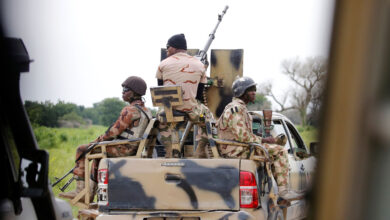
I can tell you without mincing words, that every part of this country is affected by insecurity and insurgency. The latest release by UNESCO, which the government has disputed, is about the out-of-school children, with the figure of 20 million. And this is as a result of the insecurity and insurgency that has taken over almost the entire country. The fear of going to school has enveloped our people in most areas, and today, when you talk about Borno State with eight local government council areas, you notice that education hardly takes place there, because of the level of insecurity. In Niger and Zamfara states, it’s the same thing. Ditto the areas where the government has been able to take back the schools reopened, but students have refused to go because of the fear of insecurity. You don’t expect anybody in Chibok to be excited to go to school.
Can you tell us how many of your members are affected by this problem?
For instance, some of our lecturers were taken by insurgents in some of the schools, but they have been released, and we do not actually have our members presently in captivity of bandits. For instance, our college of education at Maiduguri in Bama is no longer open because of the insecurity, and knowing fully well that Bama is one of the hotspots for insecurity and insurgency, in some of these places we do not have active schooling at the moment. One of our lecturers in Yola was kidnapped and killed two weeks ago, and we have two of these that have happened. Even in Nasarawa State and Katsina-Ala, we have our school where members could no longer go to school regularly. We have it affecting our people almost everywhere, and to us, it is a serious problem that will continue to affect education, if the right thing is not done.
The budget has been presented and you talked about implementation, please can you expatiate?
To implement it is about budget performance. Budget is a proposal. The funding is based on the expectation of the government, and this is a government that spends more than 30 per cent on debt services. The funding of the budget has always been coming from the non-oil sector for more than two years. So, when we are talking about a budget that is heavily dependent on borrowing, then you cannot expect that budget to perform excellently, because the sources of the revenue are not certain.
With the hardship, insecurity, economic instability and all, will you say your members are leaving this country for greener pastures?
In the first instance, choosing to become a teacher means there’s a high level of passion. Our members are passionate about this country and the job, and that is why the brain drain that is affecting other sectors has not really hit our own sector. We are dedicated and committed to the job, and in the past years, we have not recorded many of our members leaving for a greener pasture. Those going abroad for further studies will still come back because they have a passion for this country. I studied abroad, but I came back to Nigeria to continue, even when I had the opportunity to stay back abroad.
Are you not worried that from local government to state, parents are complaining about shortage of teachers, yet you simultaneously produce teachers on a yearly basis. What happened?
On the issue of shortage of teachers, there will continue to be shortage because of the insurgency that has not allowed schools to function. We talk about the inability of the government to fund schools, the substandard schools that actually bring qualified teachers to the classroom. We talk about the state government not being able to recruit, because of their limited resources. We have states that are owing up to five, six months’ salaries, and you don’t even expect such a state to say it wants to recruit. How many state governments have done recruitment for teachers in the last five years? We have classes with students, but there are no teachers. Teachers are there, but waiting for the government to recruit them. And because of a shortage of funds and political will, such teachers have not been recruited.
What now happens to the children?
The first thing I said is when you have a government that has relegated education to the background; not caring about the children of the masses…what happens to government primary and secondary schools today? They have been neglected. We have private primary and secondary schools, and that is why we will continue to make our demands to the government to revitalise tertiary institutions, so it doesn’t become like the primary and secondary schools today. We have a situation where the government is not ready to fund education; that is the truth.
We hear of ASUU strike today, tomorrow, all the time, but we hardly hear COEASU go on strike. Are you comfortable? Are your members getting all the incentives and are being carried along?
That is not correct. One of the problems is that people are used to ASUU, almost everybody as a graduate passes through the university system. Even some of us in COEASU passed through the university system, therefore, ASUU is a household name because it is a system that has produced everyone. We talk about ASUU as staff of universities, polytechnics; COEASU for colleges of education. Many people didn’t pass through college of education and the polytechnic, but the university has an overwhelming image that is known to everybody. When you talk about education ranking, the university is always being used to do the ranking, so the emphasis on universities is always there. When we talk about strike action, it happens in all the institutions of the tertiary sector. COEASU went on strike this year for eight weeks. ASUU the polytechnic sector was on strike for two to three, but ASUU has been on strike for eight months. In 2014, COEASU was on strike for seven months, ASUU and the polytechnic sector were on strike for almost one year, so, the issue of strike has always been an issue in the tertiary institutions. We are confronted with the same issues and challenges and, therefore, we have strike as an option given to us by law to call the attention of the government to attend to the issues. In reality, a strike action should not go on for more than a week before solutions will be proffered. We are dealing with a government that is deaf and dumb, so you do not expect a solution till you beat the drum almost to the point of tearing their eardrums.
Vol. 4 Edition 55
When the government wants to deal with issues with bodies like this, they always set up another body. Are you not scared that if the strike is prolonged, they will do the same?
It is not a normal situation, but a sign of weakness and wickedness on the part of the government to be using such measures to attend to needs. The law is not in support of what the government did. The law states that when you have a particular union that is responsible for workers in a particular sector, the law does not allow you to register another union for that particular sector. So, what the government has done is illegal, and the government thinks they can bring down the yearning of the people by creating another division. Woe unto ye that allows himself to be used for such a division. The last strike we had was 100 per cent successful. There was no college of education that was not part of the strike action, and nobody brought up any issue that could create such division. College of education lecturers are united, they believe in the leadership of the union and they are ready to pursue the demands and agitation of the union to a conclusion that will bring great relief to our members.
What will be your call to the Federal Government on the success of the educational sector?
My call on the Federal Government is for them to know that they can budget huge amounts of money to take care of insurgency, but it won’t solve the problem. What can solve this problem is good education. How many of the kidnappers are graduates? They are mostly illiterates that are not educated, and that is why education is the key to development and teachers’ education will reproduce other levels of education. Our charge to the government is to take education as its major priority and fund education as it has been demanded by the various staff unions so that education in Nigeria can continue to attract people from other countries, just as we use to have in the past, and for education to become a source of revenue to this country, because people go to other countries, and it generates revenue for them. We are losing here, and they are gaining there. The government will gain more if it invests in education as it will help solve most problems going on in the country.