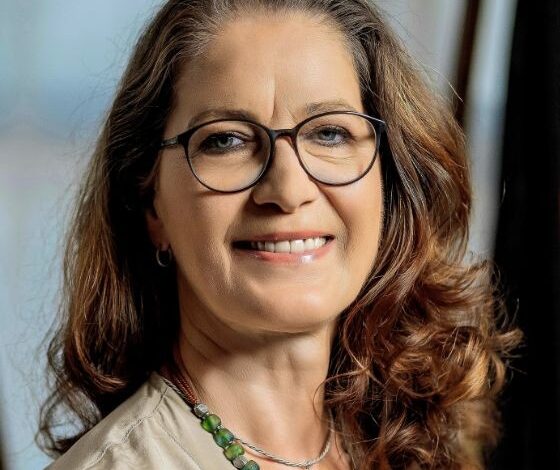
Gunther, who made this known in an interview yesterday in Abuja, said the trade relations between both countries had grown over the years.
Specifically, she said the trade relations grew from two billion euros in 2022 to the current figure of three billion euros with a balance of trade in favour of Nigeria because of crude oil export.
She said there was the potential for improvement in trade relations, which both countries were currently working on, especially in agriculture.
“I think agriculture is a very good area for cooperation, not only because we can help in the area of food security, which is important to Nigeria, but also in the improvement of export of processed products.
“Instead of selling more raw products, we will have more value creation within the country to create more jobs.
“As part of our development cooperation, we have a programme in agriculture that also focuses on exactly that value chain, which supports small and medium-size enterprises in the sector,” she said.
The envoy said that many German delegations had attended Trade fairs in Lagos, like the agri-food festival with German companies participating and having one of the biggest pavilions.
She further explained that the German Chamber of Trade and Commerce in Lagos represented German companies in the country.
According to her, Germany has about 90 companies with representative offices in Nigeria adding that while some are engaged in trading, some others have production facilities.
“Nivea is one of the German companies that has a really huge modern production facility in Nigeria. Nivea products such as lotions and creams are German products that are produced in Lagos.
“They have production facilities in Germany and these products produced in Nigeria are almost 100 percent identical because they are the same quality and standard as the one in Germany.
“For production facility, you need investment, and of course, foreign direct investment, which is also very much needed in order to boost the economy which depends on the investment conditions.
“We have seen improvements under the new administration. Very important economic reform steps have been taken.
”As you know, we have the forex issue, and also, I must say, the environment must be conducive,” she reiterated.
According to her, the German Academic Exchange Service gives out not less than 1000 scholarships yearly, adding that the German government was working on improving visa approvals for intending Nigerian students to Germany.
“At the moment, we have approximately 4000 Nigerian students in Germany, coming and going in and out of the country and also engaging in other things.
” I know we are not yet in a position to issue the visas for the students on time, but we are working on that. We are not interested in preventing people from coming to Germany.
” We want them to come. So, there is also something to do on our side to improve our capacities on visa issuance,” she said.
She explained that many courses in Germany were taught in English, however, she added that to survive in the country, it was imperative to have a certain knowledge of the German language.
She said university studies in Germany were either free or not very expensive compared with other countries with English as their official language.
According to the envoy, there is a keen interest for students to come and study in Germany, mainly because German universities are top-class and internationally renowned.
“That is why the German Academic Exchange Service gives out not less than 1000 scholarships yearly,” she said.
The envoy said there were many programmes to support German culture and language training in Nigeria, with the most famous being the Deutsche Institute.
She explained that the institute was basically about language courses, and the corresponding language tests.
“It is a cultural exchange, it is also about scientific cooperation, exhibitions, and interaction of artists, music, and others.
“Basically, what they do is to interact with Nigerian artists and connect both countries’ artists in the various fields.
“For language training, probably the best-known German language is also taught at a number of universities and the German Academic Exchange service,” she said.