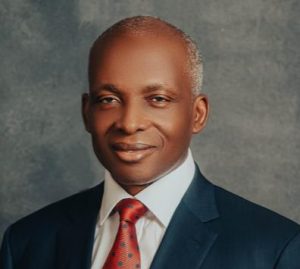
A former senator who represented Cross River South in the National Assembly (2015 to 2023), Senator Gershom Bassey, speaks candidly on the internal crisis that crippled the Peoples Democratic Party (PDP) in Cross River State, the missteps surrounding the 2023 governorship election, rumours of his defection, and the future of opposition politics in Nigeria. In this interview with Cross Udo, he traces the PDP’s downfall to arrogance, candidate imposition, and the abandonment of zoning, while also weighing in on governance, economic reforms, and emerging political coalitions
Looking back, how do you reflect on losing the governorship race after the 2023 elections?
I have spoken extensively about the 2023 elections. For me, it was a movement, and the experience was both bitter and sweet. The bitterness came from the fact that the Peoples Democratic Party (PDP), a party I deeply love, committed a fatal error that almost led to its total collapse in Cross River State. That mistake was rooted in decisions made ahead of the 2023 elections, and the outcome spoke for itself. The party lost the governorship, deputy governorship, 22 House of Assembly seats, all Senate seats, and several House of Representatives seats. Virtually everything was lost. The only position PDP narrowly retained at the time was a Senate seat in the North, and even that has since been lost. This was deeply painful because the PDP was once the dominant political force in Cross River State. The party produced three governors, controlled between 90 and 100 per cent of the House of Assembly for years, and held all National Assembly seats for a long time. Before 2023, the last non-PDP candidate to win a National Assembly seat was Florence Ita Giwa. After that, PDP dominated completely—until it failed to listen to the people.
Specifically, what do you believe went wrong?
The PDP’s strength had always been its ability to listen to the people. Whether at the local government, councillorship, or state level, the party respected established arrangements and popular sentiment. In 2023, however, the party became arrogant and believed it could impose candidates. The people of Cross River State were clear that power should rotate and that it was the South’s turn. This sentiment cut across the state, but the PDP ignored it and insisted that the ticket could come from anywhere. Times had changed, but the party refused to adapt. By abandoning the very principle that sustained it for years, the PDP set itself up for failure—and it lost woefully.
You described the experience as bittersweet. What was the ‘sweet’ aspect?
The sweet part was seeing Cross Riverians remain faithful to the state’s founding principles. Since the Calabar–Ogoja Accord, there has been an understanding that power should rotate among the senatorial districts. Before 2023, some people wondered whether zoning was merely political rhetoric. The election answered that question clearly. The people spoke loudly through their votes. The PDP picked its candidate from the wrong zone and lost overwhelmingly, to the point that its governorship candidate lost his own local government. The APC, on the other hand, respected zoning and swept the field. What made me proud was the unity displayed across the state. People from the North, Central, and South rallied behind a southern candidate because it was the South’s turn. That consensus was remarkable.
There are fears that Nigeria may be drifting toward a one-party system. Are you worried?
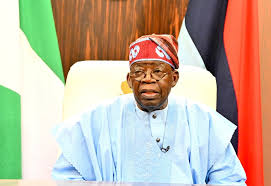
I am concerned, but not overly worried. History shows that political dominance is cyclical. I strongly believe in multi-party democracy as enshrined in our Constitution. When constitutional principles are ignored, there is little one can do beyond trusting that the system will eventually correct itself. Politics should not be only about grabbing power; it should also be about providing platforms for good governance, even through coalitions or principled opposition. In the UK, for example, parties like the Green Party or Liberal Democrats have remained relevant without consistently holding power. If you look at President Bola Tinubu’s political journey, you see a man of principle. In 2003, when almost all South-West states fell to the PDP, Lagos remained under Tinubu. He did not defect, despite having opportunities to do so. That principled stance is something I deeply respect, and it shapes my views on defection.
What concrete steps are being taken to rebuild the PDP?
After the elections, the PDP entered a phase of self-destruction, something unprecedented in my view. Much of it was driven from Abuja and aided by some aspects within the state. I have not taken any dramatic steps. I have observed. Politics has cycles, and this phase will pass. Many serious-minded people have left the party, and what remains today is only a shadow of what the PDP once was. Still, some of us have stayed back to watch how events unfold.
Does the PDP still have a future in Cross River State?
Yes, every political party has a future. That future may not be clearly visible now, but it exists. The PDP will not implode; it will evolve. The direction of that evolution, however, remains uncertain.
Are you considering contesting for elective office in 2027?
Not at the moment. I am not thinking about elective office now. I am still observing developments.
How would you assess the performance of the APC-led federal government?
The truth is that many Nigerians are suffering under the current policies. This is not propaganda; it is reality. However, I do not believe in judging a government at halftime. Governments should be assessed at the end of their tenure. While expectations have not yet been met, we must allow time to see how things eventually play out.
What advice would you offer the APC government amid growing economic hardship?
The removal of the fuel subsidy was rushed. If subsidy removal was inevitable, it should have been gradual and preceded by improvements in infrastructure, security, and social safety nets. Governments across the world reverse policies when necessary. A U-turn is not a failure. What matters is whether a policy works. Right now, the effects of subsidy removal are hurting ordinary citizens.
Many observers are calling for urgent amendments to the Electoral Act before 2027. What should change?
One major issue is the electronic transmission of results. The intention was to create a fool proof system that would allow results uploaded to IReV to be independently verified. In 2023, that system failed due to technical issues. There is a need to codify the process into law rather than leaving it to regulations. Another issue is the exclusion of automatic delegates during party primaries, which disenfranchised many party leaders. I hope the National Assembly addresses this gap.
What is your position on the ongoing tax reforms?
I am not a believer in excessive taxation. A broad tax base where people willingly comply is better than high taxes that stifle productivity. I understand that the new tax law raises the taxable threshold, which is positive. However, blocking all tax loopholes without providing basic services like electricity, water, and security can suffocate citizens. The government must give people room to breathe.
There are speculations about your defection to the APC or ADC. What is your position?
I have no intention of joining the APC, though in politics, one never says never. As for the ADC, I have not defected. I remain in the PDP, but I am a sympathiser of the coalition movement, of which ADC is a part. The coalition must undertake internal self-cleansing to reset its priorities. The idea of a coalition is not wrong, but leadership and structure matter. Some internal work must be done to sustain the enthusiasm that greeted its emergence. Politics is not always about immediate power. Sometimes, standing by principles matters more than chasing office.
How would you rate Governor Bassey Otu’s administration so far?
From areas where I have sufficient knowledge—particularly security and infrastructure—there have been noticeable improvements. However, leaders must see criticism as a tool for growth, not hostility. Not all criticism is constructive, but many offer valuable insights. Turning critics into enemies is counterproductive. Listening to dissenting voices strengthens leadership, promotes inclusiveness, and improves decision-making.