By Oluwayemi Davidson
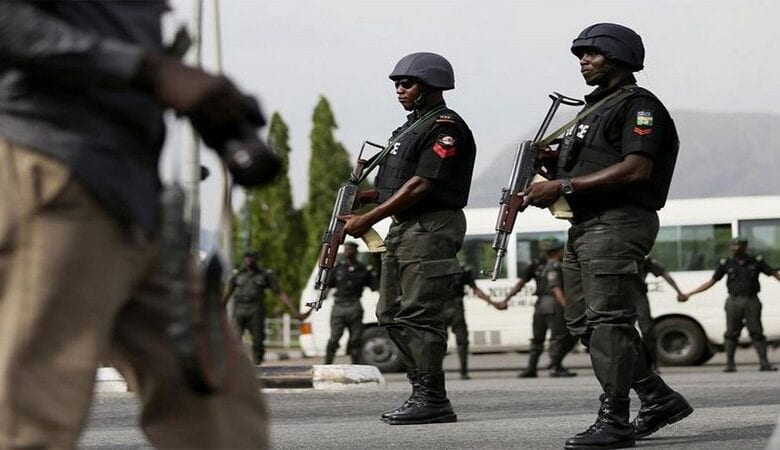
Six suspected armed robbers have been killed by operatives of Delta State Police Command following a gun duel with the hoodlums.
The incident occurred over the weekend at Igbudu Market/Old Welfare community of Warri metropolis.
Security sources said that five of the robbery gangsters sustained serious gunshot injuries while two locally made cut-to-size single barrel guns, three rounds of expended cartridges, three rounds of live cartridges and one dagger were recovered from them.
According to the sources, the injured suspects gave up the ghost while they were being taken to the hospital.
It was gathered that operatives attached to ‘B’ Division Warri surveillance team while on Aberdeen patrol along lower Erejuwa Street in Warri, on Friday received a distress call, that suspected armed robbery gang were terrorizing Igbudu Market/Old Welfare community.
The police teams acting on this distress call, moved to the scene where the hoodlums on sighting the operatives took to their heels, while the team went after them.
But the gangsters having repositioned themselves somewhere around Old Welfare Road, resorted to a gun duel with the policemen, while the superior fire power of the operatives eventually neutralized the robbery suspects.
The police public relations officer (PPRO) for Delta State Command, DSP Bright Edafe while confirming the incident told our correspondent that investigation in ongoing.
Why I can’t be running mate to anyone- Kwankwaso
In a similar development, following series of complaints from members of the public, about the activities of some hoodlums who attack innocent residents in Asaba, especially around Ezenie axis, DLA, Summit Road, and other areas within the Asaba metropolis, robbing people of their phones, money, and other belongings, the. Commissioner of Police for the State Command, CP Ari Mohammed Ali has detailed some tactical teams on a round the clock patrol within Asaba and its environs, with a view to arresting those perpetrating the act.
On June 30, 2022 at about 0230 hours, operatives of the Command Rapid Response Squad (RRS) while on visibility patrol along Ezenei Street Asaba, sighted four suspicious looking young men in a parked mini bus without registration number and when the team advanced towards them to find out their identity, they zoomed off towards Asaba-Benin Expressway.
The operatives gave them a hot chase till they got to Issele-Asagba in Aniocha South Local Government Area.
The team while trying to double cross the vehicle were faced with stiff resistance from the hoodlums, who ran into the Police van, abandoned the vehicle fled into adjoining bush and started firing at the policemen, a development which confirmed the suspicion of the operatives.
The police team fhen followed the hoodlums into the bush while exchanging gunshot.
Consequently, one of the suspects sustained gunshot injury while others escaped with bullet wounds.
One cut-to-size english double barrel, one locally made pistol, six expended cartridges, two live cartridges and a big iron cutter were recovered.
The injured suspect was taken to Agbor General Hospital, where he died while receiving treatment.
The PPRO told journalists that effort is on top gear to arrest the other fleeing members of the gang while Investigation is ongoing.