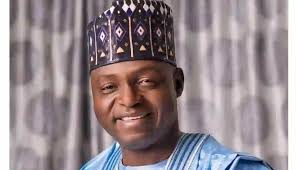
Petrol price would’ve been N250 now, if not for labour – Wabba
Nigeria inflation rate between 30-40% not 16%
The President, Nigeria Labour Congress (NLC), Ayuba Wabba, speaks with David Lawani and Ben Ogbemudia on the economy, electricity tariff, petrol price and other issues
The federal government said we were out of recession, what is your take on this, especially on the state of the economy?
Well, let me try to put it in context to say that Nigerians, especially the less than 10 per cent that are super rich, are not feeling the impact of the challenge in the economy. Because in the context of Nigeria and Africa, 80 per cent of workers and our people gain their means of livelihood in the informal sector of the economy.
Therefore, they depend on daily income to survive. Some are artisans, some are into petty business and some are labourers. They are in the majority, especially those that are also in the rural areas. They form the majority.
They are 80 per cent of our population where the social security coverage is less than 20 per cent talk less of workers that are wage earners, be it in the public or private sector. It has really been an incredibly challenging time. This has been further compounded by the COVID-19. It is not only about health challenges but also economic challenges. And the social challenge associated with it.
So, it has been a double tragedy for Nigerian workers and even citizens because our purchasing power has been reduced to nothing as the prices of goods and services have sky-rocketed. The National Bureau of Statistics (NBS) put the inflation rate to be over 16 per cent.
Conservatively, you and I that go to the markets know that it is over 30-40 per cent. That is the reality. Because when you compare the cost of commodities before and now, the increase is more than 50 per cent. That is how it is.
Look at the issue of inflation. Look also at the issue of our exchange rate where the naira has been on a free fall. All these have made the cost of goods and services so high.
Basically, the economy does not work, therefore, the prosperity of our people has been affected, and that is why many of our people are drifting into poverty. It also explains why it is being said that we are the poverty capital of the world.
So, either way, I think it has not been a rosy situation for Nigerians workers. This is coupled with the fact that the responses by some of the economic policies have not yielded desired results. And part of them is that we are still an import-driven country.
We are not manufacturing or producing. Even in areas we have a comparative advantage, we have not taken advantage of that, and this is partly because our government has embraced hook, line, and sinker, some of the recommendations of the International Monetary Fund (IMF).
Those recommendations are to make developing countries perpetual exporters of raw materials and perpetual importers of finished products. That was what they recommended in 2003 to our people with regard to refining petroleum products.
They say we should adopt a policy that was rejected by all OPEC countries to say that they should be import-driven pricing mechanisms, instead of refining the process. This is the centrality of our problems, that we do not assert our authority and we do not also look at the fact that Nigeria is blessed.
With a lot of human resources that can propose a counter policy to what is being imposed on us and work to take us out of the woods. One important issue which has affected us is also the exchange rate. This is one of the recommendations from the IMF to say that our currency is being overvalued and I keep wondering because I knew when I was small that the naira was stronger than the dollar. This has continued unabated, till now, we are still talking about N408 per dollar at the unofficial market. Where are we heading for?
I am sure, if we are not careful, this policy of the IMF, will reach a time that it will be above N500. So, these are some of the predicaments and that is why our economy has not done well. This is also why we have remained where we are. It is equally why unemployment has become perverse. For you to address it, the government alone cannot address it.
What is required is to create the enabling environment for manufacturing and industrialisation to thrive. Meanwhile, you cannot have all of these if the necessary infrastructure is not available to allow investors and local manufacturers to go into business.
So, the challenge in the economy is biting very hard. Not many people can afford two-square meals per day. Many are on 1-0-0. Many, including working, are actually living below the poverty line. There is a pool of the working poor in the country. They are working but they are extremely poor.
Often, we hear that labour is on the round-table with the authorities, but we seldom see the outcome on workers, why is the union looking the other way in the midst of these challenges?
Many Nigerians are frustrated and that is why they expect a lot from labour. They have forgotten that they have elected representatives.
There is a barrier between them and elected representatives. First, unions are there to protect the interest of workers which is the role NLC has played continuously in the past 40 years. Basically, I think that we should not allow these frustrations to derail us from focusing on the core issues that labour is meant to achieve. Labour is the only organisation now that even when you fight with your wife, you will wake up and say, oh! where is labour?
Everybody has become so frustrated, including the political elite that we elected to represent us. On this issue, we should consider what is of the strategic interest of Nigerians, not the interesting of a few? I can say with authority that even though this is not our core responsibility, NLC is the organisation that has engaged those issues.
So, I understand the frustration of many Nigerians. When you are frustrated sometimes, you do not even know who is fighting your battles or who is supposed to fight your battle. This is one thing people have forgotten. We are not politicians, we are unionists.
And workers form unions to protect their core interest. First, issues of dispute of rights and issues of dispute of interest. Those are reasons why unions are formed. But I understand the frustration, many people do not say why the government is doing so, they say where is labour? That is why we are engaged as NLC.
For example, if not for our engagement, I can assure you that the pump price of petrol would have been N250 by now. That is why we are committed to the engagement.
Our position has been truly clear. We say, if you are not refining, there is no way you will put those prices of what you are importing under control. Prices go up and your currency loses value. It is common sense the prices will go up, but how can the government protect the poor Nigerians from these market fundamentals which are not under the control of workers.
It is the responsibility of the government to control inflation and to fix the economy. That is why we elected a government. So, I think we have been doing our best and I think it is the reason we are at this stage. If not, I am sure the price would have been over and above the current price.
Is Labour and government committee still meeting?
We have concluded on electricity. There are two issues. You also remember the nature of electricity. It was only labour which came out and said, when you sell it, it is not going to address any issue. Many Nigerians wrote us off.
They said no, that by the time we privatise, there will be power every 24 hours. Now, what we have said has come out to be true. They shared these things to themselves – people without competence, people without any investment, they sold to themselves.
On a daily basis, they are making humongous money through our treasured billing, including billing us without meters. We have seen this before it happened, but Nigerians, including the political elite said labour is too conservative.
We saw it coming. Before the issue of oil and gas, we have said it a long time ago. Since the time of Obasanjo, we have been on the street fighting this issue to say no, you must refine, do not continue to import, that is where we are.
So, Nigerians must remember what NLC has fought for and why we are at this point. So, I think that is the contest. Where we are now, I think we will continue to work to protect Nigerians from those market fundamentals and those market forces. This is what we have been doing and we will continue to do that. Therefore, do not forget this is a responsibility we have taken overtime.
When labour met with the President, there were issues of palliatives for workers. Where are they because Nigeria workers are groaning in pain?
Palliative is for all Nigerians. The only point we made was that the palliatives have not reached its destination. Workers are also Nigerians. If you say there is palliative for COVID-19, there is palliative for this, there is palliative to cushion the effect on the people and it has not reached its destination, is it not obvious that we need to ask the question that where are these palliatives?
That is why we allow the question, where are the palliatives? Because even among the workers, we have the poor people and we have the urban poor. They are workers, therefore, this must be extended to them. It is our duty to represent those workers.
That is how we are now trying to work to see if we can get the urban poor into a register so that they will be given something. Already, we have submitted their names, local areas, bank accounts, and other details and their phone numbers and other things required for that process. We have submitted the list so that they can also participate.
We hope that what is being sent is also being implemented so that workers who are also poor can have a feel of the benefits. Because somebody earning less than N30,000 is poor. From the sum, they remove tax he is already a poor person.
Even to pay transport to New Nyanya, in Abuja, every day is more than N500. So, what remains from the salary? Nothing. So, he is extremely poor, those are the group of people that we have also spoken for.
We need subsidy for transportation. You have seen the chaos in the system, we do not have BRT lines so that we can have buses that can be bringing workers from the hinterlands, maybe at a far cheaper rate. We do not have trains, so, basically transport must be subsidised. They should be able to bring about buses that workers can use.
Those are some of the palliatives that we think are important and should be extended to workers and to other Nigerians, so that Nigerians can also benefit from these palliatives.
Why is there panic buying of fuel in some parts of the country?
It is not panic buying but hoarding by marketers.
The authorities said they would not increase fuel this March, if they do, what will be NLC’s position?
Our position has remained very consistent.
As I told you because our economy is import driven, everybody knows the price has gone up in the international market. What we have said consistently is to protect the interest of the poor. Because, if you leave it to market forces and do the exchange rate because of the fallen value of our currency, nobody can even afford the commodity.
So, we are insisting that every policy must have a human face. That even where you want to say deregulation based on importation which we are against, we say we are only supporting deregulation if it is going to be refined here at home.
Then you can deregulate the market and people can benefit. But where it is based on importation, we are against that policy. We have said that clearly. We have also said that if you want to use this increase at the international market to then push it down the throat of consumers, then you must do it with human face.
As I speak with you, energy is still subsidised in 158 countries around the world. It is not only in Nigeria. What they are telling us is not correct. Do a study. We did a very pronounced study, 158 countries still subsidies energy to their people.
Therefore, it is not something strange. What we are saying is that we must find ways of making sure that Nigerians, especially the poor are not left at the mercy of marketers. Because marketers are for profit making, where they do that, you know how we have responded in the past. We have always responded in our known tradition of trying to protect workers and those Nigerians from policies that will compound the issues.
We are aware that any time you increase the price of fuel, inflation goes up. It is a known fact, price of goods and services will go up and inflation goes up. These are the variables that are used in determining the price.
The value of the naira will crash. We are going to be in a vicious circle once it is import driven. Our position in labour has remained consistent: to protect the interest of workers and we can use any means to do that.
Everyday Nigerians wake up to kidnapping, killings and all manner of criminalities. What is the position of labour on insecurity in the land?
Well, on many occasions we have said government is not doing enough to protect the lives of citizens. Yes, the issue of crime has been on the increase. Some of the crimes are emerging ones. In the past, nobody was discussing the issue of banditry.
We are even more concerned because we are affected. In some of these insecurity situations, workers are the worst hit.
I can tell you that we have lost more than 1,000 workers in the North-East: teachers, health workers. Therefore, we are the worst hit.
That is why we have said government must change its strategies. Very soon, we are convening a peace summit and to propose some ideas, because it is clear the government is running out of ideas on how combat the menace of insecurity.
We need to bring our perspective, the working-class perspective to the table. We need to be part of the discuss on how it can bring about solutions. This is our contribution to issue of insecurity. But, by and large, I think it is an understatement that the insecurity situation is getting out of hand. That is the reality.
Why have many states refused to implement the N30,000 minimum wage?
That is not true. Most states are paying. A few states have not implemented it. That is the fact is on the table. Let me also remind you that no government or employer has given us minimum wage on a platter. We often get minimum wage through our collective struggle.
That is the standard in the country. Have you ever heard that Nigeria has become Father Christmas and so freely gave us minimum wage? No, we struggle for it and therefore, implementation will also entail that the same struggle. We have already declared actions in all the states.
The states should actually go ahead and push for industrial action, and through that process, two states have even gone ahead to implement that.
But it is not true that the majority of the states are not implementing it. We have a few that are not actually implementing; however, it is work in progress.
We have asked our state councils to do the engagement because when we were having the negotiation with the federal government and other employers of labour, many of those governors said once we agree, they are going to pay.
All of them said the same thing, thinking that we will not reach the same stage. Here we are, we have passed that stage and they have actually not honoured their words. So, they are not honourable people. Our politicians are not honourable people, they are only after their families and themselves, and that is why we do not have patriotic politicians that can address some of those fundamental issues.
What is your office doing to assist Nigerians workers on housing loans?
Which housing loans? Our loans through the cooperative are still ongoing. Staff loans, we also do that and those processes are continuing. Do not forget this is an institution not an individual organisation. So, basically what is expected of us as an institution we will continue to do it. And, we have been doing that.
On Child’s Right Act