By Linus Aleke
One of the major issues that dominated media space in the past one year, is the counter insurgency and counter terrorism operations of the Armed Forces of Nigeria (AFN). This is as no fewer than 150 people were hacked to death in their homes during the festive period in Plateau State by yet to be identified assailants.
This has raised more questions than are available answers, on how well the High Command of Armed Forces of Nigeria and other security agencies have managed the resources, the federal government earmarked in the national appropriation, and cash backed at the close of each fiscal year in the past one decade and still counting. This is however, not the central focus of this intervention.
The grieving Plateau State Governor, Caleb Manasseh Mutfwang,
bared his mind on security issue in Nigeria. This opinion, though not too favourable and palatable, the Governor still firmly, frankly and confidently spew his bitterness, anyway.
Tasking, the security agents to unravel the sponsors of the “carnage” and their blood-thirsty foot-soldiers, the Governor averred that the the attacks were unprovoked.
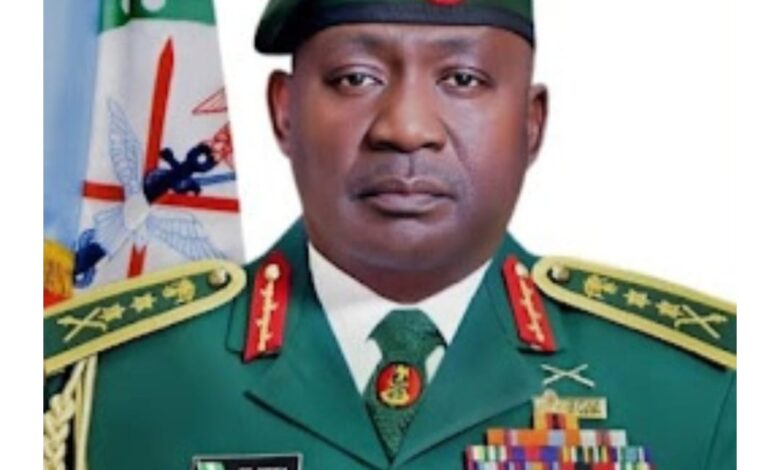
Regrettable as the Platesu ugly carnage may be, it does not minus from the good performance or otherwise of the Armed Forces of Nigerian, within the period under review. Especially the domination of all the theatre of operations, under the central Command of Gen. Christopher Gwabin Musa. A non blemish record that the unidentified assailants attempted to erode and puncture, with the Plateau killings.
Meanwhile, the military has given a detailed report of its activities throughout the year, 2023.
In the report presented to the media during a press conference in Abuja, the military said, the major security threats within the year 2023 were terrorism, armed banditry, kidnapping, oil theft, secessionist agitations and farmers-herders clashes.
Speaking to the Report on Annual Review of Joint Task Force Operational Activities from January to 28 December, 2023, the Director Defence Media, Major General Edward Buba, said, the threat dynamics were defined along geo-political zones with some permeating across the regional lines.
He said, the predominant threat in the North Central (NC) and North West (NW) regions is armed banditry/terrorism while the Boko Haram Terrorists/Islamic State West African Province lingering insurgency remained the main threat in the North East (NE) region.
The major threat in the South-East (SE) and South-West (SW), Gen. Buba said, was the secessionist agitations of the proscribed Indigenous People of Biafra (IPOB) and the Yoruba Nation respectively.
He also said that the South-South (SS) region continued to experience oil theft, cultism and youth restiveness, posting that acts of criminalities such as kidnapping, armed robbery, communal clashes and cattle rustling were common across the six geopolitical zones.
Speaking on the enablers of the crimes mentioned above, Gen. Buba said: “It is pertinent to point out that most security threats in the country were fueled by the proliferation of small arms exacerbated by the influx of illegal arms and ammunition through our porous borders and the preponderance of local arms fabrication factories in the country. Thus, the armed forces kinetic and non-kinetic efforts were geared towards tackling these threats in all the geo-political zones”.
On how the troops dominated the theatre of operations, the Coordinator noted that during the period, troops killed 6,886 terrorists and other criminal elements.
Troops, he added, also arrested 6,970 suspects, rescued 4,488 kidnapped hostages as well as recovered 3,320 assorted weapons and 39,075 assorted ammunition.
“Additionally, troops recovered 100,316,600 litres of crude oil, 60,339,426 litres of AGO, 3,465,450 litres of DPK and 3,544,990 litres of PMS, he further disclosed.
He averred that the security situation in year 2023 has remained fluid, complex and dynamic with the threat morphing in form and scale, stressing that this unpredictable nature of the threat and the attendant demands for stability have continued to pose significant challenges for security forces.
Gen. Buba further noted that various forces have continued to evolve Tactics, Techniques and Procedures (TTP) to professionally respond to these threats.
The armed forces, he said, has been developing the desired enablers to overcome the country’s numerous threats.
Notably, he said, the application of kinetic and non-kinetic efforts in collaboration with other Services and security agencies has continued to shape the operating environment, in which we are in a dominant position.
“Additionally, attention was given to providing relevant resources to enhance troops’ capacity to defeat the threats. The cumulative outcome of these efforts is reflected in increased stability achieved across the various theatres of operations. Troops are in a dominant position and are winning the war,” he further explained.
Breaking down the casualty figures recorded against the terrorists by troops in the North East, Operation HADIN KAI in year 2023, General Buba, disclosed that no fewer than 1,759 terrorist were killed, 953 arrested suspects, 826 rescued hostages and 11,015 surrendered BH/ISWAP terrorists fighters and their families.
The following weapons, he said, were recovered, 259 AK47 rifles, 9 FN rifles, 681 assorted arms, 7,097 rounds of 7.62mm special ammo, 5,773 rounds of 7.62mm NATO, 495,336 assorted ammunitions and 2,059 livestock.
On the successes recorded by troops of Operation HADARIN DAJI in year 2023, in the North West, General Buba, said that over 1,522 terrorists were killed, 645 arrested suspects and 1,101 rescued hostages.
The troops also recovered 53 AK47 rifles, 426 assorted arms, 2,342 rounds of 7.62mm special, 6,900 assorted ammunitions and 5,084 livestock.
In North Central theatre, the Coordinator, said: “Some of the features recorded by troops in the North Central Operation SAFE HAVEN in year 2023 are, 2,094 terrorists neutralized, 2,316 arrested suspects and 630 rescued hostages. The following were recovered 78 AK47 rifles, 666 assorted arms, 4,772 rounds of 7.62mm special, 7357 assorted ammunitions and 4,734 livestock”.
The killings, arrests, rescue, and recovering of weapons across all theatres continued in this leaps and bounds, throughout the year.
Meanwhile, protagonists and antagonists of the current regime are at each others jugular following the mindless killing of innocent civilians in Plateau State by yet to be identified assailant.
Recall that on Sunday, gunmen stormed Ndun, Ngyong, Murfet, Makundary, Tamiso, Chiang, Tahore, Gawarba, Dares, Meyenga, Darwat, and Butura Kampani villages in the Barkin Ladi, Mangu and Bokkos areas of the state burning houses and shooting residents.
The governor, Caleb Mutfwang, in an interview on Channels TV,
identified the flaws in the state’s security architecture, which he said required some tinkering.
According to him, “The reason we have enjoyed relative peace up until this moment is because of the kind of arrangements we put in place. But obviously, it shows that those arrangements are not adequate. What we have had to do is motivate the security agencies on the ground to make sure that they perform optimally.
And I would say to some extent that I give credit to the Nigerian Army, other security agencies, and the mobile police that have been deployed to the conflict areas. Sometimes, when you think you are achieving the target, you probably relax a little bit, because, for me, security is not the presence of security personnel; it is the absence of conflict. Unfortunately, we have had to also engage in a lot of non-kinetic methods.
“We have had engagements with community leaders to identify potential areas of conflict and nip them in the bud. We have been trying to build communal harmony, and to a large extent, we have succeeded. But, with the breach that we have experienced in the last few days, it means that some people are not happy with the progress we have made”.
However, in a swift reaction, President Bola Tinubu, in a statement by his Special Adviser on Media and Publicity, Ajuri Ngelale, condemned the attacks and ordered a manhunt for the killers.
Meanwhile, the Defence Headquarters (DHQ), has responded to the tending
video, circulating on social media depicting soldiers allegedly mistreating women under the caption “Operation Rainbow in Plateau State”.
The Acting Director Defence information, Brigadier General Tukur Gusau, in a statement on Saturday said, that those behind the trending video manipulated and circulated the video online to cause disaffection between the public and the Armed Forces of Nigeria, to achieve a predetermined objective.
General Gusau revealed that the video in question originated from an incident that took place in Sambisa forest in 2021, involving the spouses of Boko Haram members during the capture of strong holds of the Boko Haram insurgents and not in Plateau State as falsely claimed.
The statement reads: “The attention of DHQ has been drawn to a misleading video circulating on social media depicting soldiers allegedly mistreating women under the caption “Operation Rainbow in Plateau State”. It has come to our attention that the video in question actually originated from an incident that took place in Sambisa forest in 2021, involving the spouses of Boko Haram members during the capture of strong holds of the Boko Haram insurgents and not in Plateau State as falsely claimed.
“DHQ wishes to clarify that the soldiers involved in the aforementioned incident were then promptly sanctioned and dealt with by the military authority at the time it occurred for their unprofessional conduct. The dissemination of this old video, with a misleading location tag, is causing unnecessary alarm and has the potential to exacerbate the security situation on the Plateau”.
The military hierarchy, therefore, urged, individuals responsible for recirculating this video to cease and desist from further dissemination, as their actions are only serving to add fuel to the security challenges currently being addressed by Operation SAFE HAVEN.
“Our forces are actively engaged in aggressive operations and are dedicated to bringing the perpetrators of recent dastardly acts to justice,” he said.
DHQ, he added, remains committed to fostering peace and stability in Plateau State and called on all stakeholders and members of the public to support its efforts by refraining from spreading misinformation that could undermine the nation’s collective goal of ensuring the safety and well-being of all residents.