By Nathaniel Zacchaeus and Chukwudi Obasi
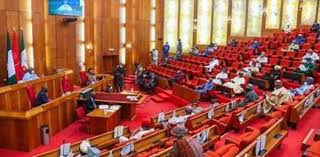
Yesterday, the House of Representatives rejected a proposed amendment to the Constitution that would have enabled the president, governors, and local government chairmen across the country to serve a single six-year term.
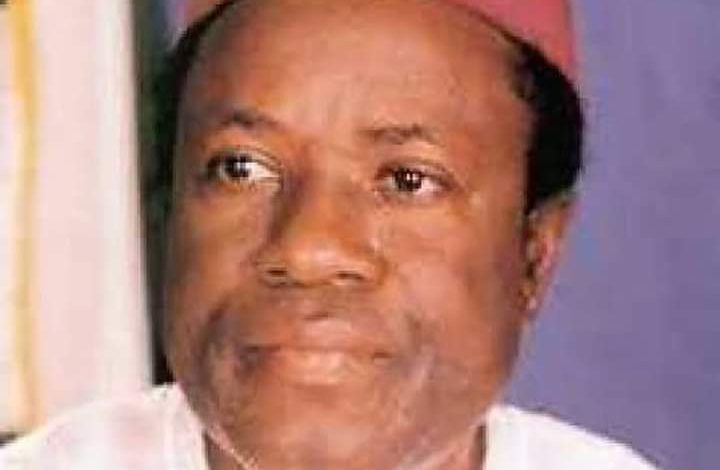
The bill was sponsored by Ikenga Ugochinyere, the member representing Ideato Federal Constituency of Imo State, and 33 others, but it was rejected during a debate on its general principles.
It sought to divide the country into six geopolitical zones and establish a rotational system for the presidency and governorship within these zones.
It also proposed that all elections be conducted on a single day.
Some lawmakers in the House, who introduced the bill in June, also proposed rotating the presidency between the North and the South and creating a second vice president.
In addition, the bill sought to amend the Constitution to create the offices of two vice presidents from the southern and northern parts of Nigeria.
The 1st Vice President shall be a succession vice president, while the 2nd Vice President shall be a minister in the economy. Both vice presidents shall be ministers.
The bill also proposed that the President and the first Vice President come from the same part of the country (North or South) and that the first Vice President become President whenever the President becomes incapacitated.
It sought, among others, “To alter Section 76 by inserting a new subsection (3) as follows: (3) For Section (1) of this Section, all elections into the offices of President, Governors, National Assembly and State Houses of Assembly shall hold simultaneously on the same date to be determined by the Independent National Electoral Commission in consultation with the National Assembly and accordance with the Electoral Act.
During the plenary, Ugochinyere’s colleagues did not allow him to lead the debate on the bill before rejecting it.
He had moved a motion to read the bill for a second time, but when Speaker Tajudeen Abbas put it to vote, members overwhelmingly voted against it.
*National Assembly proposes life jail for drug offenders, traffickers
Also yesterday, the National Assembly passed an amendment to the National Drug Law Enforcement Agency (NDLEA) Act.
The Senate’s resolution followed its adoption of the conference committee report on amending the NDLEA Act.
The Chairman of the Senate Conference Committee that harmonised the report of both chambers, Senator Mohammed Tahir Monguno, said the amendment provides for life imprisonment for drug offenders as against
The Committee recommended that “Any person who is unlawfully involved in the storage, custody, movement, carriage or concealment of dangerous drugs or controlled substances and who, while so involved, is armed with any offensive weapon or is disguised in any way, shall be guilty of an offence under this Act and liable on conviction to be sentenced to life imprisonment.”
Senators approved the recommendation when Deputy Senate President Barau Jibrin gave it a voice vote during the plenary.
For a third reading, the Senate also passed a bill to empower the Revenue Mobilisation, Allocation, and Fiscal Commission (RMAFC) to monitor accruals and disbursements from the Federation Account.
The proposed legislation seeks to repeal the RMAFC Act 2004 and replace it with the Revenue Mobilisation, Allocation, and Fiscal Commission Bill of 2024.
The proposed law revised the Commission’s composition and operational framework to ensure that federal, state, and local governments receive the constitutionally mandated resources necessary to address governance and development challenges.
The bill proposes additional funding to enhance the Commission’s efficiency, allowing RMAFC to discharge its constitutional responsibilities effectively.
The Senate passed the bill after its Committees on National Planning and Economic Affairs, Finance, and Appropriations considered a report during Thursday’s plenary session.
The Chairman of the Committee on National Planning and Economic Affairs, Abdullahi Abubakar, emphasised the bill’s importance amidst dwindling national revenues and Nigeria’s rapidly growing population.
He stated that the Act, last updated over two decades ago, no longer reflects the nation’s evolving economic realities.
According to him, the primary objective of this bill is to reinforce the mandate and powers of the Revenue Mobilisation, Allocation, and Fiscal Commission as the constitutionally recognised body responsible for monitoring revenue generation and ensuring its equitable disbursement among the three tiers of government.
Abubakar further noted that the bill prescribes a revamped structure and operational method for the Commission, ensuring that federal, state, and local governments are adequately resourced to meet governance and developmental challenges.
“In the conduct of this onerous task, the Commission requires adequate funding from the Federation account, the lack of which has hitherto hampered the effective performance of its Constitutional responsibilities,” he added.
He urged his colleagues to support the bill.
Following a voice vote, a majority of senators endorsed the legislation. The bill now awaits President Bola Ahmed Tinubu’s assent to become law.