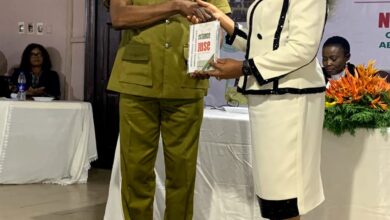
Tinubu should know Nigerians won’t tolerate mediocracy, corruption in govt- Osaikhuiwu

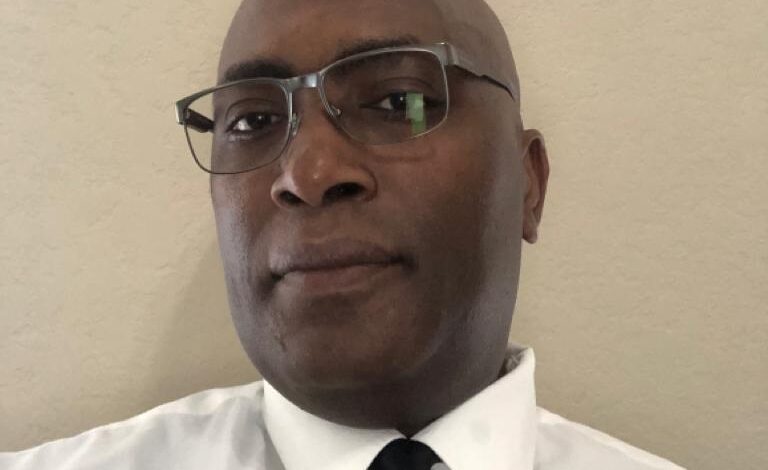
Executive Director of the African Council for Cultural and Economic Renaissance (ACCER), Nosa Osaikhuiwu, highlights areas that should catch the immediate attention of President Bola Tinubu as he assumes office as the 16th President of Nigeria. In this exclusive interview with Babs Oyetoro and Francis Ajuonuma, he says managing the country’s diversity is key
Over time the problem of the right leadership has been the bane of genuine development since independence in our dear country. As the new administration of Asiwaju Bola Tinubu takes over the leadership mantle today, do you see this government fulfilling the yearnings and aspirations of Nigerians through purposeful leadership?
I agree that we have had a leadership problem in Nigeria since the inception of the Republic, but over the last 50 years, this problem became a major impediment to the development of this country. While I believe in the novel concept of leadership by society as the sovereignty belongs to the people, the power and political leadership is exercised on behalf of the people by elected public office holders, thus at this inflection point in the nation’s history one would hope that the President, Bola Tinubu, would exercise this leadership on behalf of our citizens with a sense of responsibility and purpose for the benefits of our nation. Furthermore, I would hope that our people who hold real power through various outlets will continue to remain engaged on all issues and demand accountability at all times from this incoming administration so that we can change our behaviours and the behaviours of those in government. We must also push to end the dictatorship of the political parties and give the elected officials a free hand to choose a performing team to pilot the nation’s affairs.
Leadership means offering the people the right direction to go and annexing the available resources for the good of the citizens amid apparent diversities. Do you think that the new president possesses the capability to turn this potential to the advantage of Nigeria?
The question is very apt at this time given the ongoing transition in the country. While this is not a place to discuss my concept of political leadership, I will say briefly that it entails the exercise of political power on behalf of our people, who reserve the right to affirm or redirect every four years the exercise of this power. I am very heartened by the voting preferences in the last general elections as the people have awakened to their responsibility and fired a salvo at the bowels of the political establishment and with many sitting governors failing in their senatorial bids, it is no longer business as usual. So, if the administration plans to leave a positive legacy or seek another mandate in four years, the time to perform is now as the people will no longer put up with mediocrity or corruption in government. I hope that the President, who has his upbringing in grassroots politicking is fully aware of the angst amongst the people and will strive to meet the moment not just for his legacy, but to help give hope and opportunity to our people.
Without exaggeration Nigeria has never been divided after the civil war like we have witnessed in the recent time; even the just concluded general elections further polarised us as a people. What are the steps you expected the incoming administration to take to hasten the healing process and unite the country again?
I will agree that these elections were indeed very divisive, but I will disagree that it is the most divisive in our history. The only reason we are seeing this level of divisiveness now is because of the availability of the internet technology which presents the ability to instantly transmit a message notwithstanding the veracity or otherwise of such content. However, given the perceived feelings of hurt and ethnic rhetoric in some quarters, the government must ensure that its policies and pronouncements must elevate the best in our people and not the ugly side. Furthermore, the incoming government must immediately provide hope to our people and that this government will not be business as usual by the quality of people it will appoint to run the various agencies and help drive government policies. The first few steps by this government could help assuage the current negative feelings and perceived tension in the country. I will, however, suggest to the president to pick his team and not allow the political party to select his team for him. One of the open secrets of the fourth republic is that the political parties namely the PDP and APC have in fact through their structures been dictating to the governments at various levels who to appoint to various ministerial and other positions at the state and national levels including to boards of states and federal agencies. This exercise of power by these political parties is part of why the elected officials are hamstrung as many of the officials with the clouts to be nominated by their state or local party chapters for appointments at state and federal levels are corrupt and heavily compromised candidates. The incoming government of Ahmed Bola Tinubu must break this stranglehold and exercise real political authority to choose a winning team for Nigeria based on its ability to perform and deliver for the people and not any other considerations. Our land will be healed with hope and opportunities and the government start creating the enabling environment that can immediately impact all of our people. We can start by doing the following: Bring an end to the insecurity, through the creation of the Department of Public Safety and embarking on a massive recruitment to staff the agency and bring security to our people; Stop estimated billing for electricity on day 1 and mandate the issuance of meters to all in 180 days; Improve the supply and availability of electricity to the people; Create the enabling conditions for job creations; Mandate the use of ethanol for fuelling automobiles or introduce 20 per cent ethanol content in our fuel to drive jobs and productivity in the farming sector. Implementing some of the above suggestions could provide relief to families and give renewed hope for better days to come.
Do you subscribe to running an all-inclusive government or a government of national unity?
I am not opposed to running an all-inclusive government as long as that does not stand in the way of delivering services to our people. One can understand the need for balance in a multi-ethnic nation like ours, but my view is that government should appoint technocrats and problem solvers and not politicians to help drive the change needed to fix our country irrespective of their religion or state of origin. Having mentioned this in some of my writings, I will suggest here that the first legislation government should propose is to do away with state of origin and replace it with state of residence and define conditions for residency in a state and use this in all federal forms, applications, and processes. This will be a positive step toward creating a truly united country where every citizen has an equal stake. What Nigerians need is performance and service delivery and not ethnic or religious representations.
The Buhari-led administration has handed over a whole lot of security issues to the Tinubu administration ranging from banditry, kidnapping, ethnic militias, and herders/farmers, among others, where do you think Tinubu should start?
I agree that the nation faces numerous challenges which the new government will have to deal with from day one in office. However, many of these challenges have their roots in actions and inactions from decades ago to the present day. However, any efforts at addressing many of these challenges will require confidence-building measures from the new government and a collaborative relationship with our people. Solving many of the security challenges requires intelligence gathering which the people can help provide when the government can clearly articulate a vision for tomorrow and get a buy-in from the population. That vision must include genuine efforts to create an equal opportunity for any young boy or girl born today in Nigeria, who is willing to work hard, do the right things for our country, and is law-abiding, for such a child to be able to achieve their aspirations without government been an impediment: we can borrow a leaf from the Americans and call this our vision of the NIGERIAN DREAM. The government must see the numerous problems they are inheriting not as insurmountable challenges, but rather as an opportunity to help shape the destiny of a nation and its people. The herders/farmers crisis is a fight for resources and it is time we start ranching businesses in Nigeria, which if properly done will create immense job opportunities for herders and farmers as farmers will be required to farm hale for the cows to eat. There should be no government direct involvement in these efforts except to regulate standards and conditions in the industry. Most of these regulations that have nothing to do with the quality of food and dairy should be left to local authorities.
We also have issues of agitations for self-realisation just like the IPoB in the South-East and Igboho group in the South-West, how can these be tackled?
The agitation in the South-East is understandable given our history and the legacy of the civil war, but it is still unfortunate and unnecessary, while the agitations by the Igboho group are baseless and without any justifications. There are genuine reasons for the Igbo to express serious concerns about their place in Nigeria’s polity, but resulting in agitations for their own country or other iterations will do a disservice to their ultimate goal of equitable participation in the affairs of this nation as it resurrects the ghosts of the civil war in the minds of some. Those at the vanguard of this effort are dishonest and have not levelled with their supporters. For example, have they consulted with the others in the region on this advocacy? It is a wrong assumption that non-Igbo in the South-East will just willingly join their envisioned state not to talk of Delta or Edo states who are fundamentally opposed to any such association outside of the current configuration of the country. Nigeria is ok and they like other groups can find meaningful solutions within the country to address their grievances without tearing the nation apart. More efforts need to be paid by everyone to actions at the state level as the bulk of the nation’s resources are deployed by the states and if the states are running smoothly and delivering for the people many of these agitations will gradually fizzle out over time. However, focusing more on states should not absolve the failures since the mid-1960s at the national level which we hope the incoming government will bring to an end for the survival of our country.
The CBN has raised the interest rate to 18.5 per cent aimed at tackling the rising inflation in the country, how is this going to be possible?
Raising interest rates is one of the tools in developed economies to control inflation, but in developing countries, the efficacies of such policies cannot be measured as more economic activities take place in the informal sectors that cannot be readily measured by the Central Bank of Nigeria (CBN) and other relevant agencies. Consequently, using interest rates in this manner to control inflation will not yield the desired results. However, reducing the liquidity in the economy and other tools could help cap inflation while providing support vouchers directly to some citizens could help to cushion the hardship from the current uncontrollable inflation in the country.
For many Nigerians, the economy under Buhari’s eighth years’ govt has been in a shamble and needs urgent steps that can put it back on recovery, so what is your advice for the new govt in reversing the battered economy on a positive track?
It is quite unfortunate, but true that the last eight years have seen some serious economic setbacks for Nigeria and Nigerians, including the additional negative consequences of COVID-19 since 2020. These economic hardships have not been exclusive to Nigeria, but have been global in outreach. However, the biggest failures of the last decade have been the inability of successive governments to control and stabilise the value of the naira. The dual exchange rate regime that we operate has severely weakened the naira relative to other global currencies reducing the buying power of our people and raising the costs of everything we buy from abroad. The first thing the Tinubu/Shettima administration must do is to immediately scrap the official exchange rates reserved for businesses, medical tourism, those with children schooling overseas, and more. This official market like everything else in our country is been abused and does not serve the interest of our nation. We do not have to subsidise the personal choices of people regarding where to seek medical care or educate their children when the vast majority of our people can only dream of such niceties. Also, many businesses and other highly placed individuals are abusing this process, thus abolishing it will cause the Naira to appreciate immensely since supply and demand are some of the key factors driving the exchange rates. When abolished only need-based demands for Forex will now count and not the phantom demands by shady people trying to profit from the scheme by using their connections to buy at subsidised rates and sell at the black market thereby constantly putting pressure on the CBN to meet these baseless and abnormal demands for Forex.
In the next two months, the Dangote Refinery will be operational, the refinery has been described as a game changer for Nigeria’s economy, do you agree to that and do you think with it, it’s now time to remove the oil subsidy not minding the hardship it could cause Nigerians, and if not what do you proffer for the new govt?
The Dangote refinery will make major contributions by eliminating the need to spend our scarce foreign reserves to import refined petroleum products and also provide some employment to our people. It will also provide a secondary economic impact in its zone of operation by increasing local economic activities. However, it is worth mentioning that since it is a for-profit business, it can only survive by selling at global market rates, so Nigerians should be prepared for higher fuel prices which could further lead to another round of inflation. The alleged petroleum subsidy is a mirage as the depreciation of the Naira is what creates that appearance because oil is priced in U.S. Dollars and if the Naira appreciates relative to the Dollar then we can see the gap shrink rapidly. Finally, doing away with the official exchange rate will help the Naira appreciate over time steadily and reduce the cost of refined petroleum products for our people.
The latest National Bureau of Statistics (NBS) report shows that Nigeria’s GDP growth slowed to 2.31 per cent in Q1 2023 does this give hope to the economy?
The projected growth of 2.31% in Nigeria given the current global economic climate is not bad, but this number means very little in a country like Nigeria where a large segment of the population work in the informal sector and there are no data available to capture the level of economic activities in this sector. We should make efforts to capture all economic activities including the informal sectors by moving to a cashless economy and introducing regulations to recognize and formalize even the unskilled labour market to better account for those engaged in productive economic activities and those in need of employment or social service support in our nation. A comprehensive approach like this will also broaden the tax base of the country.
We all know that crude oil is Nigeria’s main source of revenue generation but with NBS disclosure that the country’s oil sector contributed only 6.21 per cent to real GDP in Q1 2023 what does it signal to the economy?
If this claim is true, then this is very encouraging news as it shows we are diversifying our economy, but one will reserve further comments until we see the complete data on this.
Nigerians for some time now have been facing a harsh economic situation with no sign of abating, where do you think the Buhari administration went wrong leading to the dwindling state of the country’s economy and how can it be tackled by the new govt of Tinubu?
The economy of any nation is critical to the well-being of the people, peace, and stability of that nation and Nigeria is no exception. Nigeria has indeed faced serious economic headwinds under the Buhari administration, some of which were outside its control, but some like its monetary policies were self-inflicted. The new government can start by doing the following: Abolish the dual exchange rate in other to reduce pressure on the naira; Privatise all government-owned businesses to genuine investors while retaining only minority shares; Immediately improve the power delivery situation as that alone can lead to 20 per cent increase in productivity; Provide incentives to banks and citizens to embrace a cashless economy; Develop and implement a robust credit financing system to boost demand and economic activities locally; Create a department of public safety with a staff capacity of 12 million young men and women with a maximum of 10 years’ service to boost employment opportunities for young people and improve the nation’s security and thus create a conducive climate of businesses to grow. The pool will be refreshed every 10 years depending on implementation and will serve as foundational work experience for many young people. The minimum entry requirement should be a first degree in an accredited university; Implement a 20 per cent ethanol blend as a requirement for our automobile fuel thereby creating a windfall for farmers and young men to engage in the new market to produce corn and sugarcane for ethanol processing plants thereby creating millions of jobs across the country; Develop and implement a national apprentice scheme using the NYSC model as a starting point by extending the service to 3 years with the last two years used in learning skills like auto mechanic, plumbing, electrical, fashion and design and electrical technician skills with a practical board certified examinations at the end of apprentice training; Support the creative industry to help drive growth and employment by passing legislation against digital piracy and uncompensated use of contents and more. Such legislation should also provide severe punishment for the spreading and dissemination of fake content online. While there are many more areas requiring intervention, we will engage with the incoming government privately through the African Council for Cultural and Economic Renaissance a start-up group of Nigerians at home and in the diaspora to offer some solutions on how we create opportunities for our people to fulfil their potentials and move our nation forward. We believe that outside of security and public safety, government should not be in the business of creating jobs, but rather providing the enabling environment that will stimulate job creation by the private sector.