Boko Haram fighting with more passion than Nigerian military – Bassey

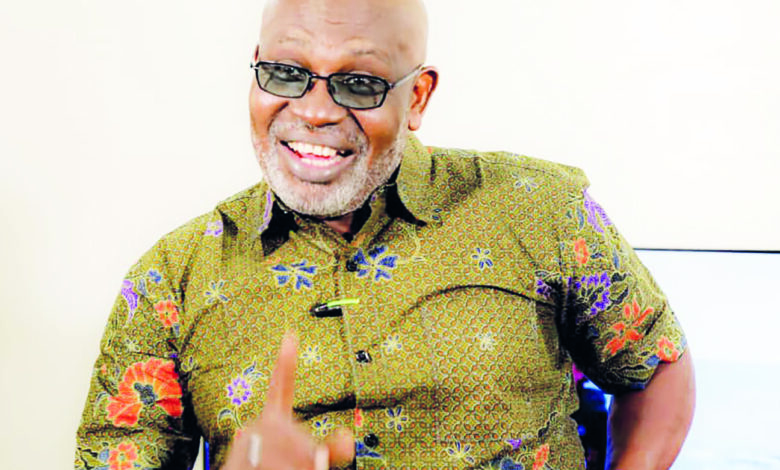
President, African Council on Narcotics, Mr. Rekpene Bassey, speaks on the unending insecurity in the country and issues of restructuring, among others in this interview with Mudiaga Affe
To say that Nigeria seems to be bleeding due to insecurity is to state the obvious. How did we get here?
The point cannot be too accentuated. The country is not only bleeding in its various arteries, but bleeding very profusely too, mostly due to insecurity. Think about it, is there any part of the entire country that is spared from the current security challenges? No, there is none. The last time I checked, approximately 100,000 persons have been slaughtered by the combined activities of Boko Haram and Islamic State of West Africa Province (ISWAP) terrorists, Fulani herdsmen, bandits, and kidnappers.
This is not to talk about the criminal activities of the now so-called unarmed gunmen and armed robbers in the eastern party of the country. Nearly 2,000 persons, mostly school pupils, and more recently university students, have been kidnapped for ransom. Over three million Nigerians have also been displaced from their ancestral homes due to the nefarious activities of various villains. Yet, there is no end in sight for this grossly morbid situation. It has never been this bad. A significant part of these challenges have presented themselves in the form of separatists’ agitations which was the hallmark of the pre-1967 civil war era. This makes it even more dangerous.
Unfortunately, the situation is not going to get better. The latest report has it that these terrorists are already within the fridges of the Federal Capital Territory. At the risk of sounding apocalyptic, it can be predicted that it might even get worse. Not with over 6,000 small and light weapons in the hands of various non-state actors. If you combine that with the sociological realities in the country in terms of staggering unemployment, spiralling inflation, poverty and debilitating hunger, porous borders, and endemic corrupt practices among others, then it looks quite gloomy. It should not be difficult to understand why such a prediction is feasible.
WIKE TELLS FG TO CONSIDER CHANGE OF SECURITY CHIEFS, STRATEGY TO TACKLE INSURGENCIES
And your question as to how we got here is pretty much valid. Look, the stage for this sorry security state was laid years ago, perhaps since the colonial era. In the first instance, the forceful joining of over 500 ethnic groups with over 600 native dialects by the British colonial masters was one of the pitfalls that laid the precarious foundation.
Secondly, those who took over at independence and their successors were completely oblivious of sound geostrategic issues having regards to effective long-term planning encompassing all the development sectors. For example, the country’s population at independence was about 45 million-plus. Today, we are about 220,000,000 million. What plans were laid out to cater for this kind of population 60 years later, in terms of life expectancy, food, shelter, education, industrialization, employment, electricity, road network infrastructure and means of transportation, security, environment. On the whole, we can blame all this on successive leadership failures.
Kidnapping, terrorism, herders/farmers clashes have become daily recurrence. Is our security architecture capable of tackling these challenges?
Why not? All things are possible with determination and hard work. Nigeria is a country of people with great talents. There is nothing we cannot achieve if we can get it right. The main problem we have here is that we are not getting it right. Corruption, general indiscipline, nepotism, classism, and favouritism have eaten so deeply into our system. When you put the wrong persons in the right offices how do you expect that things will work well?
You see, security is a special area of human endeavour. Once we are prepared to depoliticise and embrace the real security core values, all these nefarious activities will be substantially eliminated, if not completely de-escalated in some instances. But, of course, that has to be backed up by political will; which is what is starkly lacking currently. Nevertheless, the way the country’s security architecture is structured at the moment must also be restructured as a matter of urgent necessity if things must work differently.
For instance, the Nigeria Police must be decentralised and made more accountable. Besides the police, and other security agencies of government must also be accountable. If I were the president, after appointing a service chief, I will give the chief everything he or she requires in terms of political support, human factor, structural measures, and other needs within the limits of available resources. And I will follow that with a performance marching order and within the framework of a defined period. If the chief fails to perform during that period, I will relieve him of the appointment with immediate effect. Try that and see whether these security challenges will not be considerably addressed, particularly having regards to the interdiction crimes like kidnapping and armed robbery.
Insurgency has reached its peak in some areas in Niger State as well as in the Sambisa forest. How can these trends be reversed?
It was not bandits, but Boko Haram that the Governor of Niger State, Abubakar Sani Bello talked about, saying they had taken over parts of his state. He was categorical about it, that over 50 communities in Niger State had been captured by Boko Haram insurgents who also hoisted their flags in those communities.
Anyway, that did not come to me altogether as a surprise. I have always conjectured that Boko Haram elements have since infiltrated and set up cells in several parts of the country beyond the North-East. What happened in Niger State and is happening elsewhere in the country just confirmed my suspicion. It may not be too long before we begin to see their bloody hands elsewhere in more grisly ways save our local people resort to self-defence and the defence of their territories since government appears to be overwhelmed in terms of proactive security action and intelligence.
What do you think is making this fight difficult for our military to win?
That is one of the questions on the lips of many Nigerians. Let me take this liberty, therefore, to explain in my view why the war has been intractable. Firstly, it is asymmetrical warfare. What that means in simple language is that the war is unconventional. Whereas Boko Haram, ISWAP, and their cohorts like the Fulani herdsmen are applying unconventional tactics, the Nigerian armed forces are using conventional strategies in the war.
Apart from the asymmetrical aspect, Boko Haram fighters are propelled by ideological persuasion and are therefore fighting with deep emotive passion. It is very doubtful if you can find that same kind of passion in the Nigerian armed forces today. The armed forces are, however, executing the war professionally.
Of course, you can predict the consequences when there is a conflict between passion and profession. It should not be difficult to understand that passion is stronger than profession. Therein lays the quagmire. When you take the passion out of any endeavour, for whatever reasons, there is bound to be a very serious problem. What is more, it seems that the terrorists have as many moles as they have sympathizers within official circles.
Moreover, it is not certain if this president or his predecessor ever officially declared war against terrorism in Nigeria. What happened was that there have been official security efforts to de-escalate, repress or contain the situation. This may have been so because Boko Haram was, ab-initio, underestimated. Unfortunately, we have only done so at a very huge human, financial and material cost.
It is such a terrible mistake to underestimate terrorists. That is the same mistake the Americans made initially against al-Qaeda and ISIS. And as we speak, it is apparent that Islamic extremists across the world are taking cues to offer huge resources in terms of manpower, funding, and lethal armament to Boko Haram, ISWAP and others. And that is why the armed forces, the Nigerian Army, in particular, must reinvent their war strategies to defeat them decisively and win the war.
A lot of arms and ammunition are said to be coming from neighbouring African countries. How best can we man our borders?
Well, that is true. As I said earlier, there may be over 6,000 small arms and light weapons in the country presently. The majority of these arms were sourced from illegal arms dealers who push them through our vast porous land borders and waterways which stand at 4,900 kilometres. One of the ways we can best man our borders to check the influx of these arms is to set up a special security agency in charge of border patrol. Such an agency must be well funded and equipped with the right structural measures and the human factor. Otherwise, the agencies that are presently saddled with such responsibility cannot do so effectively; more so due to corrupt practices.
What is your take on the recent call by the president for external assistance from the US to tackle insurgency?
The form and nature of such assistance have not been spelt out yet, so it is a bit too early and therefore difficult to express any elaborate opinion on the matter. But we must never forget that America is indirectly a part of the problem based on their role in Libya and so on were some of the arms that are being used come from. Suffice it to say, at any rate, that such a call is a reflection of failure when assessed against the initial political grandstanding of the present government. But if that will help the situation so be it.
Beyond this, what do you think of the president’s continuous silence in the face of different challenges confronting the country?
Maybe the president doesn’t know or have what to say, or perhaps he is simply overwhelmed by the problems. Or, he prefers to speak through his aides. Just maybe. Unfortunately, it looks like his aides are not representing him well enough.
Take Femi Adesina’s recent press statement of May 4, for example, where he declared that the presidency will keep the country together, and I quote, “…even if some unruly feathers would be ruffled in the process”. Now, doesn’t that sound like we are being ushered into a reign of brutality? I do not get that! And his other colleague, Garba Shehu, isn’t helping matters either.
There is no question about the fact that effective leadership far outweighs the most tediously pompous opposition. Why shouldn’t people talk when the country seems to be drifting? The naira is having a free fall against the US dollar, while the rate of inflation is sky-rocketing. After all, it took them talking against the drift in the past administration to gain the kind of public followership and sympathy that brought them to power. Constructive criticism is a healthy part of any dynamic society. What is more, freedom of expression is a fundamental right, and people must be allowed to freely express themselves. This whole situation reminds me of what I read in a book by the late Brig. Gen. John Shagaya.
In chapter 43 of the said work titled Governance in Nigeria: The IBB era, Shagaya referring to Gen. Buhari, who was then Head of State, and I quote: “He disregarded what we collectively agreed was necessary for effective governance. In the process, he threw consensus, even within the SMC, out of the window and relied on brutality and violence.
The lesson learnt from his experience is that violence does not guarantee security. It only guarantees further violence.” This reminisce is so graphically frightening, and one can only hope and pray that in those days do not repeat themselves under a democratic dispensation headed by the same dramatis personae.
Some have called for the restructuring of Nigeria. Is it workable at this time?
That is begging the question. We are in a democracy for God’s sake. If it is the collective agreement of the majority of the people and it’s necessary for effective national security, economic, political, and social governance, why not?
I wonder what there is to be afraid of. Resources control? Devolution of power? You tell me, what is there to be afraid of? As far as I am concerned whatever democratic processes, means, and instruments are available to make the country work better in terms of collective leadership, security, and the economy, let us go for it.
Is the political system we are operating working?
In all honesty, our type of presidential democracy is disgustingly expensive. Indeed, the problem is not the system, but its political operators. Isn’t America practising the same system? We copied ours from them. Yet, theirs is not as expensive as ours. What makes it even worse is the huge corrupt practices that go with it in our clime. Nevertheless, we can improve on it if we so decide.
Youth restiveness and drug abuse are of concern to every one. What steps can be taken to address this?
This is a rather disheartening situation. It is very sad. Unfortunately, the extent of the problem has not dawned on us yet as a people. Presently about 16 million Nigerians, mostly youths and young adults, at their most productive ages, are involved in drug abuse at the level of dependence and addiction.
This is serious. At this rate, we will be turning out several more millions junkies in the next 10 to 25 years save some aggressive work is done in the areas of drug demand reduction and interdiction. So far, not enough is being done because there is no political will on the part of the government to strengthen the war against illicit drugs.
Hopefully, we might see a change in the fight with the emergence of Brig. Gen. Buba Marwa as the chairman of the National Drug Law Enforcement Agency (NDLEA). The other side of the problem is that there is a correlation between substance abuse and the prevalence of crime.
Most criminal elements depend on the Dutch courage they get from abusing illicit substances to commit a crime. Others depend on the proceeds from illicit drug trafficking to procure arms and ammunition for crime, while others use such proceeds to corrupt officials of government, the courts, and other institutions.
As for youth bulge, the solution to the problem is to set up a martial plan that will focus more on vocational training and the involvement of young people in agricultural extension activities. Don’t forget that food security is an integral component of national security; for as the saying goes a hungry youth is an angry youth. And then I think we should not only create the enabling environment for self-employment and reliance but also improve on our vocational education.
How can we tackle the high rate of unemployment?
I have more or less answered this in your previous question. Set up a youth martial plan that addresses youth unemployment, especially by creating a conducive environment for self-reliance and entrepreneurship development. Set up farm settlements with all the recreational facilities and take many of them there. That way, much of the problem would have been solved.