Most Nigerian politicians are bad losers- Osaikhuiwu, Coordinator ACCER
‘Incoming administration must immediately stop dual foreign exchange rate policy

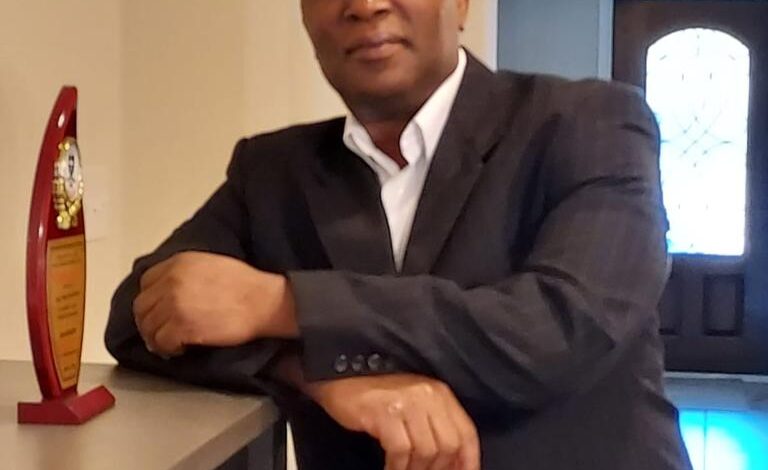
Global Coordinator, African Congress for Cultural and Economic Renaissance (ACCER), Nosa Osaikhuiwu, speaks on the just-concluded general elections, describing some Nigerian politicians’ sore losers. In this exclusive interview with ThisNigeria, the certified project manager with expertise in change management, elimination of waste, fraud, and abuse, among others, is seeking the abolition of the dual exchange rates policy as a way to urgently reposition the economy
Nigeria seems to be at a crossroads in the transition to a new government. What is your view on the issue of those clamouring for interim government?
I would like to congratulate the Nigerian people for the conduct of the just-concluded general elections including the security services for their outstanding performance and members of INEC and the various political parties. The elections were not perfect, as there are no perfect elections anywhere in the world, but we are making gradual progress if you compare this election with our previous elections since independence in 1960. When all the dust settles and the litigations are over we must conduct a thorough non-partisan after-action review of the whole 2023 general elections and look at any lessons learned so we can document these and apply them to future elections. However, the exercise was still a success and we must acknowledge this and congratulate everyone that made this happen. It is the right of every citizen who contested these elections to access the courts and seek redress if they feel aggrieved and have evidence that the results declared by INEC were tampered with or manipulated. This is a constitutional right and I will fight and defend that right of any Nigerian who wishes to exercise it. However, what we will not stand for nor accept is this unconstitutional idea of an interim national government. This is an outrage and every patriotic and freedom-loving citizen should be outraged and take serious exception to this type of highly inflammatory pronouncements by some of our fellow citizens. This shows the true undemocratic traits of these individuals who only subscribe to democratic tenets when they win, forgetting that democracy has two sides, and as practitioners of democracy, we must be willing to abide by the results and seek redress in courts if we have a justifiable cause.
President Muhammadu Buhari has spent eight years in power as a civilian head of state and government. Looking back, how will you appreciate his administration so far?
The government of any nation and indeed Nigeria is more than the president. The president is the head of the team, so the assessment should be of the administration and not the president per se. Consequently, while the administration has done well in many areas like the development of some infrastructures like the railway system, and completion of the Second Niger Bridge, and in the areas of food security by incentivising farmers to grow rice locally there are several areas where the government did not get to par like the areas of security, power, and the overall economy. As someone who is of the view that the nation’s problems are cultural, I would give the administration’s performance a fair grade which is way better than all the other civilian governments because they tried, though at times they were slow, inconsistent and unresponsive in their policies like the ill-timed Naira change just before the elections. However, I will give the government credit for allowing freehand to INEC to conduct free and fair general elections and for working with the National Assembly to pass major constitutional reforms that devolved some powers to the states many of which will lead to monumental benefits to our people. For example, state governments could now generate, distribute and transmit electricity in the various states to improve the quality of life of their residents.
Do you in your honest view think the parties who lost the last elections in Nigeria are playing the bad losers, heating the polity? What is the way out or forward?
In Nigeria, it is a common practice to blame one’s misfortune on some entity or individual, and in the case of the recently concluded elections, the various candidates and their parties are just playing this traditional Nigerian card. There are no perfect elections anywhere in the world and the Nigerian elections are no exception, but it is not the caricature being portrayed on social media sites by those who do not mean well for our people and country. As can be found anywhere and even in developed countries there were cases of logistical challenges and some irregularities, but all things considered, they were not substantial enough to alter the outcome of this election and the results declared. Frankly, this election if we use any of our previous elections since our nation’s independence as a baseline, a reference point, or a yardstick for measurement concerning the just concluded general elections, then an objective independent observer will declare without any fear of credible contradictions or shadow of a doubt that the 2023 general elections were indeed the freest and fairest elections in our nation’s history. However, those claiming the elections were rigged are basing their allegations on dubious and unsubstantiated videos circulating on the web and WhatsApp pages which in all fairness are inadmissible in a competent court of law as the veracity of these alleged videos cannot be independently corroborated. In our history of conducting elections, the losing parties have always contested the outcomes and this one is no exception. I wrote an article recently published by this newspaper and others titled “A Nation of Sore Losers” because that is the attitude we often display in any contest and exactly what the politicians and their supporters are doing. When we fail exams in schools we blame the teachers for reducing our scores. When we lose a football match we blame the referee for the loss and sadly when we lose a loved one, we often blame the mother-in-law or the wife depending on whether the deceased is the husband or the wife. Similarly, when we lose elections we blame the electoral officers or the winning party for rigging us out even when a thorough and objective review shows otherwise. All in all, what is apparent is that we hate to accept responsibility and we would invent reasons for our loss if we have to.
There are insinuations Nigerians would need to change their cultural perceptions, especially in terms of behavioural attitudes, what is your take on this?
This question is at the heart of my advocacy today and I believe with every fibre of my being that herein lies the problem and solution to all that ails our nation and people. Culture broadly speaking encompasses our value system, our ways, and traditions, including societal norms as it is the summation of the character of a society or people. We have to completely change our behaviour as a people and what is acceptable behaviour for our country to be transformed ethically, morally, and transparently including the enthronement of good governance. As a former student leader, I have always stood with the people against powerful interests in their struggles against maladministration, corruption, and abuse of office. However, a clinical analysis of the Nigerian situation will clearly show that we have a cultural problem that has infested every facet of our national life. Societal culture plays a predominant role in the development of any nation, hence we find ourselves lagging. While our laws contain the lofty ideals of accountability, transparency, ethics, and a code of conduct for public officers, we do not place a premium on the enforcement of these laws when they are violated, because we believe too much in forgiveness without atonement. Our elevation of the concept of forgiveness in biblical teachings to public matters of state is one of the banes of our society as it promotes corruption and repeat violations when there are no consequences for criminal and unlawful conduct. In our country no matter the crime or conduct we believe we can beg our way out of it. For example, if you catch someone stealing your property and decide to have him arrested, or a reckless driver on the road rear-ends your car after repeated warnings and you demand he fixes the car or a worker steals from your site and you opt to fire him the immediate response is “OGA I BEG” which are the three most dangerous words in the Nigerian lexicon and partly responsible for the lawlessness in our society, because if you refuse to accept the pleadings and demand justice and atonement the public will turn on you and call you a wicked person for been unwilling to forgive. This is also true for public officers who once they have been arrested for corruption and charged, will immediately feign illness and the next thing is the sins are forgiven and the public will begin to show empathy and sympathy for the criminal eventually leading to a dormant prosecution. What I am saying here is that we have a permissive culture that puts forgiveness as the cornerstone of our nation without conditioning it on atonement or restitution. So by allowing this culture of begging for all things, we are impeding our progress as a people and nation because through these values we are indirectly saying we prefer a lawless nation to a lawful nation. In other for us to move forward, and for our nation to enthrone good governance we must move away from the national disease afflicting our nation: “OGA I BEG” Syndrome, and insist that in all cases when our laws are violated the lawbreakers must pay the price and only after paying the price are we willing to forgive. When we do embrace culture change from the ground up, then it will filter to the top, and transparent and culturally transformed leadership will begin to emerge. The power to transform our nation rests with our people and society which we can demonstrate through the values we hold dear.
Can cultural change occur without a society losing tune with its identity?
We will not lose our identity, rather culture change will help reinforce our positive identity and character as a people and nation and it can occur from the ground up. The process will reaffirm our positive characters while those attitudes and behaviours that are negative or that are holding us back are jettisoned and replaced. For example, the culture of spraying money in public or private is a barbaric culture that we must do away with as it promotes corruption indirectly. When individuals who spray finish their spraying they are looking for the next easy money to feed the spraying habits, while the onlookers are praying to be like them and at the earliest opportunity will compromise their principles and commit fraud if need be in other to participate in this abnormal societal behavior. This is not to say we cannot support others financially if need be and we have the means, but we must do so privately and responsibly by putting money in an envelope or sending an electronic transfer. This type of gradual change will help to create a healthy and responsible society.
Kogi: Adeyemi, Audu, others reject Ododo as APC candidate, Melaye picks PDP ticket
Do you think that cultural change will have a positive or negative impact on Nigerian society?
Cultural change will have an immediate impact on our society from the bottom up. It means doing the right thing always whether anyone is looking or not and always. Cultural change also means personal responsibility, ethics, accountability, and demanding accountability from our public and private officials. It also means not begging when you violate the law, but paying the price. We must in other to live peacefully in a nation where rule of law is supreme, embrace the spirit of the law, and atonement for any infraction of the law as a condition for forgiveness. We must move away from influence peddling and the “OGA I BEG” syndrome and obey all laws and public ordinances and insist as a people that violators must be prosecuted to the fullest extent of the law. When and if we embrace these tenets our country will become one of the most lawful and developed nations of the world. In Europe and America, we are often quick to reference their policies are based on restitution and atonement as a condition for forgiveness and if we want to develop we must embrace these values because in these developed countries it is very easy to go to jail for minor offences and also leave jail after serving the penalty. Cultural change will lead to a transformation of our nation and people, but we must be willing to pay the price and not pay lip service. If we want to end corruption, kidnappings, violence, and other vices, then we must embrace culture change fully and refrain from begging or using our influence to intercede for any lawbreaker or an alleged criminal even when this has to do with friends, children or close family relatives. If we do these things then we are on our way to a great society and nation. So I say let culture change starts now.
The Nigerian economy has continued to experience a decline in the recent past, what do you think is responsible for the situation, and what can be done to improve the economy?
The global economy has faced several headwinds since the global pandemic in 2020 and now the conflict between Russia and Ukraine. Globally, inflation is at an all-time high, and ordinary citizens are feeling the impact. However, to address our situation and improve a lot of our people the incoming government must immediately discontinue the ‘Dual Foreign Exchange Rate’ policy and maintain a single exchange rate regime where everyone including the government access foreign exchange through the parallel market. This change has become necessary because like everything else in our country the process has been corrupted and it is deliberately been used to destabilize and weaken the Naira thereby increasing the level of misery in our country. While should the Nigerian people be subsidizing businesses, wealthy people who want to send their children to foreign universities by selling foreign exchange to them at below market rates, or subsidise those who want to go for medical tourism overseas? While we are not against anyone who can afford these luxuries or engaged in importation business doing so, Nigerians must not be made to bear the brunt. For example, given our prevailing culture of anything and everything goes today, what stops a businessman from securing millions of US dollars at subsidised government rates of say hundred and forty Naira (NGN 440 to US $1) and turn immediately selling this at the black market and return to purchase in the next round of CBN auction? The current exchange rate policy places undue pressure on the naira and the CBN to meet the ever-increasing demand by the business community and other citizens with foreign currency needs. Since the Federal Government does not print U.S. dollars and their supplies are limited the value of the Naira will continue to fall. However, if we implement this radical change to a single market the fraud and the phantom demands for hard currencies in the system today will disappear thus giving the Naira a breathing space to recover and perform. Aside from the monetary policy, we must retool and reconfigure our educational system and employment strategies. We intend to submit some proposals to the incoming government on how we can create up to 6 million jobs in the first two hundred days of the government if we enact certain policies that can drive robust employment in the private sector as the government should not and must not be in the business of creating jobs, but rather facilitating the enabling environment that will foster job creation. Furthermore, we need to develop a credit finance system that will provide the opportunity for our economy to thrive and increase our people’s buying capacity. However, for this credit finance system to work we need a culture change as the current culture of dubious loan acquisitions with the connivance of bank officials and the exorbitant interest rate are inimical to the development of a thriving market economy. The existence of BVN and the NIN are good building blocks to developing and implementing a robust credit finance system. What the government must do now is to pass the enabling legislation with inputs from stakeholders in other for the scheme to take off. Let me mention here briefly without going into too many details, that the NYSC scheme will be an important tool here to achieve improved employment opportunities for our people by extending it to a mandatory three years scheme and launching a national apprentice scheme through the last two years for non-professional degree holders to learn and acquire skills like fashion designing, carpentry and woodwork, automobile technician, electrical technician, plumbing and air conditioning technician with a nationally accredited certificate issued after passing an administered technical examination by a supervisory board. We need millions of technicians, and artisans today in this field and this can be a good starting point.
For almost eight years, the naira has continued to fall in the forex market despite the Central Bank of Nigeria’s (CBN) introduction of several policies including the provision of foreign currencies to commercial banks, and the naira redesign, what is responsible for this?
There have been several failed attempts to shore up the Naira, but all these attempts did not address the root cause of the problem which is the abuse of the existing government forex auction process by fraudulent bureaucrats, politicians, bankers, and business people including every day Nigerians with contacts within the banking sector through the creation of artificial demands and selling their allocation to the parallel market operators. Furthermore, and as noted earlier the over-reliance on imported goods, medical tourism, and schooling abroad for our children to mention but a few are some areas we can make real changes. We do not need to allocate anything to the banks, as the banks are part of the problems in our country, but rather let everyone go to the parallel market and have uniform rates. This will eliminate the fraud in the system and allow our currency rise and to thrive.
How are the dual policy of the black market and official exchange rate adversely affecting the economy?
This is one of the biggest frauds on the Nigerian people perpetrated by the elites and their collaborators and we have had enough. Just as the government wants to stop the phantom petroleum subsidies, they should stop with immediate effect the participation of the CBN or any organ of government in auctioning foreign currencies and allow everyone including the government to access the black market for their needs.
In June 2015, a dollar was exchanged at N196.92 at the official forex market, but today is a dollar to N460.5. What is the implication of this to the economy and why has the naira continued to fall at the forex market and what can the CBN do to improve the naira?
This is a no-brainer. We are sabotaging ourselves and our national economy by continuing to operate the government auctions along with the parallel market. The solution is a single parallel market for everyone, thus removing the fraud, corruption, and abuse in the market. If we institute a single market many of the demands for foreign exchange will dry up and only those who genuinely need them will go to the black market to purchase them. The uniform rate for everyone and the CBN should get out of the business of fronting for companies in this matter. The continued fall of the Naira relative to other currencies will continue to drive up prices for our people, thus limiting their buying capacity and quality of life: leading to higher and higher inflation across the board without a corresponding increase in take-home pay.
There is this belief that the naira will continue to remain weak against foreign currencies as long as we depend largely on imports, how true is this and can the country achieve a dollar to naira, as being said in certain quarters?
The weakness of the naira is because of the combined effects of supply and demand. Since the demand for foreign currencies far outstrips our ability to supply them the Naira will continue to slide in value. However, what we must bear in mind is that government policy since 1985 on the dual exchange rate as I stated earlier has also baked in some fraud, abuse, and phantom demands by unpatriotic Nigerians in the business, banking, and government who use this current policy as a slush fund for themselves. We must stop it now to rescue our currency and nation.
How do you think Nigeria’s monetary policy and economy can be made better?
We must move away from over-dependence on foreign goods and items and focus on producing locally for our needs, especially in the areas of food and basic household items. Secondly, whether for education, medical, or government purposes Nigeria should not subsidize the foreign exchange purchases for any individual or business entity, thus changing our current dual exchange rate to a single exchange rate for everyone. Implementing this will help steady our currency and also preserve our foreign currency reserves. Also through government policies, we can create millions of additional jobs by reforming our agricultural policies to incentivize farming by moving away from fueling our vehicles with gasoline and instead start using ethanol from processed sugar cane or corn which will be a bonanza for farmers. This singular change alone will create multiple industries that could employ directly and indirectly up to 10 million Nigerians up and down the chain.
Is diversification the only solution to the revival of Nigeria’s economy?
I could not agree more with the need to diversify our economy away from oil. Many of the richest people in America are farmers and we can create up to 5 million jobs and support another 5 million jobs through vertical integration and processing and manufacturing for overseas export markets. What needs to be done here is for government to develop the needed infrastructures and also work with the private sector to secure trade deals overseas in agricultural product export areas that could put many of our young people to work as independent businessmen. We will engage with the government on this as soon as the incoming government takes office.