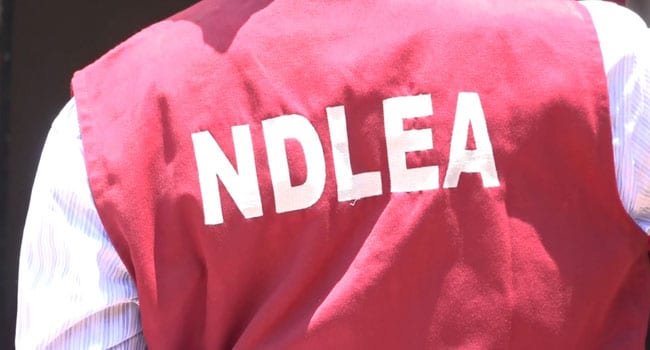
NDLEA had declared Miss Commonwealth Nigeria Culture 2015/2016, Ms Oluwadamilola Aderinoye wanted on Sunday for dealing in illicit drugs.
Ms Aderinoye is the founder of Queen Christmas Foundation, a non-Governmental Organisation.
NDLEA’s spokesman, Mr Femi Babafemi stated in Abuja that the former beauty queen escaped from her Lekki, Lagos residence as operatives were closing in on her.
He stated that NDLEA operatives raided her apartment at Oral Estate, Lekki on Jan. 24 following credible intelligence that she was dealing in illicit substances.
“Recovered from her home during the search witnessed by the estate officials were 606gm of Canadian Loud, a synthetic strain of Indian hemp.
“Also recovered from her residence was an electronic weighing scale, large quantities of drugs packing plastics, a black RAV 4 SUV and her photographs,’’ he added.
Babafemi stated also that two members of an international drug trafficking syndicate were arrested on Jan. 25 at Edu Orita in Ogun.
One of the suspects was being prepared to travel through Lagos to Qatar with some hard drugs on the day of arrest, he explained.
“At the time of the arrest, 1.8kg of Indian hemp, electronic weighing scale and other illicit substances were found on the suspects,’’ he stated.
Babafemi added that a 50-year-old man was also arrested on Jan. 24 when 20kg of Indian hemp was found in one of the rooms in his house at Mushin Olosa, Lagos.
He stated also that NDLEA recovered 87 compressed blocks of Indian hemp weighing 73kg; 21,346 pills of tramadol and 3,800 tablets of diazepam from another suspect on Jan. 26.
The NDLEA spokesman explained that the drugs were recovered when the suspect’s truck was intercepted at Lafiyawo, on Gombe-Bauchi Road.
“In Plateau, a 35-year-old male, was nabbed on Jan. 27 with 5.355kg of Indian hemp at Layin Zana area of Jos,’’ Babafemi stated. (NAN)