By Emma Obe, Andy Asemota, Ben Ogbemudia, Cajetan Mmuta and Idu Jude
It is now like one week, one trouble for Nigerians as economic indicators forecast a bleak future for the masses. After the shocking revelation by the National Bureau of Statistics a week ago that unemployment rate has hit an all-time high at 33.33 per cent and that inflation had galloped to a record 17.4 per cent, Nigerians were a few days ago woken up to another heartbreaking news by the Nigerian National Petroleum Corporation, Group Managing Director, Mr. Melee Kyari, that the pump price of petrol could hit N234 a litre because the corporation might no longer fund the subsidy that has kept the price at N162 a litre.
The subsidy regime, Kyari said, cost the authorities N120bn monthly.
Though the NNPC Public Affairs Department has reassured Nigerians that the increase in price would not come soon, there are strong indications that Nigerians will have to brace up to tougher times.
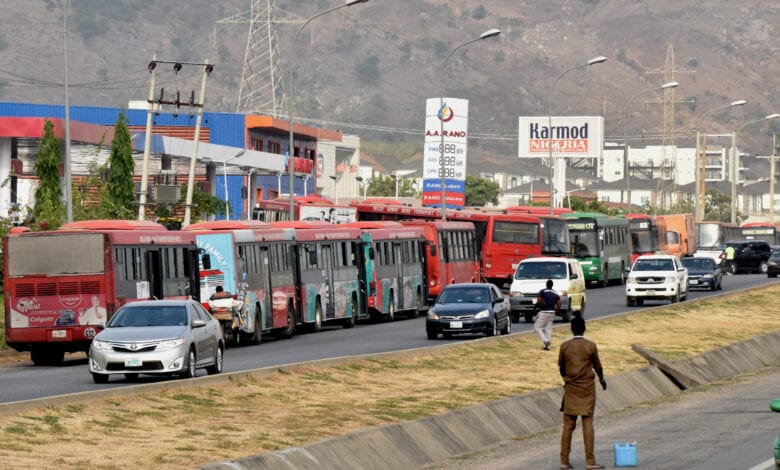
Currently, petrol sells for between N162 and N165 a litre.
Two weeks ago the Petroleum Products Pricing and Regulatory Agency (PPPRA) sneakily announced a new price regime of N212 a litre. This, however, lasted a few hours as the agency hurriedly pulled it down from its website following an outcry from the people.
But X-raying Kyari’s proposition, a cross-section of economic analysts and labour leaders posit that any further increase in pump price without an accompanying improvement in the purchasing power of the people will unleash a regime of pain, suffering and poverty on the citizens.
In the calculation of these industry watchers, a vast majority of the people are already poor and struggling to survive.
With miserable wages, low access to healthcare, potable water, education and electricity, an increase in the price of petrol sounds like a death knell on Nigerians, especially as the government has yet to announce its plans to cushion the likely effects of the imminent hike.
For a Port-Harcourt-based economist, Dr. Oluka Ekwa, the tragedy of an endless increase in the price of petrol via the withdrawal of subsidy will stretch the masses to a breaking point where they may violently resist or give up entirely.
“Petrol is an essential commodity and therefore demand for it is inelastic. This means that no matter how much increase in its price, people will still ask for it because the people cannot find viable alternatives to petrol.
“Government may be deceived by the continuous demand for petrol in spite of the price increase and would want to sustain it. But that could prove fatal because the people might resist with uncertain consequences. You must take note that most revolutions feed on the poverty of the masses,” Ekwa said.
“The much awaited evil day is here,” a professor at the Department of Agricultural Economics, Ambrose Alli University (AAU) Ekpoma, Edo State, Agharese Osifo, said while responding to the impending removal of petroleum subsidy. According to him, a new price of petrol at N234 per litre will tighten the noose around the neck of the low-income earners.
Osifo said, “It is a death knell and the much-awaited evil day is right here. Subsidy payment is a normal thing for all nations of the civilised world. Due to the strangulating effect of market imperfections, market price alone must not be left to determine the prices of petroleum products. The prices must be cushioned by government subsidy for equity and egalitarianism in the polity”.
The Chairman, Independent Petroleum Marketers Association of Nigeria (IPMAN), Rivers State chapter, Dr. Joseph Obele, said the price of almost all commodities in the country revolved around the price of fuel and therefore any increase in the price of fuel would further cause spiral inflation.
He added, “Increment in the price of fuel will further affect the inflation level in Nigeria, which is today at 17.4 per cent. It will shoot up to over 30 per cent. And the recent publication about unemployment in Nigeria shows that unemployment has gone worse. This would become an additional burden on the people”.
The Chairman, Civil Liberties Organisation, (CLO) South-East, Aloysius Attah, noted the withdrawal of subsidy was an admission of failure by government, whose duty, according to him, is to subsidise life and provide security for the people.
“Another name for government is subsidy. A government that fails to subsidise the cost of major consumable item for the people has failed in its primary purpose which is security and welfare of its citizens.
“This country will implode if government ever tries to increase fuel prices up to such magnitude. The majority of Nigerians are already impoverished and any further attempt to increase their suffering amounts to hell-fire on earth.”
A Benin-based human rights activist and promoter of One Love Foundation, Chief Patrick Eholor said rather than remove subsidy from fuel and bring untold hardship to the people, the government should cut down on the cost of governance.
“You cannot tell the masses to buy fuel at N234 but public officers continue to drive around in a convoy of 4.5L SUV vehicles, all funded from taxpayers money. You cannot tell me you want to remove subsidy and the children of those removing it are all over the world squandering funds stolen by their parents,” Elohor said.
He said it was insensitive for government to remove subsidy and make life more difficult for the masses after increasing electricity tariff and other services provided by government.
Petroleum Subsidy Blues: The Patriots, The Pretenders – Mike Ozekhome
A legal practitioner, Mr. Jefferson Uwoghiren, said, “Subsidy removal, without minimum wage increases would alter the national poverty level. The clear consequence is civil strife.”
According to Mr. Emeka Umeagbalasi of the Intersociety Group, the latest development is a clear sign of failure of the present administration.
He wondered why Nigeria, an oil producing nation, could not provide fuel for the people at an affordable rate, describing the situation as a demonstration of outright insensitivity about the plight of the masses.
A former member of the House of Representatives, Dr. Paul Ezeh, said removal of fuel subsidy and the subsequent increase in the price of the product would bring untold suffering on the people.
Ezeh said, “Soon poor Nigerians will be at the receiving end and that is because the APC has milked the nation dry while subsidising fuel with funds not appropriated by the National Assembly. We will soon see increase in pump price of fuel. It may be N250 or more.
“You will also see sky-rocketing prices because every other economic activity depends of fuel. Can’t you now see what the All Progressives Congress has brought? We should wait for more hardship even when some states have failed to pay the paltry N30,000 minimum wage. With a bag of rice at N35,000, tougher times await the citizens.”
Second Republic Deputy Senate President, Alhaji Mamman Danmusa, said a new fuel regime would worsen the harsh economic conditions of the majority of the people.
Danmusa said, “My advice to the government is that it should seek the peace and stability of the country rather than economic gain. Really, nobody is sure of what will happen. So I hope they (government and the NNPC) will think very deeply and realise that Nigerians have limit they can endure,” .
A one-time Secretary to the Government of Katsina State, Isah Muhammad Katsina, also expressed worry that crises and protests might accompany any further increase in the price of petrol.
He said, “The present leadership knows these things. They get daily reports of what is happening even in local markets, but they never take actions.
“The people may react violently. It can be peaceful. It can be violent. Imagine a measure of millet is getting to over N550 instead of N150 just as the prices of other food items have gone up at the same level.”
Meanwhile, Obele has also canvassed that subsidy removal should be done at the right time.
He said, “Subsidy should be removed when Nigeria’s four refineries are working. Then, we will be refining crude oil locally and the price of petrol will not be determined by international market forces”.
According to him, when the refineries are refurbished, they should be privatised under the Nigerian Liquefied Natural Gas model where the refineries will be operated by a joint venture of international oil companies and the NNPC.
The operation of the local refineries, he added, would not only make fuel cheaper, but would also boost employment and other economic activities in Nigeria.
Similarly, Attah said, “Let the government repair our refineries and ensure that the cost of petrol is within the reach of the common man. Nigerians need downward review of fuel prices and not an increase.”
A member of the House of Representatives, Egberongbe Mufutau, said the removal of the fuel subsidy would be in order if the Federal Government could provide the basic amenities for its citizens.
The lawmaker added, “Yes, it is good but government must provide the basic things needed by the people. Government should ensure stable electricity, potable water, good roads, affordable transportation system. If all these are provided, what concerns me with buying fuel?
“I will be using public transportation; businesses will move, the economy will grow. But if this is not done, then expect more criminalities in our society. You cannot buy foodstuff, pay for transportation and service your electricity tariff. It is really disheartening the way things are going. Well, I sincerely expect government to do something before the removal of subsidy which I also support.”
Another member of the House of Representatives, Benjamin Mzondu Bem, sees the subsidy regime from another perspective. According to him, subsidy is a fraud and needs to be removed immediately.
He posited, “They have been committing a lot atrocities with it. Now, we don’t even know whether there is subsidy or not, the way things are in this country.
“Nigerians need to adjust to the reality of the world. Let us be honest with ourselves. Let it be removed and let the market forces control the price. You will see that at the end of the day, the whole thing will crash.”