To say that the cramming together of about 250 ethnic nationalities with more than 400 languages and diverse religions in the interior coast of West Africa as one country by our British colonial masters is not working as it should, is stating the obvious.
Colonized, enslaved and exploited for more than 80 years before being granted political independence by the colonialists in 1960, Nigeria has failed to work in the true sense of the word.
Even as successive administrations, both military and civilian, have abused the fault lines to breaking point, the country has apparently degenerated into the abyss due to corruption, tribalism, nepotism, religious fanaticism and bigotry.
From 1960 till date, including the period of the Civil War, Nigeria has never been this divided, that a call for a sovereign national conference would have been more appropriate but for the fact that there is a National Assembly in place.
What with the abductions or killings of whole communities; large scale kidnapping of school children and commuters for ransom; burning up of farmlands, killing, abduction and raping of farmers by armed Fulani militias! Nigerians should have a frank, crucial conversation on its present and future challenges.
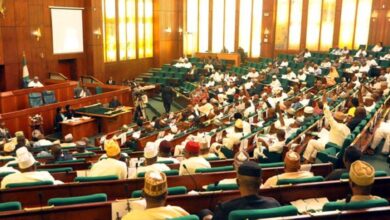
There must be a national conference which must hold great promise as a monumental event that will veritably midwife national renaissance.
It will galvanize and accentuate hope and optimism in the realms of representation, breath of national issues for discourse, ideological depth and profundity as well as the purity of intention, patriotic fervour, legitimacy and popular acceptability.
We Nigerians must see the conference as our national duty and supreme responsibility with a great sense of expectation and hope.
This national expectation should not be subordinated to any form of selfish bickering or personality clash which will ultimately negate the very essence of our national renascence.
Nigeria must urgently organize an all embracing, inclusive national dialogue which will exhaustively discuss the grey areas that have perennially been militating against the country and her quest for true greatness and meeting her destiny.
These issues include the nature and rubric of the Union, the fashioning of an acceptable federal structure that can guarantee justice, equity and fairness to all Nigerians irrespective of ethnicity, creed, class, gender and political affiliation.
If collectively through this national conference we achieve the goal of releasing the dormant intellectual energies of Nigeria and her peoples, it would have accomplished so much for the nation that no ethnic group would want to secede again or contemplate such.
It is our considered appeal to Nigerians to sink their differences, squelch their egoistic temperaments and abandon petty jealousies which can only cast aspersions on our image by truly looking at the nation’s myriad of problems dispassionately and with patriotic zeal and precision.
The present moment requires patriots with broad shoulders, capacious minds and circumcised hearts who alone can rankle the festering wounds and apply the healing herb to the stubborn gangrenes inflicted by our chequered history.
Dialogue has been rediscovered the world over as a subject of public debate and of philosophical inquiry. Politicians from the ideological divides, leading intellectuals, and concerned citizens from diverse backgrounds are addressing questions about the content of the human character.
The imperative for an all-encompassing dialogue and unity cannot be overemphasized.
Immediately after the Civil War in 1970 in which more than two million people lost their lives, what our leaders ought to have done was to call for and host a national dialogue to cut a new deal for the people and move the nation forward.
But they were smug in their self-assurance. Unfortunately, they saw the entire polity as their war booty and were blissfully unaware of its consequences. The outcome was that desperation among Nigerians became infectious.
Even when the military decided to hand over the reins of governance in 1979 to their civilian counterparts, they hurriedly put together a phony constituent assembly and drew up a constitution without the input of the authentic representatives of the Nigerian people instead of opening up a forum for national dialogue and unity.
The upshot was that the Second Republic was soon to collapse like a pack of cards.
In 1993, after the annulment of one of the most peaceful and acceptable Presidential elections ever conducted in Nigeria by the military, the people openly canvassed for a Sovereign National Conference in which they would discuss the basis for the corporate existence of the country.
But the Khaki boys in their wisdom repudiated this idea. Of course, Gen. Sani Abacha later organized his own conference in 1995 to give legitimacy to his illegitimate regime.
Despite the stark illogicality of the military praxis, a few courageous politicians led by the late iconoclastic Yoruba leader, Chief Abraham Adesanya, called for, and hosted a well–attended All Politicians Dialogue in Lagos in 1995. This helped to galvanise support for the massive agitation for a return to civil democratic governance which became a reality on May 29, 1999.
Again, the administration of Chief Olusegun Obasanjo (1999-2007), the first civilian government after a protracted period of military gangsterism, rapacity and greed, bungled a great opportunity to host a formidable National Political Conference in 2005 due largely to the plot for tenure elongation of President Obasanjo.
The Goodluck Jonathan administration, by husbanding the 2014 National Conference in which Nigerians of all faculties were adequately represented, had succeeded in providing a platform on which the nation would be re-invented.
But the opposition politicians who are currently calling the shots boycotted the confab with flimsy excuses.
Yet many continue to associate dialogue and unity with a prudish Victorian morality or with crude attempts by government to legislate peace.
It is against this backdrop that THIS NIGERIA is calling for a national conference. President Muhammadu Buhari has no choice but to dialogue with the aggrieved, from his party, the All Progressives Congress (APC) to other Nigerians who feel shortchanged by his administration.
The government seems to be fighting so many wars: the Boko Haram insurgents, militants in the Niger Delta, the Indigenous Peoples of Biafra (IPOB), the Shiites religious group in the North West, bandits all over the country, etcetera.
Unfortunately, despite the wanton killings of Nigerians all over the place, the protection of lives and property of the people which is the primary responsibility of government as stipulated in Section 14 of the Constitution of the Federal Republic of Nigeria (1999 as amended) is not in sight.
The October 2020 protests by Nigerian youths against the Special Anti-Robbery Squad (SARS) of the Nigeria Police Force had generated more heat than light as the well intentioned action of the youths was hijacked by hoodlums who were on a destructive mission, looting and killing across the country. Yes, the youths have spoken and the State has heard them. The government had made some concessions by disbanding the SARS and had promised to embark on a holistic police reform. The government has gone a step further by removing the service chiefs but refused to reduce the pump price of fuel thus refusing to reflate this highly inflated economy.
Like many analysts have said even before the protests were infiltrated by unwanted elements, the anti-SARS uprising went beyond halting police brutality. Some of the actions the President ought to have taken immediately to moderate tension in the country would have been: encourage the youths to ventilate their feelings through the peaceful protest; replace the service chiefs and rejig the nation’s security architecture by ensuring ethnic balancing in the constitution of the leadership structure of the security agencies; downward review of the pump price of fuel, and review of the appointments of the administration that tended to be one-sided. The president did not do that, which has fueled more pains in the polity.
President Buhari must note that his becoming president in 2015 was a product of dialogue and national unity. An initiative for dialogue towards a peaceful transition by the Jonathan administration was masterfully encapsulated in the hosting on Thursday June 12, 2014 of Nigeria Political Parties and Political Stakeholders Submit at the International Conference Centre, Abuja. With the theme, “Nigeria’s Political Hearts Must Beat As One”, the summit which was chaired by His Excellency, General Abdulsalami Abubakar (retd), former Nigerian Head of state, and a keynote address by former President Jonathan, was what made Buhari to sail easily to the State House without rancour or animosity.
Guber polls: Gale of defections in Anambra
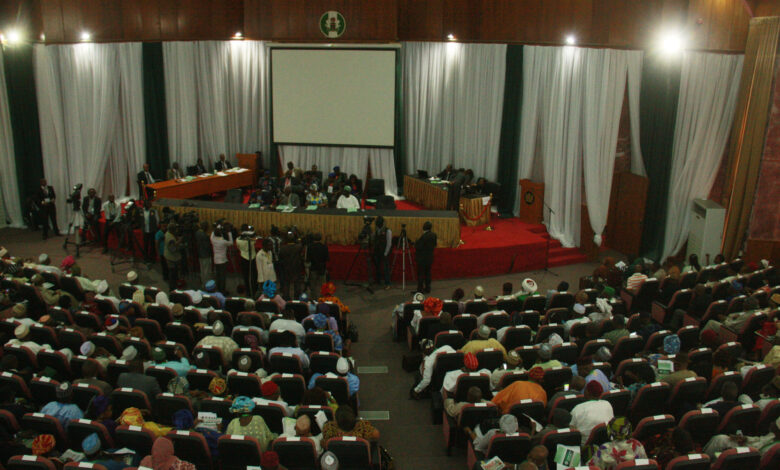
Massively attended by registered Nigerian political parties, leading Nigerian political stakeholders, civil society organizations, members of the Fourth Estate of the Realm, and members of the diplomatic community, the summit did address the activities of very powerful anti-democratic forces intent on exploiting lapses in the system to wage a bitter struggle against the democratic state. The parties and attendees went home with the fact that nothing meaningful could be achieved without peace and unity. It was this spirit of oneness and love that gave birth to Buhari’s emergence in 2015.
The need for collaboration amongst existing political parties in the face of mounting security threat to the corporate existence of our dear country is long overdue. A sufficiently re-enforced collaboration amongst Nigerians and the existing political parties will foster a positive national political climate that will engender social stability, deepen national security and cohesion and to reactivate a healthy political competition among the parties. To douse the current tensed political atmosphere, our politicians must close ranks and put the unity and survival of the nation first. A national conference whose report would be submitted to the National Assembly will therefore form the basis for a new constitution for Nigeria.
There must be a national democratic agreement among the contending forces and political stakeholders. It is better to jaw-jaw than to war. We need resources to develop the country and to feed our teeming population, not to prosecute wars.
Dialogue is an important component of the democratic process. We discovered that the scarcest commodity on our national table is the unity of the diverse ethnic groups that make up Nigeria. Our country has been so battered that something concrete needs to be done to make the youths to be interested in the future of the country as one entity. So, the obvious need for a national conference is imperative and urgent before the next generation elections.