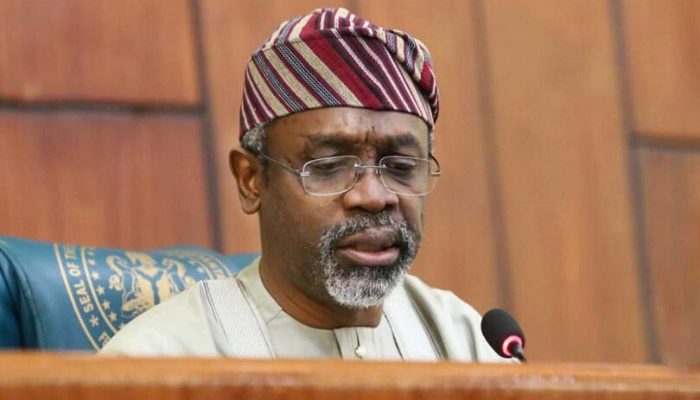
Farmers need to work toward attaining self-sufficiency in fish production, to reduce its importation in Nigeria, according to the Speaker, House of Representatives, Mr. Femi Gbajabiamila.
Gbajabiamila, whose view was also echoed by Gov. Babajide Sanwo-Olu of Lagos State, said this on Tuesday in Ikeja.
They both shared the view at the opening ceremony of a three-day training on the Code of Conduct for Responsible Fisheries in Lagos State.
The training was organized by the National Institute for Freshwater Fisheries Research (NIFFR), in collaboration with Ata Global Services Ltd., and facilitated by Gbajabiamila.
Gbajabiamila, represented by his Senior Legislative Aide, Mr. Fuad Laguda, said that ensuring reduced the importation of fish would ensure the sustainable livelihood of fisherfolks in the country.
He said that the training was for continuous empowering of the people of Lagos State and Nigeria in general.
The speaker charged the participants to make good use of what they learned during the three-day training.
This, he said, would enable them to give back to society, and improve Nigeria’s economy by reducing foreign importation of fish.
In his goodwill message, Sanwo-Olu said the training programme was a step in the right direction to expose youths to opportunities in fish farming and the value chain.
The governor, represented by his Chief of Staff, Mr Tayo Ayinde, said that it aligned with the efforts of his administration in the area of development of aquaculture, to meet the fish demand of residents.
He commended the management of NIFFR on its efforts at sustaining the legacy of past leadership in the implementation of its mandate, which was strategic to achieving food security, with regard to fish production.
”It is a thing of concern that given our natural endowment, in terms of water resources, a lot of our hard-earned foreign exchange was being expended for the importation of fish as a result of our inability to meet our local demand.
”It is, however, heartwarming that as a result of the strong commitment from the Federal Government to resuscitate and develop the agriculture sector, a lot of progress is being achieved as evident in the drastic reduction of many food importations, including fish and fish products,” the governor said.
Also speaking, the Chairman of the Governing Board, NIFFR, Chief Mutiu Lawal-Are, urged farmers to echo the need for policy consistency on the part of the government.
He said this was in order to transform the latent potentials in Nigeria’s freshwater fisheries sector into tangible results.
Lawal-Are, who was represented by the Acting Executive Director, NIFFR, Mrs. Stella Ovie, said the three-day training was to re-orientate, re-invigorate and propel to international standards the fisheries industry in Lagos State.
He said that Lagos State had the capacity to positively impact and promote the domestication of responsible practices in the nation’s fishery sector.
ICPC inaugurates Anti-Corruption Transparency Unit in NRC
This, according to him, is in line with the well-publicized vision and policy focus of the Federal and Lagos State Government.
Speaking in her capacity as Acting Executive Director of NIFFR, Ovie said that the goal of the institute was to attain self-sufficiency in fish and fisheries production for the sustainable livelihood of fisherfolks.
She said that this was through aquaculture and rational exploitation of inland aquatic resources in Nigeria.
Ovie said that the training, facilitated by Gbajabiamila in empowering Lagos youths, was very critical in transforming the unemployed citizens, not only to successful entrepreneurship but also employers of labor in their own right. (NAN)