By Francis Ajuonuma, Ben Adoga, and Cajetan Mmuta
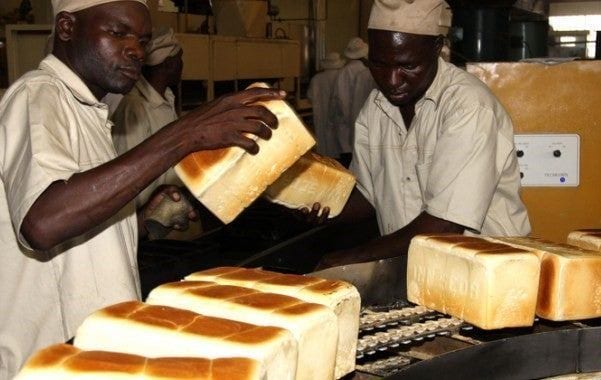
Bread, a staple food among most Nigerians, is now turning to gold and looks set to get out of the reach of the ordinary people on the street.
This is so because, almost every month, the prices of loaves of bread keep rising astronomically, leaving many households unable to afford the meal, while those who could afford it, have been left lamenting over its high cost.
The continuous rise in the prices of bread has been blamed on some of the Federal Government policies, as well as an increase in the prices of sugar, flour, butter, and power.
Last week, the National Bureau of Statistics (NBS) raised a worrisome alarm when it put Nigeria’s inflation rate at 29.9 per cent due to the rising cost of food made possible by some federal policies.
Also, the Master Bakers of Nigeria, at a recent press briefing, called for the immediate implementation of the financial support palliatives for bakers as they were promised by the Federal Government as post COVID-19 support programmes for Small and Medium Enterprises (SMEs), which they belong to.
They claimed that their association had already lost over 40 per cent of their membership and that more members were still falling out of the market due to price hikes of bakery inputs and policies of governments at all levels.
*We’ll shut down production Feb 27 due to rising bakery inputs- Bakers’ union
Due to the prevailing situation, bread makers last week threatened to withdraw their services from the public with effect from February 27 if the Federal Government fails to take action that will force the cost of bread production down.
However, some bread consumers, who spoke with ThisNigeria on this worrisome development said they have reduced their consumption of the hitherto staple food and will be forced to boycott it entirely if the prices keep going up, insisting that the hike in bread price is becoming unbearable for the ordinary Nigerians.
Some bakers, who also spoke with our correspondents, warned that the once-cheapest food for the poor is gradually moving out of their reach. They fear that more bread makers or bakeries will be forced to close shop if the situation continues unresolved.
Investigations at Oceanic Bakeries at Adetokunbo Ademola Crescent, Wuse 11 show that quality has also been substantially compromised due to the high cost of materials. Oceanic is one of the major bread providers in Abuja.
*Price of average loaf hit N1,200
n the South-East, the story is not different as investigations show that a loaf of bread now costs between N250 for small ones that used to sell at N100 and N1,200 for a loaf that had earlier sold for N800, while the ones that sell for N900 is now N1, 500 at various shops and stands in most markets within the zone.
A manager of Magrellos, situated along Bode Thomas, Surulere, Lagos, who simply identifies himself as Godwin, said the bread industry is almost dead and needs urgent solutions to keep it going.
“Bread is of different types. The common man goes for the Agege Bread, but one thing with bread is that no matter its high costs, people will still buy it because bread is an addictive product like tobacco.
“Some can’t do without bread. So, it is just for the government to come in. If not, there will be a problem because, if you can no longer afford the basic food, what do you expect?”
He added, “The patronage for bread has dropped drastically because the higher the price, the lower the quantity that will be demanded. So, what is happening now is not good for anybody.
“When they say subsidy, they should scale it down. For example, let them subsidise food and not any other thing so that it’ll have a direct effect on the masses. Because it’s only when you subsidise foods that the masses can enjoy. If you subsidise fuel, it’s for the rich, but food, especially bread, sugar, garri; when you do that, things can pick up.”
For Rasidi Ismaili Olanipekun, a manager at Ibigiga Bakery, Amukoko, Lagos, as of today, the bread business is no longer profitable as a result of very low patronage caused by the high price of the product.
“The bread business has collapsed. I’m tired of doing a business that is not profitable as a result of very low patronage caused by the high price of the product. I have made up my mind to quit the job, if I can secure another job, but not in the bakery.
“Already, some of our members have left the job for commercial motorcycling jobs because it benefits them more than the bakery business. It is not only the bakery business that is suffering everything in Nigeria has collapsed.
“Before we used to earn little as profit from sales, but today, nothing is coming as profit. Before we can sell four, three, two bags a day. It’s no longer so today as we can only struggle to sell a bag.
“The Policies of the Federal Government have not helped the bread industry at all. Rather, it has helped it in squeezing life out of it. The duties placed on baking materials like sugar, wheat, flour, and butter, among others, have contributed to this problem. So, my advice to the government is that they should make the prices of things come down to avoid a food crisis in the country.”
A parent, who simply identified herself as Mama Chinwe, said, “Bread is now gold. It’s now difficult to have tea and bread for breakfast with your family of four because you will need more than N3,000 to do that, and it is just on the ‘management’ level. Before, my kids used to drink tea and bread almost every day, but that has stopped.
“A loaf of bread that used to be ₦800 is now ₦1, 300, and it is likely to further increase any moment,” said the Operations Manager at the Abuja Market Square Supermarket.
Chinyere Diugwu, a major bread distributor in Abuja, said: I’m afraid I may soon be thrown out of business as my capital has been eaten up by the price hike.
“I supply two boarding schools in the FCT as well as maintain two shops where only bread is sold. Before now, it used to be a very lucrative business, but that could barely make ends meet.
“If I’m thrown out of business, what will the children eat? The Pangolo bread that used to move fast is no longer produced.
“It’s easy for construction workers, masons, and artisans to take a loaf of Pangolo, buy minerals, ‘ kunu’ or ‘akamu’ in the morning and combine it and go to work or continue with their work. Now, how do they want these people to survive?” she lamented.
Similarly, another major bread distributor in Abuja, Deaconess Imelda Uzomba, lamented her plight and that of consumers thus: “The jumbo size loaf that used to sell for ₦1,400 is now ₦1,600, and the price is likely to increase by next week.
”As a small-scale businesswoman, such an increase would warrant an increase in my capital to meet the demand, which is not possible. A bus load of bread will require the addition of ₦200 to each loaf to be able to supply, “Where am I going to get that kind of money?”
Checks have also revealed that customers of many of the supermarkets in Awka, the Anambra State capital, are now opting for cheaper loaves of bread, while it was further noted that people with fat pockets are the ones who mostly patronise the ones whose prices have been jacked up above the reach of the average or poor masses.
Our correspondent who visited some of the bread stands at the popular Eke Awka daily market observed that the sellers are battling to make ends meet as their businesses record low patronage daily, following the outrageous price hike that affects virtually all consumer goods, including food items, in the markets.
A customer, Mrs Grace Okeke, told our reporter that she no longer patronises her dealer as she used to because of the worrisome price hike per loaf of bread in the market.
She said, “I don’t buy bread as I used to do for my children. You can see that the prices of bread have gone very high and so are other food items in the market as well as other things. So, even if I want to buy two loaves of bread, I can’t now, but I go for one and at times none.
“Families are in serious trouble these days. From rent to school fees, feeding the family, and other domestic issues; you will be forced to make some slashes trying to spend less to meet the ever-increasing demands.
“However, I urge the Federal Government to be more proactive in finding solutions to the problems being faced by “every Dick and Harry” in “our homes”.
A staff of one of the big supermarkets in Awka, who simply gave his name as Chris, said, “We are all experiencing the same problem of price increase. The market is the same.”
“As it is, we bread bakers aren’t safe from the sledgehammer of high cost of baking materials and other items needed by our homes. But we must adjust, no matter the situation.
”The government should come to our aid because nobody is safe or better in the present circumstance. Except the dollar exchange rate comes down, the prices of things will continue to go up,” he stated.