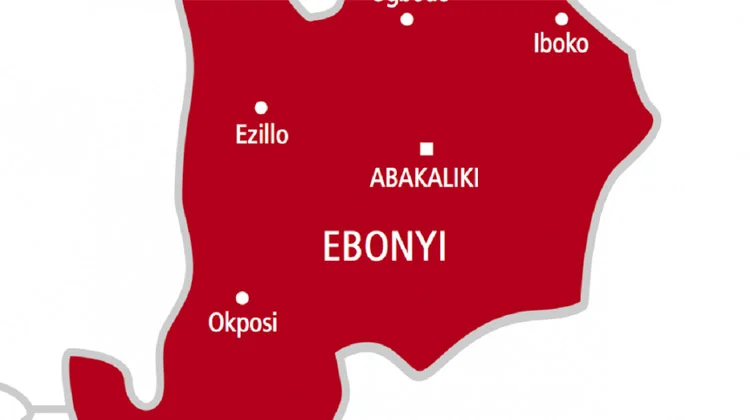
The Police Command in Ebonyi has confirmed the death of the kidnapped former Ebonyi Deputy Governor’s father, Chief Francis Igwe at his abductors den.
This is contained in a statement issued to journalists in Abakaliki on Friday by the Command’s Public Relations Officer (PPRO), SP Joshua Ukandu.
Ukandu explained that the victim, Igwe died on March 2 before the rescue team of the Nigeria Police Force could reach there.
The News Agency of Nigeria (NAN) recalls that the ex-deputy governor’s father was kidnapped on March 1 on his way to church at Ndufu-Alike community, Ikwo local government area (LGA) of Ebonyi.
The Command’s PPRO said the operative of the police neutralise one and arrested nine suspects in connection with the crime.
“Following the kidnapping of Chief Igwe on March 1, operatives of the Ebonyi Command immediately commenced intensive operations aimed at rescuing the victim.
“Through the deployment of technical and intelligence assets, operatives arrested two suspects identified as members of the kidnapping syndicate.
“During interrogation, the suspects confessed that the victim had been killed on March 2.
“The suspects further volunteered to lead operatives to their hideout and assist in the recovery of the remains of the victim.
“However, upon approaching the hideout, other members of the gang opened fire on the operatives.
“The operatives responded with superior firepower, which overwhelmed the gang.
“In the course of the confrontation, one of the hoodlums was neutralised, while others fled the scene. Subsequently, seven additional suspects were arrested, and one locally made pistol was recovered from them.
“The remains of the late victim were later recovered and deposited at the morgue for autopsy.
“The suspects are currently in police custody, and efforts are ongoing to apprehend the fleeing members of the gang. They will be charged to court upon the conclusion of investigations,” PPRO explained. (NAN)