By Cross Udo, Abuja
President Bola Tinubu has told the new service chiefs, the National Security Adviser (NSA), and the acting Inspector General of Police (IGP) that they should work as a team to deliver on the mandate given to them.
Tinubu had his maiden meeting which was held behind closed doors with the NSA, the service chiefs, and the acting IGP yesterday at the Presidential Villa in Abuja.
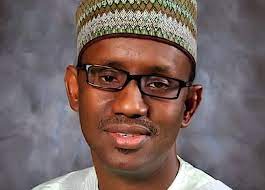
Briefing State House correspondents at the end of the meeting, the NSA, Mallam Nuhu Ribadu, said that the President directed them to work as a team and deliver on their mandate.
Speaking on the outcome of the meeting, he said, “We’re here to thank Mr President for the opportunity he gave us to serve our country and to serve his government. We also pledged our loyalty to him, Nigeria, and Nigerians.
“We believe the choice he made is the right one, the correct one, and we know what he wants for this country. We’re going to work tirelessly to ensure that we accomplish that objective of securing our country, establishing peace, and stability, and let’s get our lives back.
“He assured us that he’s with us a hundred percent. He told us that we must work as a team and that there’s work to be done, he’ll expect us to deliver and we’re grateful for the opportunity. That’s why we are here.”
Asked what will be the starting point of the new security heads, Ribadu said, “Where we are today and you can see already things are improving in our country. If you see the record of crimes and activities of criminals going down, it will continue to go down. We’ll secure this place.
“Nigerians have seen the quality of the people that are given the opportunity, they are probably some of the best we have and they are not going to fail you, they’ll certainly deliver. Thank you very much.”
Apart from the NSA, others in attendance were the Chief of Defence Staff, Major General Christopher Musa, the Chief of Army Staff, Major General Taoreed Lagbaja, the Chief of Naval Staff, Rear Admiral Emmanuel Ogalla, the Chief of Air Staff, Air-Vice Marshal Hassan Abubakar, and the Acting IGP, Kayode Egbetokun.
*Dialogue with repentant bandits, Yerima urges Tinubu
Meanwhile, a former governor of Zamfara State, Ahmad Yerima has urged President Tinubu to first engage the use of dialogue with bandits rather than military force, as the best way to address the insecurity challenge to resolve insurgency in the country.
Yerima gave the suggestion yesterday while speaking with State House correspondents after a courtesy visit to the president.
Yerima, who said the immediate-past government failed in negotiating with the bandits, believed that if the Federal Government wades in and begins negotiation with the bandits, the country will record advanced progress like was experienced with the Niger Delta militants.
He further highlighted the success of late President Musa Yar’Adua’s negotiations with militants in the Niger Delta region in 2007, arguing that the feat is a precedent for a peaceful resolution.
The Senator who underpinned that the challenges of banditry are further exacerbated by the growing poverty and illiteracy in the region, stated that he is not making a case for bandits but maintained that the Federal Government can wield resources and political will to activate negotiation with the repentant ones.
Yerima also stated that the president should intervene in the power play crisis between the incumbent Governor Dauda Lawal of Zamfara State and his predecessor, Bello Matawalle.