By Oludamisi Ojo
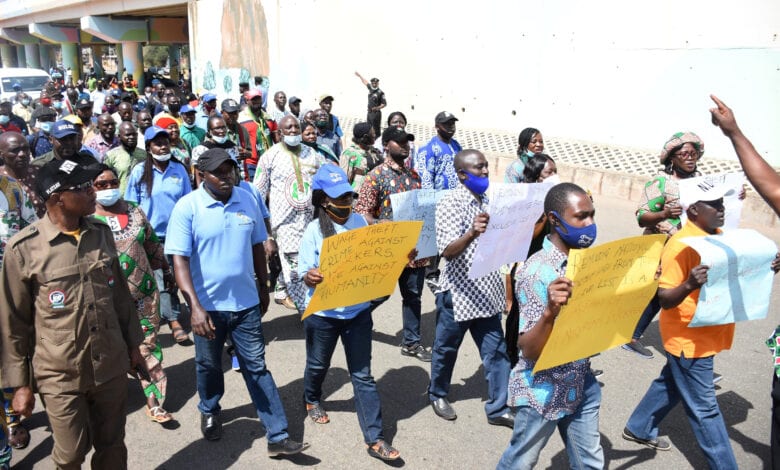
The Trade Union Congress (TUC), Ekiti State Chapter, has lamented the way petrol marketers operating in the state are selling petrol above the regulated pump price of N162 approved by the federal government.
The labour union, described as outrageous, the N250 per litre being charged by Marketers.
It noted that the situation has created a serious crisis for workers and imposed untold hardship on them.
The TUC expressed displeasure over the sale of petroleum products above the pump price, saying the government should find a way to curtail the activities of petrol marketers, who were allegedly hiding under the current petrol scarcity to extort the populace.
A statement issued in Ado Ekiti, on Tuesday, by the State Chairman of the TUC Com. Sola Adigun urged the marketers to consider the interest of the workers, the ordinary people who need to move daily and the artisans whose daily survival is determined by the product.
Adigun also appealed to the petrol marketers to stop hoarding the fuel in the interest of the people, particularly the masses who do not have an alternative source.
The TUC Chairman reminded the government that “by the provision of Section 14, subsection 2 b, which makes” security and welfare of the people as the primary responsibility of government”, those in authority was bound to protect the people from the exploitation of any kind.
Five men docked for belonging to a gang of thieves
The Union charged the task force on petroleum to justify the essence of its existence and protect the people from Shylock businessmen who are bent on making life unbearable for the people.
TUC noted that Workers who had to move several kilometres to work were worst hit by the unjustifiable scarcity and illegal increase in the pump price and the attendant skyrocketing prices of commodities
The labour union was reacting to the sale of petrol for between N250 and N260 per litre by Marketers in the last two weeks due to scarcity being experienced in town.