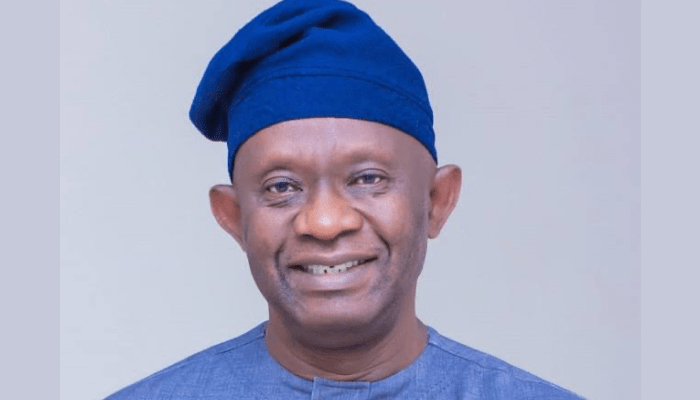
By Nathaniel Zacchaeus
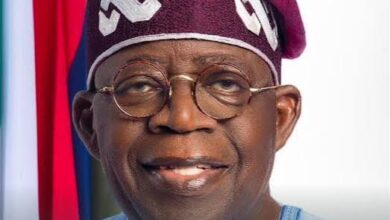
Chairman of the Committee on Senate Services, Senator Sunday Karimi, has said President Bola Tinubu deserved commendation on the landmark judgment on financial autonomy for local government areas pronounced by the Supreme Court on Thursday.
Karimi in a statement yesterday said Tinubu deserves to be honoured in the nation’s “Hall of Fame” for enabling the judiciary free hand to function, which culminated in such historic adjudication.
He assured Nigerians that the National Assembly would ensure compliance by the various state governments while also taking up the responsibility of amending the constitution to address inherent contentious issues.
*Promises constitutional amendment for INEC to conduct council polls
These include grey areas like the transfer of the responsibility of the conduct of elections to the local councils from the various state electoral bodies to the Independent National Electoral Commission (INEC).
He said, “I thank Mr President for mustering the courage to do the right thing. Since 1999, the third tier of government speaking, has been non-existent. State governments treated them as appendages of the state governments.
“No President has been able to change that. But, within one year, however, President Tinubu returned the local government to the owners-the masses.
“Local governments, if well operated, will ensure a better existence for our people. President Tinubu took due cognisance of this and courageously took the bull by the horns.”
He, however, noted that the battle was not yet over.
He said, “Some state governors will fight back. President Tinubu allowed the judiciary a free hand to operate in this particular instance, irrespective of the fact that he is but a first-term President who may desire a comeback in 2027.”
Tinubu, he added, did this primarily because of his single-minded concern for Nigeria’s masses.
Part of the statement read, “I align myself with the President on this. It takes a man of the people, it takes a man of courage, it takes a man that knows and feels the pulse of the masses to make this happen.
“He has seen it all, as a former Senator and a former Governor. Former President Buhari promised to push this but lacked the presence of mind and political will to pursue it. It will not stop there.
“The National Assembly through our oversight responsibility will ensure that revenue from the federal purse goes to where it is supposed to go.
“We will ensure that the Supreme Court judgment is obeyed to the letter and that allocation is shared between the three tiers of government by the law. The next step is to ensure that the local government elections are conducted by the INEC.
“The National Assembly must amend the electoral act and the 1999 constitution to ensure that credible people are elected to the helms of the local government administration. This will ensure that capable individuals can step forward to contest local government elections.
“Experienced people will be needed to manage the funds effectively, and prioritize the development of the grassroots for the masses to become actively involved in shaping the future of their local governments.
“A lot of money that has gone to the local governments, over the years was either taken over by the state governments through the joint account or not accounted for. Prosperity will remember President Tinubu for this epoch-making achievement, his second term is assured.”