By Nathaniel Zacchaeus, Abuja
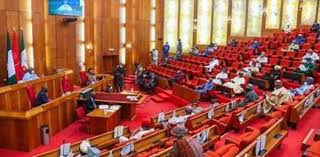
Heads of judicial institutions and top government functionaries yesterday in Abuja lent their support for a bill being proposed by the National Assembly to increase the salaries and emoluments of judicial office holders by 300 per cent.
They also stressed the need for a yearly increment in their annual salaries and a four-year periodic review of their salaries and emoluments by international standards.
They spoke separately at a public hearing for shareholders and the general public on a Bill for an Act to prescribe the salaries allowances and fringe benefits of judicial office holders in Nigeria and related matters bill 2024.
The public hearing was organised by the Senate Committee on Judiciary, Human Rights, and Legal Matters.
They lamented that the last time their salaries and emoluments were reviewed was in 2007.
They also noted that the development had forced some judicial officers to be involved in acts not expected of a learned silk, in the last 17 years.
The stakeholders included the Attorney General and Minister of Justice, Lateef Fagbemi (SAN); the Chief Justice of the Federation, who is also the Chairman of the National Judicial Council, Olukayode Ariwoola; President of the Nigeria Bar Association, Yakubu Maikyau; the Minister of Finance and Coordinating Minister of the Economy, Mr Wale Edun and senators.
*Nigerians will suffer injustice if judges are underpaid, says CJN Ariwoola
Ariwoola said Nigerians will continue to suffer from the nation’s judiciary system until salaries, allowances, and official benefits of judges are increased.
The CJN was represented at the hearing by Justice Kashim Zannah, the Chief Judge of Borno State.
He said the salaries were last reviewed in the year 2007.
The CJN said, “It has been 17 years, earning the same amount despite the tumultuous depreciation in purchasing power, while other sectors have theirs renewed several times over the period. Judicial officers have been silent.
“As a simple illustration, the exchange rate of the US dollar was 130.25 at the time the salary was fixed in 2007 and this exchange rate can be found on page eleven of the June 2009 Revenue Mobilisation Allocation and Fiscal Commission review report that is the source of the exchange rate as of the time it was fixed.
“Therefore, as of 2007, when the salaries were fixed. For example, A Judge’s monthly gross pay before tax of 661,738 divided by 130.25 equals $5,080 today, divided by just 1500, it is $441.
“A salary of $5,080 has now dwindled to $441 only when it was fixed. In today’s terms, the value is equal to N7,000,600.27k.
“However, by the historic instrumentality of the 10th National Assembly, and the unequalled disposition of Mr President to enhance the administration of justice, the current appropriation law captures an anticipated equivalent of the above example at a gross monthly of N3.2m.
“Now, notwithstanding the foregoing, we know to profound appreciation the table capture that we are bringing is what the Honourable Attorney General said the President approved as the 300% increase, and which by the instrumentality of this distinguished and Senate was already captured.
“Our prayers, therefore, distinguished senators. It is evident from the foregoing that even the appropriated salary package is less than half the value of the salaries that were fixed in the year 2007.
“When judges are well compensated, yes, they do their best. But actually, as clearly demonstrated, the real interest that is being looked at is the interest of these citizens because they will be the ones who suffer the consequences of a deprived Judiciary.”
Ariwoola, while analysing the poor pay of Nigerian judges, equated it to a patient under intensive care who needs serious medical attention.
He said, “Distinguished senators, In a nutshell, what we are saying is this. The situation of judges across Nigeria is like one in critical condition in the ICU
“The proposed Bill would stabilize the patient. The captain in the appropriation door would have him moved from the ICU to the general ward. When a patient is in that condition, you don’t start physiotherapy at the ICU.
“You make sure he is stabilized, move to the general ward, gain some strength, and then you now look at physiotherapy and all other therapists. That is the nutshell of our presentation that distinguishes senators as we have already exhibited.
“Do move quickly, move the patient out of the ICU to the general ward, and then we will come. For now, let’s stabilize the patient, move him out of the ICU, and then we can talk about the rest later.
“The Chairman (of the Senate Committee), National Judicial Council reiterates its appreciation and gratitude to you and your committee for your tireless effort at removing all obstacles in the work of Nigerian citizens for justice.”
*AGF, NJC, RMFAC back proposal
Similarly, the Minister of Finance, Wale Edun stressed the need to improve the salaries and emoluments of the judicial officers to guarantee a speedy administration of justice.
He expressed confidence that President Bola Tinubu would continue with the legacy he left behind in Lagos where he improved the standard of lives of the judicial officers.
Edun said, “It is a continuation of that tradition that is now coming into effect and an attempt and an initiative to improve the lot of the judiciary.
“So I’m very, very pleased to have been part of this opening ceremony. Listen to the Attorney General. He is the authority in government law.
“I cannot but follow him in commending this bill and requesting its swift passage to the benefit of the judiciary in particular and Nigerians in general.”
The Attorney General and Minister of Justice, Lateef Fagbemi said the instant NJC proposal for a 300 per cent increase was informed by prevailing economic realities of increasing headline and core inflationary trends, putting in place an enabling working environment that engenders professional development and efficiency for judicial officers.
He said, “Based on the foregoing and the expressed concerns of His Excellency, the President over matters of improving welfare and standards in the judiciary, promoting capacity, independence and confidence in the Nigerian judiciary; I recommended the NJC proposal for the President’s consideration on 19th October 2023.
“On 20th October 2023, the President granted an unprecedented approval of a 300% increment in the remuneration of judicial officers.
“Consequently, the President directed RMAFC to review its previous May 2023 recommendation to reflect the NJC proposal.
“This culminated in the present Executive Bill that was forwarded to the National Assembly in furtherance of a cardinal part of the President’s Renewed Hope for a Better Nigeria which is deepening Judicial Reforms to promote sustainable socio-economic growth.”
UBA committed to stakeholders, customers- GMD Alawuba
By Francis Ajuonuma
The United Bank for Africa (UBA), says it’s committed to expanding its presence across the globe and delivering value to all its stakeholders and customers, according to the Group Managing Director of the bank, Oliver Alawuba.
Alawuba, made this statement while speaking at the world press conference held at its headquarters in Lagos to celebrate the bank’s 75th anniversary.
According to him collaboration and partnerships with big-time stakeholders and international organisations are imperative to achieving the objectives of the bank.
“We are committed to expanding our presence, seizing growth opportunities, and delivering value to all stakeholders.
“Collaboration and partnerships as exemplified by the $6bn SME funding agreement signed with the African Free Trade Area (AfCFTA) will be instrumental in achieving our strategic objectives.
“We are dedicated to deepening relationships with customers, employees, regulators, and other stakeholders for mutual benefit and long-term success,” he said.
He assured the stakeholders of the bank’s readiness to invest in innovation and digital transformation to drive operational efficiency.
“Innovation and digital transformation are at the heart of UBA’s strategy for future growth and competitiveness.
We will continue to invest in innovative products, services, and digital platforms that enhance customer experience and drive operational efficiency.
“Our commitment to Corporate Social Responsibility is strong, with initiatives focused on education, healthcare, entrepreneurship, and environmental sustainability; thus, making a concrete impact on communities across Africa,” he added while acknowledging the bank’s growth in the financial sector.
“Today we have over 25,000 Staff, and over 35 million customers served through multiple channels – over 350,000 POS terminals, 2,000 ATM terminals, 1,000 Business Offices, and 19.7 million Card Customers.
“The past 75 years have been marked by stability and excellence, pillars upon which UBA’s legacy stands tall.”
Also speaking at the event, the Group Deputy Managing Director, Muyiwa Akinyemi noted that the bank has had a remarkable milestone in its transformation journey for its 75th Anniversary.
“This anniversary is very dear to us here at UBA, as it not only marks our legacy but signifies our transformation journey from inception as British & French Bank that was established in 1949, to becoming the leading financial institution in Africa as Africa’s Global Bank.
“UBA today operates across four Continents with a presence in 20 African countries, United States of America, France, United Kingdom, and UAE; and over the past 75 years, we have exemplified stability, reliability, and excellence in banking, achieving numerous milestones and positively impacting the communities that we serve,” he said.
NLC, TUC mobilise CSOs, others for strike over electricity tariff, minimum wage
By Clement Adeyi and Cross Udo, Abuja
The leadership of the Nigeria Labour Congress (NLC) and their Trade Union Congress of Nigeria (TUC), counterparts yesterday put their civil society allies on notice over their planned industrial action if the government fails to reverse the hike in electricity tariff and conclude the minimum wage by May 31.
In their joint communique, leaders of the two labour centres, gave the federal government and National Electricity Regulatory Commission, NERC, month ending to reverse the hike.
The communique jointly signed by Comrades Joe Ajaero, President of the NLC, and Festus Osifo, President of the TUC, reiterated their May 31 ultimatum for the government to conclude the new minimum wage or face a national strike.
The communique read in full: “The National Executive Council (NEC) of the Nigeria Labour Congress (NLC) and Trade Union Congress (TUC) convened today in an emergency meeting in response to the pressing national issues affecting Nigerian workers, namely, the recent hike in electricity tariff, the ongoing negotiation of a new national minimum wage with the federal government and the Persisting non-compliance with the 2019 National Minimum wage Act by some state Governments in Nigeria.
“NEC-in-session observed as follows: Whereas the NLC and TUC had embarked on a one-day nationwide Picketing of all NERC offices and DISCOs in protest of the illegal hike in electricity tariff while demanding a reversal from NERC and the federal government without the desired result.
“Whereas the Federal Government’s refusal to comply with the dictates of the 2019 National Minimum Wage Act in constituting the Tripartite National Minimum Wage Negotiating Committee later than six months to the expiration of the existing one; the deliberate delays in good faith negotiations which has compelled the NLC and TUC to give the federal government until the last day of May, 2024 to complete everything about the New National Minimum Wage fixing process;
“Whereas the federal government has not shown any serious sign of ensuring that the New National Minimum Wage process is concluded accordingly;
“Whereas some state governments are still refusing to pay the N30,000 National Minimum Wage as stipulated in the 2019 National Minimum Wage Act.
“After thorough deliberations and considerations of these current realities as they affect Nigerian workers and masses, the NEC-in-session of both centres resolved as follows:
“Electricity Tariff Hike: The NEC once again vehemently condemns the unilateral increase in electricity tariff by the authorities. This action, taken without due consideration for the economic hardships faced by the masses and the provisions of the Law, is deemed unjust and burdensome.
“The NEC reaffirms its demands for an immediate reversal of the tariff hike and the vexatious apartheid categorization into Bands to alleviate the suffering of Nigerian workers and citizens and gives the National Electricity Regulatory Commission (NERC) and the federal government until the last day of May 2024 to meet these demands.
“Negotiation of New National Minimum Wage: The NEC acknowledges the ongoing negotiations between the NLC/TUC, the Organised Private Sector (OPS), and the federal government regarding the new national minimum wage.
“While appreciating the efforts made thus far, the NEC emphasizes the urgency of reaching a fair and equitable agreement that reflects the true value of Nigerian workers’ contributions to the nation’s development and the current crisis of survival facing Nigerians as a result of government’s policies.
“The NEC affirms its commitment to ensuring that the interests and welfare of workers are adequately protected in the negotiation process.
“The NEC-in-session therefore reiterates the ultimatum issued by the NLC and TUC to the federal government, which expires on the last day of this month. It emphasizes the non-negotiable nature of the demands put forth by Nigerian workers and urges the government to prioritize the resolution of these issues in the best interest of industrial peace.
“NEC-in-session further directed all state Councils whose state Governments are yet to fully implement the N30,000 (Thirty-thousand Naira) National Minimum Wage and its consequential adjustments to issue immediately a joint two-week ultimatum to the culpable state Governments to avert industrial action.
“Consequently, the NEC-in-session accordingly reaffirms the NLC and TUC joint ultimatum earlier issued by the Anambra state government by its Anambra state councils.
“It therefore directed all affiliates and workers in the state council to mobilize their members to ensure a successful action in the event the state government fails to meet the demands of workers by Thursday, the 23rd of May, 2024.
“If the government fails to meet the demands outlined within the stipulated timeframe, the NEC authorizes the leadership of the NLC and TUC to take appropriate actions, including but not limited to the mobilization of workers for peaceful protests and industrial actions, to press home these demands for social justice and workers’ rights.
“NEC therefore calls on all affiliate unions, and workers including Civil Society Organisations across Nigeria to remain united and steadfast in solidarity during this critical period.
“Together, we shall prevail in our pursuit of a fair and just society that guarantees the dignity and well-being of all its citizens. The NECs-in-session finally affirms its unwavering commitment to championing the cause of Nigerian workers and ensuring that their rights and interests are upheld at all times.”
*Agree to resume wage negotiations with govt today
Meanwhile, the Organised Labour comprising the NLC and TUC have agreed to attend a meeting of the minimum wage Tripartite Committee slated for today (Tuesday) for negotiation of minimum wage for workers.
The Vice President of TUC, Mr Etim Okon, disclosed this in Abuja yesterday.
Okon said, “The Federal Government has apologised and the next meeting is scheduled for Tuesday and we are going to appear and present our demand.
“We will still be presenting the N615,000 demand. It was what we presented before we walked out, though our submission was not rejected by the government.
“We only rejected the N48,000 that the government presented, because they did not show us how they arrived at that amount. The proposal falls short of meeting our needs and aspirations.”
Recall that the NLC and TUC had walked out of the negotiation meeting last week when the FG proposed N48,000 as a new minimum wage for civil servants because they claimed that the proposed wage was grossly inadequate as a take-home pay for workers.
They added that it was an insult to the sensibilities of the Nigerian workers.
ThisNigeria gathered that the Chairman of the Tripartite Committee on National Minimum Wage, Alhaji Goni, had confirmed in a letter of invitation to labour leaders that negotiation would continue today (Tuesday).
Retain 24.75% lending rate, experts’ advice CBN
Some financial and economic experts have advised the Monetary Policy Committee (MPC) of the Central Bank of Nigeria (CBN) to retain the lending rate of 24.75 per cent.
The experts, who gave the advice in Abuja, spoke on the heels of the MPC meeting which held on Monday 20 and Tuesday 21.
A renowned economist, Professor. Ken Ife, said that the seeming success of aggressive tightening in the last two meetings might propel the committee to further tighten the rates.
Ife, Lead Consultant on Private Sector Development to the ECOWAS Commission,
however, advised the committee to retain the prevailing rates.
“They might want to increase it. The worst case scenario is for them to retain.
“This is because the policy is working to tighten the grip on inflation. It is actually yielding results.
” Even though, relative to last year, inflation is increasing, when you look at month on month inflation, all the five inflation indices are decreasing.
“Headline inflation, which is the composite price index, food basket index, core inflation, urban inflation, and rural inflation. They all went up in the last 12 months, but month on month, between March and April, they all started going down.
” So, the aggressive tightening is working, but it needs more time for the growth to become significant and reflect on the next months,” he said.
According to Ife, the MPR, being less than inflation, is a major challenge for investors.
” Inflation is 33.1 per cent while the lending rate is 24.75 per cent. This does not encourage investment.
” So, the MPR could continue to rise while inflation continues to decline until one gets higher than the other.
“In the prevailing circumstance, private sector investment could be crowded out because if banks are forced to borrow at a high level, their lending rates will also get higher.
” It is advisable to retain the rates but I know that they are minded to increase it,” he said.
Another economist, and past president of the Abuja Chamber of Commerce and Industry (ACCI), Dr Chijioke Ekechukwu, also urged the MPC to halt further tightening of the lending rate
“At the inception of the new MPC, it has been about tightening. Tightening became necessary because of the amount of money in circulation, which needed to be mopped up.
“This has resulted in a high MPR, which has equally led to a high interest rate in the financial sector.
“Having reached this far, instead of tightening further, they should hold on to the existing rates to be able to see the impact of the tightening that has been done already.
“The more tightening that we have, the more the inflation rate. Today, there is a positive correlation between high MPR and high inflation rate,” he said. (Source: NAN)
Transcorp Power Plc posts N142bn revenue, declares N23.46bn dividend
By Francis Ajuonuma
Transcorp Power Plc, a subsidiary of Transnational Corporation Plc (Transcorp Group), recorded an impressive performance in the 2023 financial year.
The Company recorded gross earnings of N142.1 billion, a 57.3 per cent increase, compared to the previous year as profitability remains strong and demonstrating its resilience amidst evolving market dynamics.
Profit before tax showed an impressive year-on-year growth, up 84.4 per cent, from N28.6 billion reported in 2022 to N52.8 billion in 2023 with the company declaring dividend of N23.46 billion.
Speaking at the company’s recently concluded 11th Annual General Meeting (AGM), first since the Company went public, via a listing by introduction of its shares, on March 04, 2024, the Chairman of the Board, Emmanuel Nnorom acknowledged Transcorp Power’s achievements over the past year and assured shareholders of the company’s commitment to maintain its exceptional financial results, as well as improving the lives of Nigerians.
He said: “Last year’s strong performance is a testament to the resilience of our business strategies, underpinned by a culture of strong corporate governance. We know that with our strategy and the dedication of our team, we will continue to deliver exceptional value to all stakeholders.”
Also commenting on the company’s performance, the Managing Director/Chief Executive Officer, Peter Ikenga, said the company’s success was due to rigorous execution of strategies and deliberate focus on enhancing operational efficiency.
“As we celebrate last year’s achievements, we remain committed to continuous improvement. This year, our strategic focus is on recovering plant available capacity, enhancing operational excellence and efficiency. We are determined to build on our successes and leverage strategic investment opportunities to deliver even greater performance and sustainable growth for our stakeholders.”
Shareholders at the AGM lauded the Company’s professionalism and commitment to growing value for shareholders. Mrs. Bisi Bakare, one of the company’s shareholders said: “I am very satisfied with Transcorp Power’s performance. It demonstrates their commitment to creating value for us shareholders, which is what we are all here for.”
Viewpoint
In search of a new police model (I)
By SenatorOpeyemi Bamidele
The proposal for the creation of State Police has been a subject of intense debate in the last decade or more. This, in part, can be attributed to the rise of armed attacks orchestrated by diverse interests either pursuing divisive agendas or seeking predatory ends in virtually all geo-political zones.
At different times, public intellectuals, especially those who specialise in Security and Strategic Studies, have offered divergent views on the pros and cons of the State Police, a truly decentralised police structure that focuses on ensuring public order at the sub-national level.
While some argue for the fundamentality of a decentralised police structure that reflects the true characters of our federation, others oppose the proposal on diverse grounds. The latter, for instance, emphasises its possibility of deepening the culture of impunity at the sub-national level.
They also fear that the governors may arbitrarily deploy the police under their control against the opposition political parties, perceived social critics, and other highly critical actors, hence endangering our nascent democracy.
Indisputably, this fear is truly ominous given the arbitrary use of power by some Governors. However, it is not sufficient ground for the outright disapproval of this proposal, especially at a time when the cost of insecurity is no longer bearable for our fatherland.
It is, therefore, paramount to critically dissect state police purely from the perspective of political economy. As an approach, political economy measures how politics defines the economy and how the economy in turn redefines politics.
The interplay of politics and economics, either formally or informally, plays out daily in the conduct of our nation’s affairs. But we rarely emphasise the application of this approach to dissecting the functionality of our federation.
This interplay, if methodically applied, can deepen our understanding of the timeless demand for an alternative police system now that the National Assembly has initiated another process to review the Constitution of the Federal Republic of Nigeria, 1999.
Nigeria, a federation of 36 states, six geo-political zones, and a Federal Capital Territory (FCT), is on the cusp of history. Its inherent structural imbalance influenced the decision of the National Assembly to review the 1999 Constitution.
The process, initiated in December 2023 to produce a new grundnorm that truly reflects the federal character of Nigeria, is steadily ongoing and simultaneously progressing at the Senate and House of Representatives.
Unlike the previous political dispensations, this process has not merely spurred renewed debates about our national security architecture and governance structure at large. It has equally elicited public confidence in the resolve of the National Assembly to deliver a fairly recalibrated political order that will bolster the aspirations of all Nigerians, whether poor or rich, old or young.
At the end of the review, we all hope the outcome of this process will transform into a new constitutional order that will birth a more functional federal system. But is the process really necessary?
For me, I strongly believe, the process is highly imperative given the dysfunctional nature of our federal system. This system is dysfunctional due to its failure to decisively address the deficit inherent in our political and economic spaces. It is also dysfunctional due to the prevailing security conditions that plague nearly all constituents of our federation.
No Nigerian, at home and in the diaspora, can dispute the unacceptable conditions of our federation or the stark realities of our fatherland.
These realities manifest from time to time in diverse reports of extremist violence in the North-east, banditry, and kidnapping in the North-West, farmer-herder clashes in the Middle Belt, separatist aggression in the South-east, age-long resource conflict that plagues the South-south and territorial inversion in the South-west.
These security trends have become a part of our national life. Almost all federating units, in one way or the other, have their bitter share of these conditions, though the prevalence may differ from state to state.
As a result, lives have been cut short; indigenous people uprooted from their ancestral roots; the domestic economy profusely haemorrhaging; and our collective assets unduly attacked for reasons that cannot be justified. Yet, as a federation, we have not come up with constructively contrived strategies to nip these horrible conditions in the bud.
Since the birth of the Fourth Republic, these grievous conditions have spawned diverse national conversations. In 2005, for instance, the conversation led to the convocation of the National Political Reforms Conference, which died a natural death due to the democratically perverse recommendation of a third term.
In 2014, the National Constitutional Conference was convened to address all these heinous conditions that eclipse our collective peace, progress, and prosperity. But its outcome ended up in our national archive as the then-president predicted.
Also, in 2017, the All Progressives Congress constituted a Committee on True Federalism to address our heinous structural imbalance. The committee completed its mandate with a far-reaching report that recommended state police, resource control, and fiscal federalism, among others.
However, the conversation has gained more traction with the resolve of the National Assembly to review the grundnorm that governs our federation. Unlike the previous exercises, we are not just undertaking another review as the Parliament of the Federal Government.
Rather, we are undertaking this national assignment as the Parliament of the Federal Republic of Nigeria, a legislative power derived from Section 4(1-4) of the 1999 Constitution. Under this clause, the National Assembly is vested with the power to specifically “make laws for the peace, order and good government of the Federation or any part thereof…”
This power, as enshrined under the provision, distinctly includes the power to amend, review, or even produce an entirely new federal constitution that will decisively address our current socio-economic and political realities.
Now, as the Parliament of the Federation, this is exactly the power we are now exercising to resolve highly critical questions that gravely threaten life and property; de-incentivise strategic investments, and undermine our collective resolve to build one resilient, vibrant and invincible federation, mainly in the last two decades, even more.
These questions often include: What are the triggers of perilous security conditions that plague our federation? Who are the masterminds aiding these conditions? Why did they resort to armed violence? What are the costs of their actions? And how best can we transform this unpleasant security context into a more stable environment that guarantees collective prosperity? Each of these questions has substantially been answered one way or the other.
As a federation, however, we have not agreed on how these answers can be methodically applied or what exactly we can do to create an environment where a regime of effective public order prevails without let or hindrance. As a result, diverse proposals aimed at establishing such a regime or engendering internal stability often sharply polarise the nationalities that constitute this federation.
The proposals essentially can be reduced to two separate strands, which public intellectuals of diverse ideological orientations have canvassed within their spaces of persuasion. The conservatives, for instance, have embraced a centrally controlled police doctrine, which in entirety domiciles the policing powers exclusively in the Federal Government.
Also, the progressives firmly hold to the principle of devolving policing powers to other constituents of the federation – be it region, states, or local – to provide an eclectic approach to the supreme mandate of ensuring human lives and protecting collective assets.
The politics of state police creation is as deep as the ethno-religious fissures that characterise Nigeria itself. And its depth forms the core of the conservative persuasion that favours the retention of Sections 214-216 of the 1999 Constitution.
This persuasion simply implies a centrally controlled police order in which the Federal Government retains the absolute power of providing security and ensuring internal stability. In the main, its proponents believe mere investments in training police officers; prioritising their welfare, recruiting more operatives, and upscaling their operational capacity, among others, will guarantee public order and internal stability.
The proposal to adopt or establish a State Police has viciously come under sustained attacks for different explanations.
First, the conservatives have argued that the Governors will use it as an instrument of oppression against their perceived political enemies if the Federal Government shares policing powers with sub-national governments. This fear is indisputably tenable given the highhandedness of some Governors. However, does this suggest that we should throw away the baby with bath water?
Second, other critics frequently cited the partisanship of the district, provincial, and regional police in the First Republic to justify their opposition to the adoption of State Police. They explained how the political elite deployed the police operatives under their control against their perceived and potent political foes. For them, the creation of State Police can further deepen the subsisting regime of vicious impunity at the state level. Even though it might have failed before now, does it mean the state police model cannot succeed in this contemporary time, especially with the increasingly cascading response capacity of the Nigeria Police?
These explanations are not convincing enough to disapprove the proposal for State Police outright. And this can mainly be understood from different socio-economic and political dimensions. In the first instance, whether in principle or practice, Nigeria is a federation of 36 states, six geo-political zones, and one FCT.
•Bamidele, Leader of the 10th Senate, writes from Abuja
Ordinarily, the realities of Nigeria’s governance structure should define its national security architecture. This simply suggests that a centrally controlled police system can hardly be responsive enough in a federal context with a unitarist foundation and pillars. Accordingly, a police system that will respond decisively to our internal challenges ought to reflect the intrinsic characteristics of our federation.
Globally, also, demography often determines the size, strategy, and structure of the police system a federation will adopt. This singular attribute largely defines the way most emerging democracies protect their citizens; secure their collective assets and create an environment for a functional economy.
Nigeria, as one of the world’s fastest-growing populations, cannot continue operating a unitarist security architecture despite its strong federal tendencies. Such a policing model cannot meaningfully address existential threats to our internal cohesion and stability.
Unlike in 1979 when we had a population of 70.75 million, Nigeria is now a federation of 229 million people, currently the world’s sixth biggest country, as shown in the demographic data of the United Nations.
Contrarily, as revealed in the recent presentation of the Inspector-General of Police, Mr. Kayode Egbetokun, Nigeria has a police-citizen ratio of 1-650. This ratio is a far cry from a ratio of 1-460, which according to the United Nations, is a minimum requirement for every sovereign state or territory worldwide. This shortfall further reinforces the dysfunctionality of the centrally controlled model we are currently operating.
Effective policing, therefore, is always a function of understanding the security environment. This requires all operatives to understand the peculiarities of the security context without ambiguity.
It also means they understand the culture, history, language, and values of the people they are engaged to protect. It entails that they have built, even maintained a network of social capital that can help them function effectively.
This suggests that they are familiar with their areas of responsibility, mainly the socio-economic dynamics that often breed internal challenges within the security environment.
As currently constituted, the Nigeria Police does not possess any of these attributes, which I strongly believe, is central to crafting an alternative national security architecture that will guarantee the protection of lives and property. In other words, the dysfunctionality of the current police system directly correlates to the prevalence of criminal incidents in virtually all states of the federation.
This further justifies the public demand for an alternative police system that can deepen internal stability and incentivise diverse investors from within and without.
However, the progressives do not in any way share the conviction of the conservatives. Rather, in absolute terms, they propose the need to recraft Sections 214-216 of the 1999 Constitution to introduce local, state, or regional police into the country’s security architecture.
This also suggests the exigency of devolving policing powers to other federating units – local and state governments. It is not entirely new to Nigeria’s political system.
*Bamidele, Leader of the 10th Senate, writes from Abuja