By Chukwudi Obasi
The House of Representatives Public Accounts Committee (PAC) has moved against oil companies and the Nigerian National Petroleum Company Limited (NNPCL) over outstanding debts to the Nigerian Midstream and Downstream Petroleum Regulatory Authority (NMDPRA), now put at ₦432 billion.
The Committee commenced an investigation into the mounting liabilities following findings contained in the Auditor-General’s annual audit reports, which raised concerns over unpaid regulatory and petroleum-related obligations owed to the Authority.
The probe is expected to establish how the debts accumulated, payments made so far, outstanding balances and measures taken by NMDPRA to recover the funds owed by the affected companies and institutions.
The Auditor-General’s 2023 Annual Audit Report had put the combined indebtedness of NNPC Ltd and oil companies operating under the Depot and Petroleum Products Marketers Association of Nigeria (DAPPMAN), Major Marketers Association of Nigeria (MOMAN) and Major Energy Marketers Association of Nigeria (MEMAN) at more than ₦392 billion.
The liabilities covered several regulatory and petroleum-related obligations, including Balancing Allowance, National Transport Average and the one per cent Midstream and Downstream Gas Infrastructure Fund.
The report also identified legacy debts arising from petroleum imports, coastal transactions and credit arrangements.
A breakdown of the 2023 figures showed that NNPCL accounted for more than ₦162 billion of the outstanding amount, while the affected oil companies owed about ₦230 billion.
This brought the combined indebtedness to approximately ₦393 billion, highlighting the scale of unpaid obligations confronting the petroleum regulator.
However, the liability increased further in the subsequent audit report.
The Auditor-General’s 2024 report put the outstanding debt at ₦432 billion, although the figure excluded NNPCL’s indebtedness.
Further submissions made by NMDPRA to the Public Accounts Committee showed that 146 oil companies operating under DAPPMAN, MEMAN and MOMAN owed the Authority ₦327 billion as of 2025.
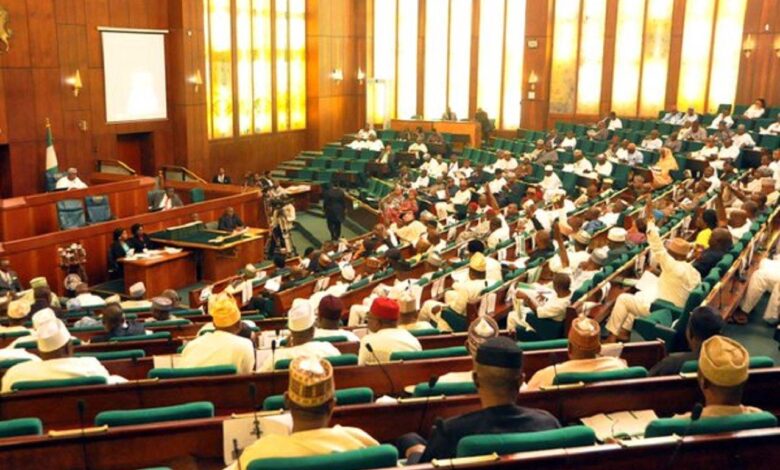
The figures have now placed the affected companies and NNPCL under parliamentary scrutiny as the House seeks to determine the circumstances surrounding the unpaid obligations.
Chairman of the Committee, Representative Bamidele Salam, said the investigation would compel all relevant entities to account for their obligations and provide the documents required to enable Parliament to establish the facts.
Salam also warned companies summoned by the Committee against disregarding parliamentary invitations, stressing that those appearing before the panel must provide appropriate representation and relevant records.
“Any company invited by this Committee must respect the people’s Parliament of the Federal Republic of Nigeria by honouring the summons with appropriate representation and all relevant documents,” he said.
He said the Committee was not out to witch-hunt any company but was determined to protect public revenue and ensure that money due to government was properly accounted for.
“We are not here to witch-hunt anybody; our responsibility is to establish the facts, protect public revenue and ensure that every naira due to government is properly accounted for,” Salam added.
The Committee will scrutinise documents relating to the origin and basis of the liabilities, the periods covered, payments made and balances still outstanding.
It will also examine the recovery efforts undertaken by NMDPRA and determine whether the regulatory authority took adequate steps to enforce payment of the debts.
The PAC said its investigation formed part of its constitutional oversight responsibility to ensure transparency and accountability in the management of public revenue.
The Committee is also expected to establish whether weaknesses in existing recovery mechanisms contributed to the accumulation of the liabilities and identify measures required to prevent further build-up of unpaid obligations.
The House maintained that companies and institutions owing statutory obligations must account for their liabilities, while relevant government agencies must take effective steps to recover public funds.