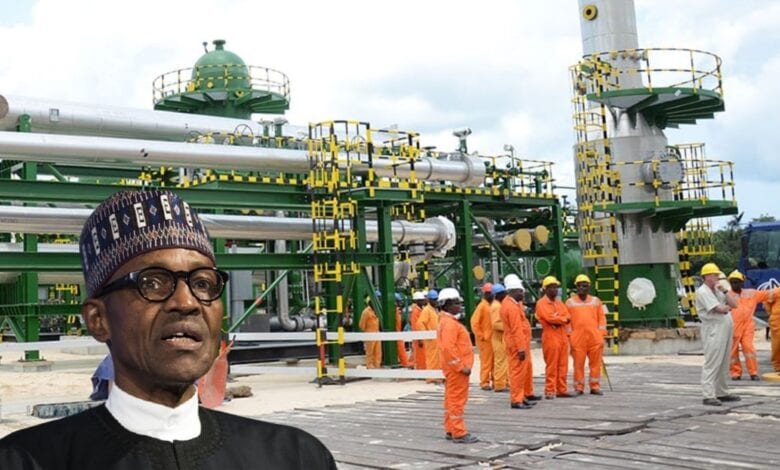
The revelation by the Minister of State for Petroleum, Chief Timipre Sylva, that the Federal Executive Council (FEC) has approved $1.5 billion (about N570 billion) to rehabilitate the moribund Port Harcourt Refinery raises serious concerns.
Sylva had, after the Council approval, explained that the refinery’s rehabilitation will be undertaken with funding from African Export-Import Bank (Afreximbank); the Nigerian National Petroleum Corporation (NNPC); Internally Generated Revenue and budgetary allocations of the Federal Government.
The exercise, which will cover three phases, are expected to be completed within a period of 18, 24 and 44 months respectively.
The minister also explained that the current administration intends to rehabilitate the beleaguered refineries in Warri and Kaduna before its tenure expires.
We recall that since the different rounds of rehabilitation works began on the nation’s refineries some three decades ago, it had gulped no less than $25 billion before the present contract, without commensurate positive outcome.
It should be noted that not only critics of the President Muhammadu Buhari’s administration, but also eminent scholars and experts within and outside Nigeria, have warned of likely failure of the proposed rehabilitation.
Consequently, they have called for a halt of the present contract to forestall the loss of much-needed resources in this period plagued by COVID-19 pandemic and economic recession among other challenges.
We can’t agree more. The proposed rehabilitation should be stopped forthwith. It is a pie in the sky. A white elephant.
A project that has rightly been described by knowledgeable insiders as one not meant to be actualised in the first place.
The desirability of functional refineries in the country is not in doubt, and for an administration that promised to fix the three comatose refineries within six months of coming to power, it would have been something to rejoice over.
Forum lauds Buhari, Sylva on plan to fix Port Harcourt refinery
But with less than 48 months to her exit, and coming up with such grandiose rehabilitation project spaced outside the life of her administration smacks of a wide goose chase; an ill-digested proposal, a political gobbledygook.
We decry failure of past federal administrations and NNPC to revive the nation’s refineries, which would have made life easier for the people, especially in the utilisation of fuel.
It is sad that infrastructure are left idle and dilapidated as huge drain pipes of Nigeria’s income at a time when the country is almost overwhelmed with debts from local and foreign lenders.
The planned rehabilitation of the PH Refinery is unhelpful to even the cause of improvement of fuel supply in the country.
There is no gain saying that approving $1.5 billion to be spent on rehabilitation of about 210,000 BPD nearly 40 year old refinery with less than 31 per cent efficiency rate is not good. It does not indicate a serious appreciation of the need to improve the quality of infrastructure in health, education and other critical sectors or the need to urgently improve the overall standard of living in Nigeria.
We therefore enjoin President Buhari’s administration to put an end to this refinery rehabilitation project.
The government should brace up towards the urgent privatisation of the nation’s moribund refineries.
It is through such positive conduct that the administration can impact on the lives of Nigerians.
The era of over invoiced Turn Around Maintenance (TAM) or so-called rehabilitation contract should be gone for good.
The current government should shift focus to privatisation of the money guzzling refineries.
Taking into consideration that a privately owned Dangote Refinery with a capacity to meet the nation’s domestic demand is about to come on stream, we call on the present administration to hands off the issue of running any refinery directly or by proxies and address urgent issues of insecurity, unemployment, health and education sectors.
The refineries should be sold in their present dilapidated conditions in the interest of transparency and fair play.
The huge amount that will be lost to rehabilitation contracts could be deployed in fixing some of the nation’s pressing problems.
We are at loss as to why a country with more than 30 per cent of its youths population out of work and is in a desperate poverty level, when every dime could count in productive areas as job creation, could more or less literally throw $1.5 billion to the Marines.
One of the greatest restraints against Port Harcourt Refinery rehabilitation at this point in time is the fact that the nation must begin to take seriously the truth that whoever buys any of the Nigeria’s loss recording assets should fix it.
After all, the Federal Government did not spend hundreds of billions of Naira to rehabilitate Port Harcourt Petrochemical Plant in the same environ as the PH Refinery before the former was sold to Indorama.
It is no secret that Indorama is today one of the most profitable companies in Nigeria.
So, we strongly advise that if the people being prepared to manage the PH refinery after its rehabilitation think the facility is valuable, they should seek funding to acquire the refinery when it is put up for sale.
In the same breathe, we condemn any move by some unions to frustrate the privatisation of the PH refinery and others.