CoAS’ appointment: It’ll be inappropriate to retain senior officers – Gen. Akpa

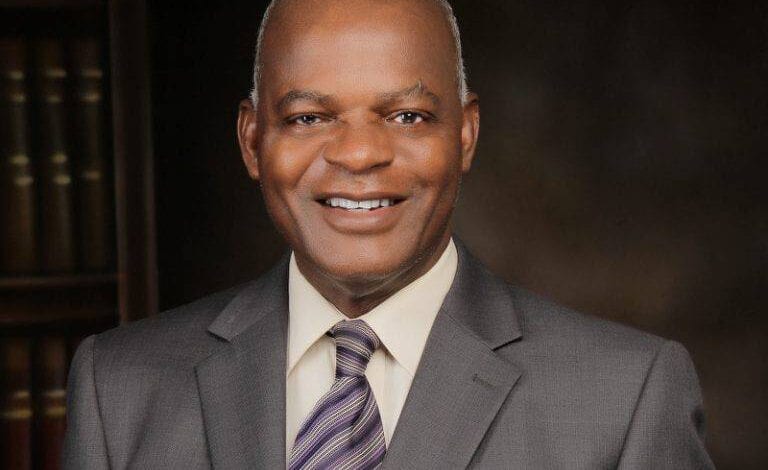
A former Commandant of the Nigerian Defence Academy, Maj.-Gen. Patrick Akpa (retd.) speaks on the appointment of the new Chief of Army Staff, Maj.-Gen Farouk Yahaya, and other contentious issues accompanying his appointment in this interview with Kassim Omomia.
Anew chief of Army Staff has been appointed by the President from the 37th Regular Course of the Nigerian Army. What are the implications?
It seems you have a thorough knowledge of the military system, to the extent that you know the various courses in the NDA. To answer your question, let us consider a new chief executive officer who has been appointed to take over a serious corporate organisation specialising in the production of critical goods. There are implications for the appointment of this new CEO. The person will have to rapidly study the organisation, its branches and departments.
He will meet the top employees and possibly review the structure of the organisation to make it more efficient and competitive. He will also look at the personnel and gradually remove the toxic people among other management issues. As you know defence is a profoundly serious business, a business of life and blood. The CoAS is the commander and the CEO of the army.
Like the CEO of the firm producing critical goods, the new CoAS will generally follow these corporate principles in commanding and managing the army. The difference is that he must operate within a regimented environment and take account of the culture of the army. When it comes to management of manpower, he does everything within the terms and conditions of service officers.
Will many generals, especially those of the 35th, 36th and maybe 37th courses not be retired?
As you said, the new CoAS is of 37th Regular Course. The generals in Regular Courses 35 and 36 are his seniors, it would not be very appropriate for these set of officers to remain in the service. This is not our tradition and culture. Let me talk from personal experience. I am of NDA ninth Regular Course and was the Chief of Training and Operations at the Defence Headquarters in 2005. General Alexander Ogomudia was the Chief of Defence Staff at the time.
Suddenly, Admiral Adekeye of Regular Course 13 was appointed the Chief of the Naval Staff. Ogomudia called a meeting of the service chiefs, and I was there to take notes. Adekeye was the first to come in and he said “Good morning sir” but I refused to answer. I was uncomfortable with that greeting. A three-star general cannot pay compliments to a two-star in that manner. I am sure Adekeye himself would have been uncomfortable. So, you can see why it is not appropriate for the officers of Courses 35 and 36 to remain in the service.
Storm over constitution review
With respect to his course mates in Regular course 37, it will not be the same. These officers can be deployed to command divisions, to Defence Headquarters, to Tri-Service institutions and even within the Army Headquarters as Principal Staff Officers. Again, this depends on the CoAS himself. Going back to our history, to the time when General T Y Danjuma was the CoAS, he deployed his course mates in various capacities within the army.
General Akinrinade was GOC 1 Division, General Abisoye was GOC 2 Division, Martin Adamu was the Quarter Master-General and Alabi Isama was a Principal staff Officer under him. So, there is no reason why the new CoAS cannot follow this precedent and retain the manpower and experience for as long as possible.
Is it not a huge waste, in terms of resources, retiring senior officers, now that the country is waging war against insecurity and other manner of banditry?
Look, there is over reliance on the armed forces to solve this insecurity problem. We have strategists of all sorts in this country, but I really do not know why we have not deployed the right strategy in solving this problem all these years. We have spent so much money but the end to this problem is not in sight. We should adopt a less expensive strategy to beat the insurgency.
All instruments of power available to the government should be deployed. If we know, as a matter of fact, that some foreign countries are sponsoring and supporting Boko Haram, diplomacy should be deployed to wean such countries off support to the terrorists and come to our side. Other than the Armed Forces, the government have other weapons available to them and they should not be shy to deploy them.
On your question, it is important to know that for any officer to have attained the rank of Major-General, he would have gone through various courses. Most of the Generals now have a first degree from the NDA. In addition, they would have done most of the courses special to their corps and done the staff college and the National Defence College.
A few of them would have attended the Executive Course at the National Institute for Policy and Strategic Studies (NIPSS), Kuru. These officers have acquired the capacity to operate at the strategic level in our defence system. You are therefore right to say it is a huge waste to lose such officers in our defence system, but you also need to know that it is not the generals that do the actual fighting.
It would even seem that the system is top heavy, and the promotion system may need to be reviewed. While the military system will lose these highly trained officers, they will find accommodation in the non-military sectors of the national economy. In other systems, there are commercial organisations in demand for such highly trained officers. Unfortunately, the economy is not developed sufficiently to absorb the officers retiring from the army.
What are the consequences considering that we do not have enough manpower? Again, has the action of the President any psychological undercurrent, in terms of affecting the morale of officers?
For sure, we do not have enough manpower to meet the current security challenges facing the country. This manpower is of two cadres: the commissioned officer cadre and the non-commissioned cadre. Managing the available manpower in the system is of paramount importance.
The armed forces and indeed the army uses the pyramidal structure in managing its manpower resources. This pyramidal structure is like Maslow’s hierarchy pyramid structure. Let us for a moment look at the officer cadre. At the base of this pyramid are the young officers and at the top and apex of the pyramid are the generals.
The same type of structure exists at the level of the non-commissioned officers. In recent years, this geometric figure does not look like a pyramid any more. There are very many generals at the apex and the pyramid looks more inverted. It can even be argued that the decision of the President has helped to reshape the pyramid which is good for the management of the system.
Remember Generals do not engage the enemy directly in combat. It is the rifle men and the non-commissioned officer cadre and the young officers who do the fighting. When you say that we do not have enough manpower, you are right, we do not have enough manpower at the non-commissioned officer cadre level, but we have enough at the level of the general, i.e., at the apex of the pyramid.
With respect to morale, it is a mixed bag. Obviously, the morale of some of the officers to retire would not be high. Because of the decision of the C-in-C and president opportunities would open in the system, especially for the middle ranking officer – Colonels and Brigadier-Generals.