By Cross Udo and Nathaniel Zacchaeus, Abuja (with additional report)
The Minister of Finance, Budget, and National budget Zainab Ahmed, yesterday disclosed that the Federal Government has so far disbursed N1.98trn as a share of the 13 per cent oil derivation backlog paid to oil-producing states.
Ahmed stated this at the sixth edition of the President Muhammadu Buhari administration scorecard (2015-2023) in Abuja.
She also insisted that Nigeria is not broke.
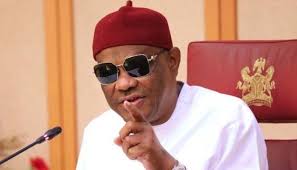
The 13 per cent derivation fund recently resurfaced after Governor Nyesom Wike of Rivers State alleged that the oil-producing states have refused to disclose their share of the derivation arrears paid by the Federal Government from 1999 to all the Niger Delta states.
However, according to Ahmed, the amount was paid in seven years, despite some of the funds preceding the current administration.
She said, “One of the key functions of the Ministry of Finance Budget and National Planning is to support the states. We wouldn’t have been able to grow consistently without enabling the states to grow because it is a federation.
“Mr. President has been very uniquely generous in his support to states. I can say no president has provided the level of support provided to the states of the Federation. He understands that the federating units need to work together as one to achieve the targets that he has set for the country. So everybody goes to support sub-national governments. In seven years, we have disbursed N1.98trn in funds to oil-producing states.”
*Insists Nigeria not broke
Speaking on Nigeria’s financial status, Ahmed insisted that Nigeria was not broke.
The minister’s comments come amid criticism of the Buhari administration for copious borrowings believed to have sapped the country’s coffers dry.
Data obtained from CBN’s website showed that the federal government’s debt through Ways and Means climbed from N17.5trn in December 2021 to N23.8trn in October 2022 —an increase of N6.3trn in 10 months.
These borrowings are currently not included in the country’s total public debt stock (federal and state governments) which currently stands at N42.84trn.
In July, the cost of servicing debt surpassed the federal government’s retained revenue by N310bn in the first four months of 2022.
Ahmed disclosed this while presenting the 2022 fiscal performance report for the period, saying that the Federal Government’s total revenue was N1.63trn, while debt service gulped N1.94trn.
She advised that urgent action was required to address “revenue underperformance and expenditure efficiency at national and sub-national levels”.
Similarly, the President of the African Development Bank (AfDB), Akinwumi Adesina, in his analysis of Nigeria’s debt profile, said the external debt levels stand at N16.61trn or $40bn.
He concluded that “Nigeria needs help to tackle this debt burden”.
However, during her presentation of Buhari’s scorecard yesterday, Ahmed said Nigeria has not in any way defaulted in its both domestic and foreign debt repayments, adding that the country is not opting for debt relief.
The minister noted that the country continues to disburse funds to the three tiers of government from the Federation Accounts Allocation Committee (FAAC).
She said the Federal Government has since 2015 disbursed N5.04trn to state governments, disclosing that the non-oil sector drives the country’s economy more than the oil sector owing to vandalism of infrastructure.
Ahmed further said oil production is increasing, stressing that as of October 2022, it soared to 1.4 million barrels per day.
She also said N1.7trn was released for this year’s capital projects as of September 2022, according to thecable.ng.
*NEC agrees on updating Finance Bill 2022
Meanwhile, the National Economic Council (NEC) yesterday resolved to update the draft with additional inputs from State Governors as the bill is set to be presented to Federal Executive Council (FEC).
A statement issued by the Senior Special Assistant to the President on Media and Publicity, Office of the Vice President, Mr Laolu Akande, explained that the NEC’s resolution was made during a virtual extraordinary meeting chaired by Vice President Yemi Osinbajo.
According to the statement, members of the Council were briefed on the main features of the Bill by the Minister of Finance, Budget, and National Planning, Hajia Zainab Ahmed.
The Minister said that the proposed Finance Bill 2022 is anchored on five fundamental policy drivers, including Tax Equity; Climate Change; Job Creation/Economic Growth; Tax Incentives’ Reform; and Revenue Generation/Tax Administration.
She added that the Bill seeks to amend relevant taxes, excises, and duty statutes in line with the macroeconomic policy reforms of the Federal Government and to amend and make further provisions in specific laws in connection with the public financial management of the Federation.
She disclosed that other aspects of the Finance Bill include Chargeable Assets; Exclusion of Losses and Replacement of Business Assets.
“For instance under the Tax Equity pillar, all sectors of the economy would be brought into the tax net including Capital Gains Tax from digital assets, Cable Undertakings, Lottery, and Gaming Business.
“Similarly under the Climate Change and Green Growth pillar of the bill, there would be incentives for the natural gas sector and discouragement of gas flaring.
“Under the pillar of Tax Incentives’ Reforms, there would be new deductions for Research and Development, and Investment Tax Credits; Reconstruction Investment Allowance; Rural Investment Allowance; Incomes in Convertible Currencies to be exempt, among others”, the statement said.
It further revealed that the bill contains an amendment under Chargeable Assets stating that, “subject to any exceptions provided by this Act, all forms of property shall be assets for this Act, whether situated in Nigeria or not, including Options, debts, digital assets, and incorporeal property generally.
“According to the bill, these provisions clarify the basis for the taxation of Cryptocurrency and other Digital Assets in line with the Government’s policy thrust of enhancing the cross-border and international taxation of growing e-commerce with emerging markets.
“By doing so, Nigeria will join the league of jurisdictions currently taxing digital assets, including the United Kingdom, United States of America, Australia, India, Kenya, and South Africa”, the statement said.
Wike to Agba: Stop speaking on issues of developments in states you least understand
The Minister further noted that extensive consultations have been done on aspects of the bill such as tax avoidance and tax evasion by introducing a general anti-avoidance route.
She disclosed that in coming up with the bill, the Ministry of Finance engaged a wide range of stakeholders and elicited enough feedback, especially through the work of a technical committee co-chaired by Special Adviser on Economic Matters to the President, Dr Adeyemi Dipeolu and Special Adviser on Finance, Mrs Sarah Alade.
Several governors commented on the presentation of the bill, including the governors of Sokoto, Borno, Kaduna, Kebbi, and Ogun, among others. It was then resolved that state governors should make additional inputs just as the proposed bill is being sent forward for consideration to the Federal Executive Council before the President sends it to the National Assembly.
At the meeting, the newly sworn-in Osun State Governor, Senator Ademola Adeleke, was also formally welcomed to the Council by the Vice President and other members.
*Controversial padded N206bn meant for military equipment, Humanitarian Minister tells Senator
The Minister of Humanitarian Affairs, Disaster Management, and Social Development, Sadiya Umar-Farouq, yesterday told the Senate that the N206bn ‘padded’ in her Ministry’s 2023 Budget by the Ministry of Finance, was meant for the purchase of Military Equipment.
She explained yesterday when she appeared before the Senate Committee on Special Duties, Chaired by Senator Yusuf Yusuf.
A member of the Committee, Senator Lilian Ekwunife, had asked the Minister whether she had been able to know the source of the N206bn in her Ministry’s Budget she disowned the last time she appeared before the panel.
The Minister said she was surprised when an investigation by her at the Ministry of Finance revealed that the money was meant for military equipment.
She said, “On the N206bn when we saw it, we didn’t understand what it was meant for because the explanation wasn’t clear.
“If you put N206bn in Humanitarian Affairs Ministry’s Budget and the narration is the purchase of military equipment, definitely something is wrong.
“That’s why I said I’m not going to say anything about it until we get clarification from the Ministry of Finance.
“If we had requested for N206bn for a different project and then in the appropriation bill, it is reading something else, we will not own it.”
When the minister was pressed further on whether she requested N206bn for another project, she came up with another narration.
The Minister simply said, “It is not exactly that way, and that’s why we need that clarity from the Finance ministry”.
The Permanent Secretary of the Ministry, Sani Gwarzo, however, courted the wrath of the Committee’s Chairman when he described the padding as a minor mistake.
His utterance did not go down well with Yusuf who shouted at him and asked him to sit down.
The Minister was at the National Assembly last week to defend her Ministry’s 2023 Budget before the Senate Committee on Special Duties.
She explained that the Ministry requested some projects for the North East Development Commission (NEDC) and National Social Safety Net Project in the 2022 budget but that funds for the proposed projects were not released.
She, however, said the Ministry was surprised that the money inserted, was now ten times higher than the 2023 Budget of the Ministry.
One of the Committee members, Senator Elisha Abbo, had discovered the anomaly and asked the Minister to explain the N206bn in her Ministry’s budget.
The Minister expressed surprise and said, “Yes we made mention of the projects for 2022 which were not released and part of it was part for the NEDC.
“The money was not released and now we have seen it recurring by almost 10 folds we are also going to clarify from the ministry of finance to know why this increase although the previous year, the money was not even released for the project.
“So we will get the details and then send them to you on that. On upscaling of the National Social Safety Net Project. These projects are under the national social safety nets, the condition cash transfer, the updating of the national social register, and the rapid response register as well to cushion the effect of inflation.
“This is all I can say for this. I cannot give full details of how this amount is going to be utilised because it is something that was negotiated between the ministry of finance and World Bank.”
Abbo had expressed shock at the Minister’s response and said that the country would not continue to borrow money and plunge the country into debt.
He had said, “This is serious. We cannot continue to borrow money and plunge this country into debt for our children to come and pay without investing in what they will see.”
The Chairman of the Committee, therefore moved a motion to summon Minister of Finance, Zainab Ahmed to come and give an explanation about the N206bn inserted in the Ministry budget.
Yusuf said, ” I want to move a motion that the minister of finance should appear before this committee to furnish this committee with details of what they intend to do with N206 billion in the 2023 budget.
“Now that the Minister has said that she is not in charge of negotiation, of course, she is not, the Minister of Finance is responsible.”