By Mudiaga Affe, Kassim Omomia, Ben Ogbemudia, David Lawani, Cajethan Mmuta and Jude Idu
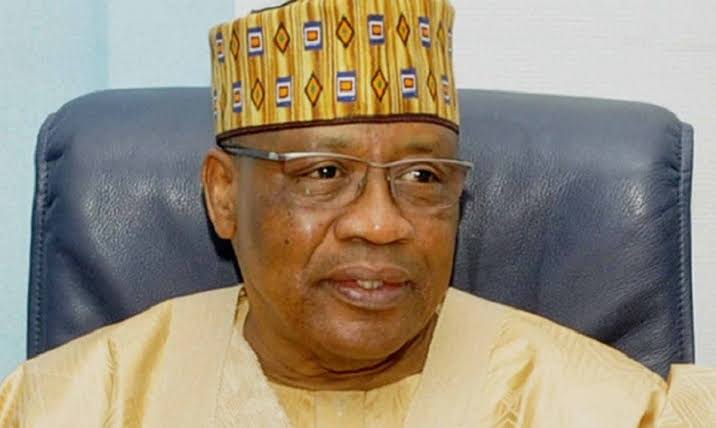
Former military President Ibrahim Babangida is currently at the receiving end of many Nigerians as they took him on over his latest commentary on the nation’s socio-political space.
For a majority of the public commentators, the 79-year-old former military leader, considering his past antecedents, shouldn’t have offered such a roadmap for the country.
The past regime of Babangida, they allege, was not only at the root but also the harbinger of the numerous socio-economic challenges presently pounding the country.
Babangida, fondly called IBB, who ruled the country as a military head of state between 1985 and 1993, introduced the Structural Adjustment Programme, believed to be the arrowhead of the nosedive of the nation’s economy.
The IBB-led junta also annulled the June 12, 1993 presidential poll in which the acclaimed winner and business mogul, the late Moshood Abiola, of the Social Democratic Party, roundly defeated Alhaji Bashir Tofa of the National Republican Convention.
Analysts argue till date that the poll remains the freest in the annals of the country.
Curiously, the former president, who alongside other military officers toppled the democratically-elected government of Alhaji Shehu Shagari in 1983, had, a few days ago, on a television programme, canvassed that Nigeria does not deserve anyone above 60 years to lead her in the next political dispensation.
He also posited that his regime was saintly when compared with the present regime in terms of corruption.
Though former Vice President Atiku Abubakar; former Lagos State Governor, Bola Tinubu and the incumbent Vice President, Prof. Yemi Osinbajo are believed to be eyeing the presidency in 2023, none of them has declared interest in the numero uno position. The trio are above 60 years.
However, weighing in on Babangida’s comments, a professor of Political Science, Femi Otubanjo, faulted the former military leaders on his comparison over corruption matters.
Otubanjo, who spoke to one of our correspondents on Saturday, said IBB had no moral justification to sermonize on corruption.
He said, “It is unfortunate that IBB will be saying that his administration was better than this one in terms of corruption. It is like some thieves arguing that one stole less or more. If IBB admits that he was corrupt and we know that there is glaring corruption under the Buhari-led administration, there is nothing to compare about.
“Nigeria has been under the yoke of corruption and it has not helped us to develop the way it should. People are suffering and dying because of corruption. So, let us not try to do image laundering about regimes. Nigeria has been unfortunate. No regime has been corruption-free and it has got massively worse because we see those who are corrupt flaunting it on our faces.”
On the age limit prescription set by IBB, the academic also disagreed with the former president, noting that leadership should be determined by the capacity to deliver and not age.
“The issue of Nigeria is not about age but looking for a leader that can deliver. I think he is right to some extent to have said we are likely to find such people in the ranks of below 60 years, but age does not determine it.
“These days, the United Nations demographic participation shows that 70 years has become the middle age. What is important here is experience, competence, and commitment. However, I think a 60-year-old person may be more vigorous in pursuing things about the vision of what Nigeria should be,” he added.
Also, an economist, Niyi Akinsiju, alleged that the former leader institutionalised corruption and made it a state policy in his regime.
The economist added, “There are some issues we don’t need to spend time debating which history has robustly recorded. A major historical outlook on the IBB administration is that corruption did not only become a policy of the state but became institutionalised during his years in government. I am sure this perception still haunts him.
“Perhaps, we need to clarify that enforcement of the law under a civilian government is different from the process under a military government where the head of government may decide to abbreviate all processes of the judicial system to aggrandize his leanings. Seriously, we cannot compare notes. There are no notes to compare.
“What is becoming obvious is that whereas Nigerians used to wave act of corruption aside as routine conduct, but now, our sensitivity is becoming more unaccommodating of corruption. It is an indicator of the standards the federal administration had placed on fighting and demonizing corruption. Before the coming of Buhari, corruption was glamorized, it is no longer so under this government.
Akinsiju also dismissed the age prescription, saying the nation’s constitution has clearly addressed the issue.
He added, “The former President’s prescription is not backed by empiricism of any sort. It shows how leaders just throw words around without understanding the context. The constitution is clear on the eligibility of who becomes the president of this country, and any other postulations are mere posturing. Let the people decide”.
Similarly, the senate spokesman, Ajibola Basiru, noted that the IBB reign caused a lot of economic havoc in the country.
The senator said, “I will really like to know on which barometer is he talking about contemporary corruption. By the way, with his remark, he has indirectly admitted that his regime was corrupt.
“Has he forgotten the Structural Adjustment Programme introduced by his administration? That initiative was what destroyed the Nigeria economy. Nigerians have not forgotten that his economic policies led to the destruction of local industry as well as other socio-economic havoc. These are the legacies he left behind.
On the age advisory, the senate spokesman, who said that competence was the biggest leadership attribute, noted that presidents of the most powerful countries were in their mid 70’s.
The lawmaker added, “IBB cannot be telling us what to do. I believe old age is telling on him. His advice is definitely unhelpful”.
Meanwhile, a professor of Medicinal Chemistry at the Nnamdi Azikiwe University, Awka, Anambra State, Ikemefuna Uzochukwu, who supported the call for a younger president, explained that it was not an elixir for performance.
“I am of the opinion that younger persons should be given opportunity in our political landscape. However, the capacity to perform is not restricted to any particular age bracket. The important thing is to identify the calibre of persons suited for particular office,” he stated.
A lawyer, Chibunna John Okoli-Akirika, also noted that the nation needed someone who would deliver the democracy dividend to the people.
He explained, “Age is a function of mind as well as a function of physical and mental alertness. One maybe young in age, but very mature. Another may be elderly, but very immature.”
“From the point of law, the constitution accepts the age limit one must meet to seek election in the country. If you say that somebody shouldn’t contest, it means that legally speaking, you are infringing on the person’s constitutional right.”
For another lawyer, Igwe Chike corruption is higher in the country nowadays.
He said, “Nigeria is more corrupt now than it was in his days. The corruption in Nigeria is so much that even when Abacha loot were recovered, the same loot were re-looted by politicians. So, somehow the former president becomes a saint when compared to what we have now.”
On the age prescription, Igwe, who said the constitution was clear on the requirement, nonetheless, called for a younger person to lead the country in the next dispensation.
Statesman and Peoples Democratic Party chieftain, Alhaji Tanko Yakasai, while disagreeing with the former leader, said age was not a determinant to intellect and leadership.
“You see, I am not among of those who see age as a barrier to leadership. I read in newspapers where Atiku Abubakar, Tinubu and other where reportedly disqualified based on Babangida’s prescription but that is not the way to go”.
PDP Reps caucus calls for resignation of Secondus
The PDP stalwart posited, “Making meaningful contributions is about the personality on the seat. We have on record those who made good and quality leadership in this country were above 60. So, we should focus on the calibre of leaders not age”.
Also, a former member of the House of Representatives, Paul Ezeh, stated that Babangida’s recommendation, would only work if youths had found their political footings.
Ezeh, an architect also noted that the leeway for good governance in the country was to “play politics without sentiments”.
“So, whether below or above 60, the country must be ready to play politics without sentiments. Politics beyond ethnicity or religion. The way we are going, no matter who is elected, sentiments, ethnicity and political divide will always rear their ugly head. So, it is not who is there, it is what do Nigerians want”
Contributing, Islamic cleric, Sheikh Ahmad Gumi, said age limit didn’t really matter as there were bad politicians in all generations.
“We have seen bad politicians and good ones of all ages. Dr. Mahathir Mohamad of Malaysia was 90 years when his services were again needed.
“Biden could be the only politician that could emasculate power from Trump as maturity and experience were needed. So, we should not rule out a good one because of age”, he counselled.
On corruption, Gumi said government officials now were more tricky in swindling public funds now than ever.
He added, “No doubt, officials are more cunning in swindling public funds now than ever. But it has more to do with generational change than governance which dictates the need for smart government not one given to lethargy and self adoration”.