From Cross Udo, Abuja
Ahead of the 2023 general elections in the country, the European Union Election Observation Mission, EU EOM, at the weekend met with the various political parties under the aegis of Inter Party Advisory Council, IPAC, where it emphasized on the need to conduct free, fair, and credible elections.
The leader of the delegation, Ms Marie Arena, a member of the European Parliament and Chief Observer, EU EOM in 2019 told the IPAC leadership that the Report of its findings of the 2019 elections has been submitted to relevant stakeholders.
She said that the Report has 30 recommendations on how to improve the electoral process in subsequent elections.
Ms. Arena said the group had met with Civil Society Organizations, government, and political parties to make inputs on the best way to conduct next general elections.
The group also called for the inclusion of women in the political activities.
In his remarks, the Chairman of the Inter-Party Advisory Council, Engr. Yabagi Sani expressed appreciation to the Parliamentarians of the European Union for their interest, commitment and sacrifices of time and resources towards the development and sustenance of the culture and practice of democracy all over the world, especially, in the developing nations among which, is our country, Nigeria.
He said, “The EU Parliament has done a great work in advancing the European nations’ objectives of enthronement of good governance, peace and security, regional stability through the emergence and sustenance of robust, enduring democratic system of governance all over the world.
Also, the IPAC has the mandate of synchronizing the activities of the various pro-democracy NGOs in the country with a view to ensuring harmony and sanity during advocacy for good governance and compliance with the rule of law by stakeholders and key players.
“Since inception, IPAC has recorded landmark milestones which include making inputs into the processes of lawmaking, through position papers, lobby and the use of the mass media. No less an achievement is the fact that IPAC has been able to develop mutually beneficial synergy with the Independent National Electoral Commission, INEC.
“As a result, IPAC has positively impacted on the workings of the electoral umpire and the advancement of the electoral process in the country. Further, IPAC has evolved to be reckoned with by successive governments, institutions, and agencies of governments in the initiations and implementations of policies and programmes of significant dimensions on the well-being of the people.
“Even as Nigeria has experienced twenty-two years of an unbroken chain of representative governance, not a few observers are still apprehensive that, given all the perceptible signals and indices, the 2023 elections might turn out to pose very serious challenges to IPAC along with the other democracy watchdogs and interests in the task of entrenching democracy and safeguarding peace, security, and stability of the country.
“This apprehension is against the backdrop of the fact that, at the dawn of another round of election season and electioneering campaigns, a number of the political gladiators, rather than harping on issues of development, progress and wellbeing of citizens, are beaten the drums of ethnicity, regionalism and other primordial fault lines in their quest for political power.”
2023: I’d rather quit politics than spill blood – Uzodimma
Engr. Can’t further said, “This negative scenario is further compounded by the unprecedented wave of insecurity posed by insurgency, banditry, kidnapping and irredentist agitations across the length and breathe of the country. Indeed, Nigeria can be appropriately said to be at a cross-road at this moment of its history as a nation state.
“While we believe that Nigeria has gone past the era of military adventurism on the political scene, the recent developments of forceful take-overs of political power in parts of Africa, especially in West Africa, should be a source of concern to the global community of democrats.
“Given its strategic place in Africa, by virtue of its continent-wide history of influence, the sheer size of its economy and population, Nigeria should naturally serve as the hub of generating and spreading the radiant light and gospel of democracy on the African continent. It goes without saying therefore, that strenuous and relentless efforts should be put into strengthening the roots of democracy in Nigeria.
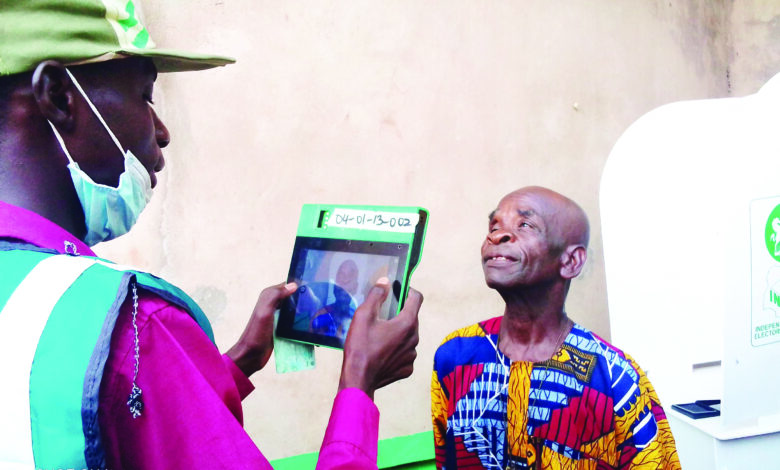
“With the coming up on stream of the amended Electoral Act, political parties are now more than before, expected to emphasis the use and application of ICT and related technology in their internal affairs and interaction with the Independent National Electoral Commission.
“Failure to meet up these demands, will no doubt affect the performance of their obligations in the electoral process. However, the reality as it is, is that most of the political parties are grossly deficient in their possession of computer hard wares as well as human capacity in the use and application of ICT.
“To enhance their capacity, to meet up with the challenges and demands of the Electoral Act in the countdown to the 2023 elections, majority of the political parties will be needing external intervention and assistance in terms of capacity building and acquisition of the required ICT hard wares.
“The EU Election Observer Mission and Nigeria’s other development partners will do very well to look into this aspect in their consideration of providing support towards success of the 2023 election.”