By Cross Udo, Nathaniel Zacchaeus, and Linus Aleke, Abuja
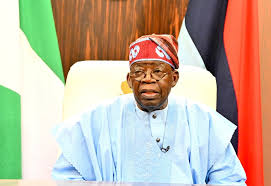
President Bola Tinubu yesterday said Nigeria’s national defence and internal security, local job creation, macro-economic stability, investment environment optimisation, human capital development, poverty reduction, and social security are some of the top priorities of the 2024 Budget of Renewed Hope.
Addressing a joint session of the National Assembly on the 2024 Federal budget proposal in Abuja, President Tinubu said the nation’s internal security architecture will be overhauled to enhance law enforcement capabilities to safeguard lives, property, and investments across the country.
He said the proposed budget prioritizes human capital development, with particular attention given to children because human capital remains the most critical resource for national development.
According to him, “To improve the effectiveness of our budget performance, the government will focus on ensuring value for money, greater transparency, and accountability. In this regard, we will work more closely with development partners and the private sector.
“To address long-standing issues in the education sector, a more sustainable model of funding tertiary education will be implemented, including the Student Loan Scheme scheduled to become operational by January 2024.”
Speaking on the economy, President Tinubu said a stable macro-economic environment is crucial in his administration’s bid to catalyse private investment and accelerate economic growth; hence, his government shall continue to implement business and investment-friendly measures for sustainable growth.
“We expect the economy to grow by a minimum of 3.76 percent, above the forecasted world average. Inflation is expected to moderate to 21.4 percent in 2024. In preparing the 2024 Budget, our primary objective has been to sustain our robust foundation for sustainable economic development. A critical focus of this budget and the medium-term expenditure framework is Nigeria’s commitment to a greener future.
“Emphasising public-private partnerships, we have strategically made provisions to leverage private capital for big-ticket infrastructure projects in energy, transportation, and other sectors. This marks a critical step towards diversifying our energy mix, enhancing efficiency, and fostering the development of renewable energy sources.
“By allocating resources to support innovative and environmentally conscious initiatives, we aim to position Nigeria as a regional leader in the global movement towards clean and sustainable energy.
“As we approach the COP28 climate summit, a pivotal moment for global climate action, I have directed relevant government agencies to diligently work towards securing substantial funding commitments that will bolster Nigeria’s energy transition. We must seize this opportunity to attract international partnerships and investments that align with our national goals.
“I call upon our representatives to engage proactively to showcase the strides we have made in the quest to create an enabling environment for sustainable energy projects.
“Together, we will strive for Nigeria to emerge from COP28 with tangible commitments, reinforcing our dedication to a future where energy is not only a catalyst for development but also a driver of environmental stewardship,” he said.
The President said a conservative oil price benchmark of $77.96 per barrel and a daily oil production estimate of 1.78 million barrels per day were adopted after a careful review of global oil market trends, and that a naira to US dollar exchange rate of N750 per dollar was adopted for 2024 as well.
Giving a breakdown of the 2024 Appropriation Bill, the President said, “Accordingly, an aggregate expenditure of N27.5trn is proposed for the Federal Government in 2024, of which the non-debt recurrent expenditure is N9.92trn while debt service is projected to be N8.25trn and capital expenditure is N8.7trn.
“Nigeria remains committed to meeting its debt obligations. Projected debt service is 45 per cent of the expected total revenue.
“The budget deficit is projected at N9.18trn in 2024 or 3.88 per cent of GDP. This is lower than the N13.78trn deficit recorded in 2023, which represented 6.11 per cent of GDP.
“The deficit will be financed by new borrowings totalling N7.83trn, N298.49bn from privatisation proceeds, and N1.05trn draw down on multilateral and bilateral loans secured for specific development projects.”
READ ALSO:Kano guber crisis: Youths protest teenager’s killing as police arrest killer cop
President Tinubu said his administration remains committed to broad-based and shared economic prosperity, adding, “We are reviewing social investment programmes to enhance their implementation and effectiveness. In particular, the National Social Safety Net project will be expanded to provide targeted cash transfers to poor and vulnerable households.”
He also said efforts will be made to further contain financial leakages through the effective implementation of key public financial management reforms.
The President commended the patriotic resolve of the 10th National Assembly to collaborate with the Executive on the mission to renew the hope of Nigerians and deliver on the promises made to Africa’s largest population.
“As you consider the 2024 Budget estimates, we trust that the legislative review process will be conducted to sustain our desired return to a predictable January-December fiscal year. I do not doubt that you will be guided by the interests of all Nigerians. We must ensure that only projects and programs with equitable benefits are allowed into the 2024 Budget.
“Additionally, only projects and programs that are in line with the sectoral mandates of MDAs and those which are capable of realizing the vision of our administration should be included in the budget,” the President declared.
*Akpabio: We’ll merge, unbundle MDAs
Meanwhile, the Chairman of the National Assembly who is also the President of the Senate, Senator Godswill Akpabio, and the Speaker of the House of Representatives, Tajudeen Abass assured Tinubu that the 2024 Appropriation Bill would be accorded accelerated consideration and passage.
They urged the President to bar ministers and heads of ministries, departments, and agencies of the federal government from embarking on any foreign trip until the eventual passage of the bill, which they pledged would be done before the end of the year.
They expressed the hope that the executive arm of the government would seize the opportunity of the cordial relationship existing between it and the legislature by ensuring prompt appearances before the various committees to defend their budgets whenever they are invited to do so.
Akpabio specifically noted that even though the fiscal document would be attended to with despatch, the National Assembly would still carry out its constitutional responsibilities on it.
He said, “The National Assembly bears a great responsibility in the task of reviewing and approving the budget. We fully understand the weight of this responsibility and the impact our decisions will have on the lives and welfare of the Nigerian people.
“We must ensure that the budget reflects the principles of transparency, accountability and inclusiveness. Consequently, we will certainly conduct a thorough and meticulous review of the budget estimates.”
Akpabio expressed the determination of the two chambers to stem wastes and corruption in the system, hence its resolve to carry out legislative activities that would lead to the merger of some federal agencies and the unbundling of others.
He said, “Both the Senate and the House of Representatives have resolved to assist the executive to unbundle some agencies for effectiveness and merge agencies of government whose job definitions of roles overlap for greater effectiveness.
“We deem it necessary for our country to go back to agriculture as a way of stopping the overdependence on crude oil. A mono economy is putting all our eggs in one basket. It is a risk we have taken for too long and we cannot continue to tempt providence.
“We also believe that education should be prioritized and something is done to stop frequent closures. If we do not checkmate the brain drain, the drain will numb our brains. This is why we must open the door of education, because when you open the door of education you close the door of the prison.
“We also want to plead with the Government to do all within its powers to reduce our high debt profile. We know that Mr President inherited this worrisome burden. But then the mark of a great leader is that he fixes the problems wherever they exist”
*Abass proposes an Act to strengthen budget process
Speaker Abass noted the pains, agony, and sufferings that most Nigerians are currently experiencing as a result of the ongoing economic reforms embarked upon by the current administration and urged the President to stem the tide.
Abass said, “Mr President, it is a well-known fact that millions of our constituents are living through incredibly difficult times. For this reason, they also look to the Tinubu-led government to provide quick and sustainable solutions.
“The antecedents of the President and your track record in governance inspire a lot of hope in Nigerians. Mr. President, it is for this reason that we cannot afford to fail Nigerians.
“If anyone can change the rot and chart a new course for Nigeria, It is you. I have no doubt whatsoever that we can measure up to the expectations of Nigerians through your visionary leadership and the commitment of the National Assembly.”
He urged his colleagues to ensure that the 2024 budget prioritise investment in education and healthcare, which he said, was critical to human capital development and a more productive workforce.
He said, “Infrastructure development is another critical area of importance, which is crucial for economic growth. The biggest challenge, however, is balancing these priorities within the constraints of available resources.
“Given this and the related challenge of a high level of public debt, the National Assembly will ensure that the 2024 budget includes concrete strategies for sustainable debt management”
This he said, would include, measures to increase revenue and control expenditure.
The Speaker said, “Specifically, the focus should be on raising more revenue through tax reform, fiscal reform, subsidy reform, foreign exchange convergence, and centralised revenue collection.
“Going forward, Mr. President, we will also work to institutionalise pre-budget engagements with the executive to further improve and hasten the budget process.
“The House has already commenced interface with MDAs through the Sectoral Debates to understand the challenges facing government agencies and identify areas for legislative intervention.
“All of these efforts are geared towards ensuring that we provide the necessary legislative support to your administration’s Renewed Hope Agenda.”
Abass noted that an institutional framework was necessary to achieve a perfect budgetary system in the country.
He said, “For this reason, I propose enacting a Budget Act to strengthen the budget process and promote development outcomes. This is a well-established practice in democracies across the world.”