By Seyi Odewale and David Lawani
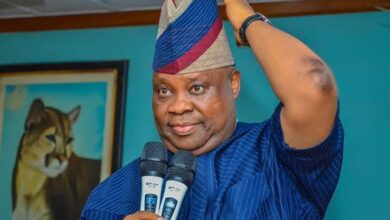
A former Kaduna State governor and African Democratic Congress (ADC) chieftain, Mallam Nasir el-Rufai, has declared that the 2027 presidential contest should produce a Southern president, effectively ruling himself out of the race until 2031.
el-Rufai, a former Minister of the Federal Capital Territory (FCT), made his position public via a statement shared on ADC News’ official X handle, stressing that equity and political understanding demand that power remain in the South in the next election cycle.
This came as senior opposition leaders have raised the alarm over what they described as a coordinated attempt to weaken Nigeria’s multi-party democracy,
el-Rufai said, “I refused to contest in 2027 because it is the turn of the South. You will see me in action come 2031.”
The post, shared on his X handle at about 2:54 pm on Saturday, had attracted 58,000 views by Sunday afternoon, with supporters applauding what they described as his consistency and respect for political agreements.
His declaration comes amid an intensifying national debate on zoning and power rotation, particularly within opposition circles.
Although the ADC has maintained that zoning is not yet its priority, internal and public conversations around regional balance have continued to shape alignments ahead of 2027.
So far, three prominent figures are widely identified as presidential hopefuls within the broader opposition space: former Vice President Atiku Abubakar from the North, and two Southerners — former Anambra State governor Peter Obi and ex-Transportation Minister Rotimi Amaechi.
By deferring his ambition to 2031, el-Rufai has positioned himself as both a Northern political voice advocating Southern continuity in 2027 and a long-term contender preparing for a post-Tinubu political landscape.
*As opposition leaders warn of danger of a one-party state
Meanwhile, senior opposition leaders have warned that the country is sliding dangerously toward a de facto one-party system under President Bola Ahmed Tinubu.
In a strongly worded joint communiqué issued on Sunday, the leaders accused the Federal Government of weaponising state institutions—particularly anti-corruption and security agencies—to intimidate, coerce and politically neutralise opposition figures ahead of the 2027 general election.
Former Senate President David Mark, former Vice President Atiku Abubakar, former Anambra State Governor Peter Obi, former PDP Deputy National Chairman Chief Bode George, former APC National Chairman Chief John Odigie-Oyegun, and Mallam Lawal Batagarawa jointly signed the statement.
According to the opposition figures, there is growing public concern that agencies such as the Economic and Financial Crimes Commission (EFCC), the Nigeria Police and the Independent Corrupt Practices and Other Related Offences Commission (ICPC) are increasingly perceived as instruments of political intimidation rather than impartial enforcers of the law.
They alleged that opposition governors and key political actors are being subjected to sustained pressure through anti-graft investigations and media trials, creating an atmosphere of fear that compels defections to the ruling All Progressives Congress (APC).
Recent defections, they argued, have reinforced suspicions that political coercion—rather than ideology or electoral persuasion—is driving the realignment of power at sub-national levels.
The leaders warned that the pattern goes beyond individual politicians and is aimed at dismantling emerging opposition coalitions considered capable of challenging the ruling party in 2027, describing the trend as a grave threat to Nigeria’s democratic future.
Citing what they described as selective enforcement of anti-corruption laws, the opposition leaders claimed that allegations against senior officials aligned with the ruling party often go uninvestigated or unresolved, while opposition figures face swift and aggressive prosecution, sometimes without formal charges.
They cautioned that the perceived erosion of the EFCC’s independence undermines public confidence in the anti-corruption fight and could fuel political instability as the country approaches another election cycle.
As part of their demands, the leaders called for the immediate depoliticisation of the EFCC and a return to its statutory mandate of impartially investigating and prosecuting economic crimes across all political divides.
They also demanded the establishment of an independent review body to conduct a comprehensive forensic examination of the public accounts of federal, state, and local governments from 2015 to 2025, with full access to financial records and a mandate to publish its findings.
In addition, the opposition proposed embedding anti-graft operatives directly into government payment and expenditure processes at all levels, arguing that preventive oversight would reduce financial crimes and eliminate the need for selective, post-facto prosecutions.
The leaders further disclosed plans to engage Nigeria’s international partners and diplomatic missions, including those of the United States, United Kingdom, European Union and the United Nations, to express concern over what they described as the growing politicisation of Nigeria’s anti-corruption architecture.
Calling on Nigerians across party, ethnic and religious lines to remain vigilant, the opposition leaders warned that silence in the face of democratic backsliding could have dire consequences for the nation.
“Nigeria belongs to all of us,” the communiqué stated, “not to a single party or a single leader.”