By Babs Oyetoro
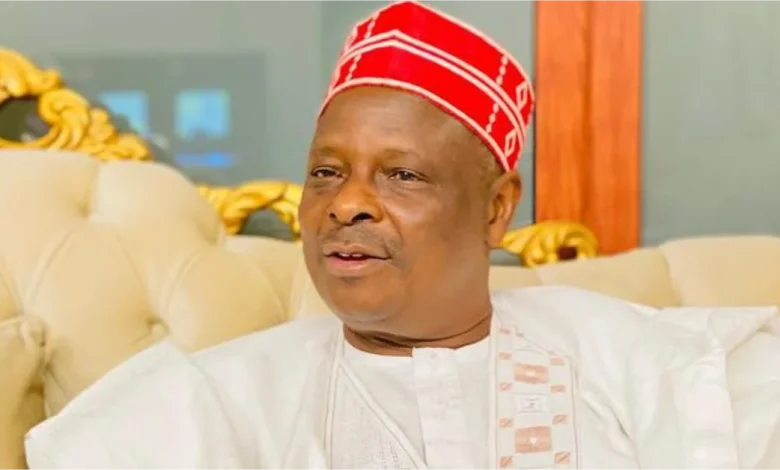
In a decision already sending shockwaves through Nigeria’s political landscape, Rabiu Kwankwaso has announced his separation from the New Nigeria Peoples Party (NNPP), the platform he built into national prominence, and is now set to join the African Democratic Congress (ADC).
He is expected to formally defect to the ADC today, following consultations with political stakeholders across the country to align interests ahead of the 2027 general elections.
In a statement on Sunday, Kwankwaso said the move was driven by the need for a strategic political realignment amid the evolving dynamics of Nigerian politics.
He expressed gratitude to the NNPP for the opportunity to serve as its National Leader and presidential candidate in the 2023 general elections, describing the decision to leave the party as “difficult.”
He said the nation’s current political trajectory requires aligning with a platform that offers a better opportunity to pursue meaningful national change.
“I wish to formally announce my resignation from the New Nigeria People’s Party (NNPP) with immediate effect,” the statement read.
Kwankwaso’s exit comes amid heightened political activity nationwide.
Last Friday, the ruling All Progressives Congress (APC) held its long-awaited national convention, while the major opposition Peoples Democratic Party (PDP) conducted its own convention on Sunday.
Beyond the symbolism of leaving a party he helped found, it effectively shifts the Kwankwasiyya movement. This grassroots network has flourished in the North into a potentially larger coalition under a new banner.
For the ADC, an emerging party with electoral force, the gain is immediate.
The implications are particularly acute in Kano State, a perennial kingmaker in presidential elections with over three million registered voters.
Kwankwaso’s influence in the region could allow the ADC to rapidly establish a stronghold in an area historically dominated by the APC.
Party loyalists in Kano, however, caution that translating movement support into votes under a new platform remains uncertain.
“The move is a signal of a maturing of opposition politics in the North,” said Hakeem Baba-Ahmed, a political analyst and former presidential adviser. “For once, we shall be seeing structures fighting not only personalities in the region.”
Political scientist Abubakar Kari added a cautionary note, “Coalitions based on personalities instead of shared programmes hardly endure.”
A senior APC source, speaking on condition of anonymity, maintained confidence in the party’s position in the North-West. “Our structures are deep and tested across the region, and one movement will not dislocate years of political investment,” the source said.
The NNPP, however, has clearly distanced itself from Kwankwaso’s decision. Party founder Dr Boniface Aniebonam said in Lagos that the NNPP “will stabilise and rebuild” and emphasised that it is not joining the ADC.
In an official statement, ADC National Publicity Secretary Bolaji Abdullahi said the party would continue working toward a broad-based coalition anchored on consensus.
“Our concern is not individuals joining, but working toward a united front that will agree on a consensus presidential candidate that can carry all tendencies along,” he added.
Broader opposition dynamics are at play. Kwankwaso reportedly remains in contact with key figures across party lines, including Atiku Abubakar and Peter Obi, raising the possibility of a wider realignment.
Yet, personal ambitions, regional calculations, and questions of ticket ownership could complicate any grand coalition.
Analysts warn that a lack of cohesion could fracture the opposition again, inadvertently benefiting the APC.
What is clear, though, is that Kwankwaso’s move has changed the political conversation. Calculations are being redrawn from Kano to Abuja, and the road to 2027 may pass through new alliances forged in the wake of this decisive break.
Public affairs analyst Jide Ojo said, “The move adds weight to the ongoing search for a viable third force, but without disciplined coalition building, the opposition risks repeating past mistakes.”
*NNPP reacts
Meanwhile, the NNPP has firmly rejected Kwankwaso’s defection. Party founder Dr Boniface Aniebonam, speaking in Lagos, stated that party members are not part of the move to the ADC.
Kwankwaso had formally announced his resignation on Sunday, saying:
“I seize this opportunity to express my profound gratitude for the honour and privilege of serving as the NNPP 2023 presidential candidate. As a committed and bona fide member of the party, this was not an easy decision to make.”
He added that the current political landscape requires strategic realignment, necessitating a platform that offers the best opportunity to effect national change. Kwankwaso is expected to join the ADC on Monday, March 30, officially.
Earlier, Dr Ahmed Ajuji, NNPP’s former national chairman and member of the Kwankwasiyya Movement, urged party officials at all levels, from national to ward, to remain in their positions and continue their work within the party.
Ajuji noted that, aside from those who choose to pursue other political careers, members should remain in the NNPP, as moves are underway to unify the party and withdraw from ongoing litigations.
Aniebonam reiterated the NNPP’s position, “We are not joining the ADC. Most of our members in Kano State went to the APC. Only members of the Kwankwasiyya movement who left may join their leader in the ADC.”
“Dr Ahmed Ajuji, and members of the Kwankwasiyya movement, including Kwankwaso and Elder Buba Galadima, have long been expelled from the NNPP. We won our cases against them in court. Ajuji, therefore, cannot dictate to us.”
He added, “Most of our members, including our sole governor, Abba Yusuf of Kano State, left for the APC due to escalating court cases. It is therefore ironic to see Ajuji sign such a memo, given that he belongs to the Kwankwasiyya movement and is a recognised member of the Agbo Major-led NWC of the NNPP. The NNPP will not accept Kwankwaso back nor allow him to ever fly our flag again for any position.”
Aniebonam noted that those remaining from the Kwankwasiyya movement “did not even believe in the ADC or Kwankwaso’s ability to survive there.”
He confirmed that the NNPP has begun consultations with aspirants for the 2027 presidential elections, emphasising that all candidates will have to undergo the party primaries, unlike in 2023 when Kwankwaso was handed the presidential ticket.
“We will not make the same mistakes again. The NNPP is willing to accept members who defected to other parties back into its fold, but never those expelled for anti-party activities.
“We are actually relieved to see Kwankwaso join a new party, as that will usher in the peace that had long eluded members ever since Kwankwaso began moves to hijack the NNPP. We are also open to collaborations with parties of similar ideologies, but members in the build-up will decide these for the 2027 general elections,” Aniebonam concluded.