By Ben Adoga and David Lawani, Abuja
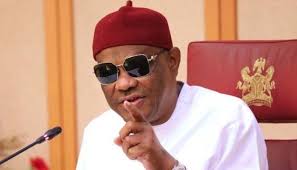
Minister of the Federal Capital Territory (FCT), Nyesom Wike, has fired back at Imo State Governor and Chairman of the Progressive Governors Forum (PGF), Hope Uzodimma, over the APC governors’ rejection of political alliances outside the ruling party ahead of the 2027 elections.
Wike challenged Uzodimma to explain how the APC won legislative seats in the South-East during the 2023 elections despite President Bola Tinubu recording poor results in the region, arguing that the voting pattern demonstrated that Nigerians could support different parties in presidential and legislative contests.
His reaction followed the declaration by APC governors that they would not support, endorse or participate in any political arrangement involving non-APC candidates, even as Wike maintains that his support for Tinubu’s re-election does not mean the PDP will surrender its candidates in other elections.
In a statement issued on Tuesday by his Senior Special Assistant on Public Communications and Social Media, Lere Olayinka, Wike also rejected suggestions that the “Rainbow Coalition” was an arrangement with the APC.
According to him, the coalition is a platform for mobilising support across political parties for Tinubu’s presidential re-election, while individual parties remain free to contest governorship, National Assembly and State House of Assembly elections.
Taking his argument directly to Uzodimma’s Imo State, Wike questioned how APC candidates won two senatorial seats in the state in 2023 when Tinubu secured less than 15 per cent of the presidential votes there.
“In Imo State, under Governor Hope Uzodinma, how did APC win two Senate seats in 2023, in an election held the same day as that of the President and APC had less than 15 per cent in the presidential election? Was it Rainbow Coalition? Were the voters confused?” Wike asked.
He said the same question applied to Ebonyi, Abia and Enugu states, where APC candidates won National Assembly seats even though Tinubu secured less than 10 per cent of the presidential votes.
“Was it the Rainbow Coalition that also made APC win National Assembly elections in Ebonyi, Abia and Enugu states where the President did not have ten per cent of the votes?” he asked.
Wike’s argument was that the 2023 results provided evidence that voters could distinguish between presidential and other electoral contests, and that supporting Tinubu in 2027 did not necessarily require voters to support APC candidates in every other race.
He said the same dynamic could occur in 2027, provided political stakeholders genuinely mobilised support for Tinubu’s presidential bid rather than attempting to use the presidential election to settle local political disputes.
The minister was particularly emphatic that he had never promised that the PDP would withdraw from other contests because he supports Tinubu.
“What I said and stand for is that I will mobilise support for the re-election of the President. I never promised anyone that PDP will not field candidates to contest governorship, National Assembly and State House of Assembly elections,” he said.
Wike also dismissed the expectation that his support for Tinubu should translate into electoral assistance for politicians seeking victories in their respective states.
“Politics is local, and those having problems in their states should resolve them instead of using the re-election of the President to whip up sentiments,” he said.
He recalled that he and other members of the G5 supported Tinubu in the 2023 presidential election without negotiating with the APC, arguing that their decision did not prevent the PDP from participating in other elections.
Wike said his position in 2027 was similarly focused on the presidential contest, insisting that the Rainbow Coalition was designed to bring together politicians and supporters from different parties who believed Tinubu deserved another term.
He urged political actors to separate the President’s re-election from the battles for governorship and legislative seats, saying those contests could be addressed after the presidential election.
“After the President must have been re-elected, we can all go and face elections in our states,” he said.
But the APC governors have taken a fundamentally different position, insisting that their support for Tinubu must be matched by support for APC candidates at every level.
At their meeting in Abuja on Monday, the governors under the PGF rejected alliances capable of weakening the APC or affecting the chances of its candidates.
Uzodimma, who read the communique after the meeting at the Imo State Governor’s Lodge, said the forum had unanimously resolved against supporting political arrangements involving candidates outside the APC.
“The forum unanimously resolved that its members will not participate in, support, or endorse any alliance or political arrangement capable of undermining the reelection of Mr President, weakening the APC, or adversely affecting any candidate of the party at all levels,” he said.
Making the governors’ position explicit, Uzodimma added: “The Forum has no intention to support any candidate at any level that is not an APC candidate.”
The governors also resolved to take charge of Tinubu’s re-election campaigns in their respective states and align their structures with the national campaign architecture of the APC.
Uzodimma said the party’s campaign would rely on grassroots mobilisation and present “verifiable facts and measurable outcomes” to demonstrate the performance of the Tinubu administration.
The governors also dismissed reports of division within their ranks, pledging to strengthen internal cohesion and harmonise their structures from the national level to the grassroots.