By Anthony Otaru, Abuja
Nigeria’s ambition of building a resilient private sector and expanding its economy faces a major threat as stakeholders warn that an estimated 33.48 million Micro, Small and Medium Enterprises (MSMEs) remain dangerously exposed to collapse without adequate insurance protection.
Industry leaders, regulators, economists and insurance experts say the overwhelming majority of small businesses operate without protection against fire, flooding, theft, accidents, deaths, supply chain disruptions and other economic shocks, leaving a critical segment of the Nigerian economy vulnerable.
With Nigeria estimated to have about 39.65 million MSMEs, stakeholders expressed concern that insurance coverage remains extremely low despite the sector accounting for about 96.7 per cent of businesses and employing more than 84 per cent of the country’s workforce.
The stakeholders argued that millions of businesses could be wiped out by a single unforeseen incident, particularly at a time of rising operating costs and macroeconomic uncertainty.
They identified poverty, low awareness, distrust of insurance companies, poor claims experiences, rigid products and affordability challenges as major barriers preventing MSMEs from embracing insurance.
Many small business owners, they noted, still consider insurance an expensive luxury rather than an essential tool for business survival.
The National Insurance Commission (NAICOM) has, however, moved to address the gap through its Insurance Sector Strengthening Programme (ISSP), which seeks to deepen insurance penetration and bring more businesses into the formal insurance framework.
Under the programme, NAICOM aims to increase insurance penetration from about 0.5 per cent to 1.5 per cent of Gross Domestic Product by 2026, with a long-term target of 10 per cent by 2031.
The commission also plans to onboard more than 250,000 MSMEs into insurance within five years, while targeting two million women-led enterprises and 1.5 million youth entrepreneurs.
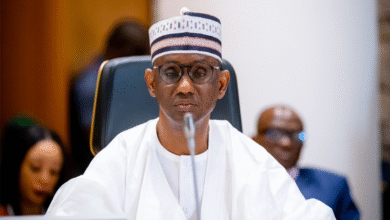
NAICOM Chief Executive Officer, Mr Olusegun Ayo Omosehin, said expanding insurance coverage was critical to building economic buffers capable of protecting businesses from shocks.
The stakeholders maintained that Nigeria could not achieve sustainable economic growth if millions of enterprises that form the backbone of employment remained uninsured.
Professor Ken Ife said insurance expansion must be viewed as a key component of economic restructuring and risk management.
According to him, government resources alone cannot finance Nigeria’s transition towards a $1 trillion economy, making it necessary for the private sector to drive growth.
He said small businesses must be transformed into more resilient and investment-ready enterprises capable of surviving disruptions.
“The public treasury cannot fund Nigeria’s transition to a $1 trillion economy alone,” Ife said, stressing the need to reduce risks confronting businesses and strengthen their capacity to attract investment.
Also speaking, Professor Uche Uwaleke said strengthening MSMEs required a broader approach to financial inclusion beyond access to loans.
He said insurance should form part of an integrated support system involving credit access, capital market participation and other risk-mitigation mechanisms.
Uwaleke said existing interventions, including partnerships involving the Small and Medium Enterprises Development Agency of Nigeria (SMEDAN) and insurance underwriters, should be strengthened to provide businesses with better protection.
“Boosting MSMEs requires robust financial inclusion which spans credit access, capital market integration and risk-mitigation tools like insurance,” he said.
He added that an enabling macroeconomic environment, lower interest rates, pro-growth lending policies and improved collaboration between financial institutions and researchers would help businesses survive economic shocks.
An insurance broker and Managing Director of Arizonal Insurance Brokers Ltd, Mr Obiora Bonaventure, blamed the poor uptake of insurance among MSMEs largely on a trust deficit and concerns over claims settlement.
He also identified poorly designed products, rigid policy structures, economic hardship, affordability constraints and weak distribution channels as factors discouraging small businesses.
According to him, insurance products must be redesigned to reflect the realities of informal and small-scale enterprises.
“MSMEs are victims not because of selfish interests but because of trust deficit and poor claims, poorly tailored and rigid products, economic pressures and affordability,” Bonaventure said.
He warned that without deliberate efforts to protect small businesses from unforeseen losses, many could be pushed out of operation by Nigeria’s difficult economic environment.
Stakeholders therefore called for wider deployment of digital insurance platforms, insurtech solutions, flexible microinsurance products and stronger state-level safety nets to make insurance cheaper and accessible.
For Nigeria’s 33.48 million uninsured MSMEs, they warned, the absence of risk protection could mean that one fire outbreak, flood, accident or major economic shock is enough to erase years of investment and threaten millions of jobs.