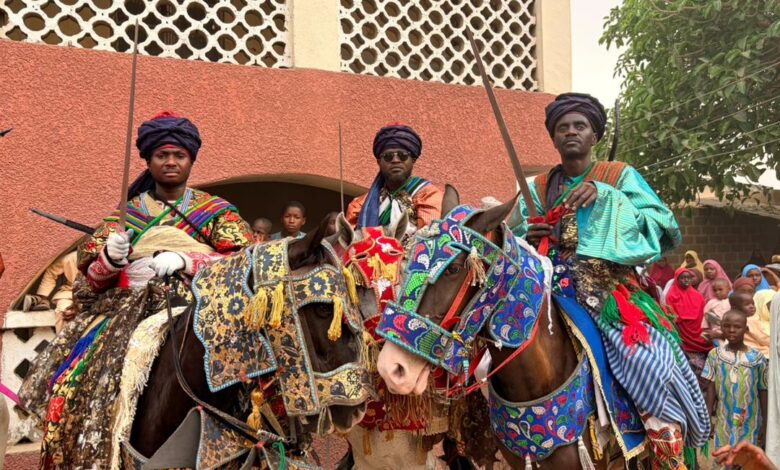
By Seyi Odewale
Long before British colonial rule reshaped the map of West Africa, Hadejia stood as a formidable northern emirate—an ancient Hausa state transformed under the Sokoto Caliphate into a powerful political and military centre.
Strategically located in present-day Jigawa State, Hadejia thrived through trade, cavalry strength, and a deeply entrenched governing tradition.
By the early 20th century, however, the British Empire was advancing aggressively across northern Nigeria.
Under the command of High Commissioner Frederick Lugard, British forces launched sweeping military campaigns to dismantle the Sokoto Caliphate and impose colonial authority.
Kano fell in 1903, followed by Sokoto, as one emirate after another was subdued by superior European firepower.
But Hadejia did not fall quietly.
Under Emir Muhammadu Mai-Shahada, Hadejia emerged as one of the final and fiercest centres of resistance to British conquest.
For the emirate, colonial expansion represented more than territorial invasion—it was a direct challenge to its sovereignty, Islamic identity, and political independence.
Mai-Shahada’s leadership embodied defiance. Rather than submit through diplomacy, Hadejia’s forces resisted through strategic mobility, cavalry warfare, and intimate knowledge of local terrain.
Horse riders mounted raids, disrupted British advances, and used river crossings and difficult geography to challenge imperial troops.
For a time, Hadejia’s resistance unsettled colonial expectations. Yet courage alone could not overcome the machinery of empire.
British forces possessed Maxim guns, artillery, repeating rifles, and disciplined battalions supported by expanding logistical systems.
As neighbouring emirates fell, Hadejia became increasingly isolated—its resistance transformed from regional defence into a symbolic final stand against foreign domination.
To Lugard’s administration, Hadejia represented unfinished colonial business.
In 1906, British troops launched a decisive military offensive to crush the emirate once and for all. The campaign was brutal, targeting both military resistance and political authority.
Emir Muhammadu Mai-Shahada was killed during the conflict, effectively ending Hadejia’s organised opposition.
With the emir’s death, Hadejia was absorbed into the Northern Nigeria Protectorate, and British authorities installed a more compliant ruler under the framework of indirect rule.
The fall of Hadejia marked not merely a military defeat, but a profound colonial reckoning.
Its resistance exposed the violent realities behind Britain’s conquest of northern Nigeria, challenging later narratives that portrayed colonialism as orderly administration.
Hadejia’s struggle revealed instead that the empire was forged through bloodshed, coercion, and determined indigenous opposition.
Though ultimately conquered, Hadejia secured a powerful historical legacy.
Its stand remains one of northern Nigeria’s enduring symbols of anti-colonial courage—a reminder that African societies did not simply yield to imperial rule, but fought fiercely to defend their homeland, traditions, and political autonomy.
More than a century later, Hadejia’s story continues to resonate as a testament to bravery in the face of overwhelming force.
In 1906, Hadejia confronted the empire. And though conquest prevailed, courage defined its place in history.