A Nigerian senator earns nine times the entitlements of his USA counterpart – Sen. Abba Ali

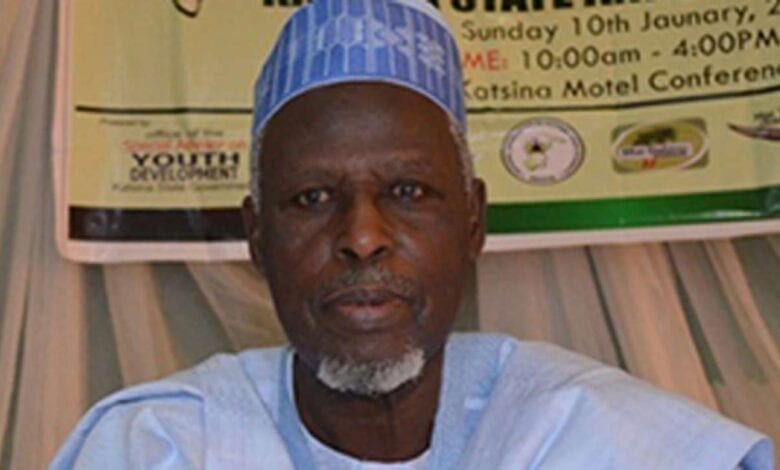
•‘President Shehu Shagari said N25,000 salary was okay for him’–Sen. Abba Ali
The ex-lawmaker from Katsina State and Chairman, Governing Council of the African Peer Review Mechanism (APRM), a flagship programme of the New Partnership for Africa’s Development (NEPAD), spoke on knotty issues of salaries of National Assembly members and other issues in this interview with Andy Asemota
From your vintage position as an elder-statesman and former senator, do you share the view that a bi- camera National Assembly is a waste on Nigeria’s scare resources?
A bicameral National Assembly, to me, is good. During the First Republic in this country, the nation had a bicameral National Assembly with the Senate (the Upper Chamber) and the House of Representatives (Lower Chamber). Now, in the present democratic dispensation, we are operating the same bi-camera legislative system in a presidential system of government. Well, anything good for the people don’t always come cheap. The bicameral NASS is giving us the chance to ensure checks and balances, to see how our representatives are operating, and to see those who really deserve to be there or not, among others.
What are your thoughts on the contention in some quarters that lawmakers in the present democratic dispensation earn too much salary?
Sincerely speaking, I don’t support the sort of amount said to be spent on the NASS members. It is clear testimony that a Nigerian senator is earning nine times the entitlements of his USA counterpart, who is fully engaged day-in and day-out in the Senate. Taking into consideration our resources, if it were in the PDP when our economy was booming, when the price of oil was about 140 dollars per barrel, and we were having a lot of money to throw around, well, we could say the nation could afford it; but not as much as they (lawmakers) are earning now.
I can tell you the history of our own salaries in the NASS of Second Republic. There was no Revenue Mobilisation, Allocation and Fiscal Commission then to fix the salaries of public officers and civil servants. The Senate was involved in the fixing our salaries. When we tried to fix the salary of the late President Shehu Shagari, we thought one million per annum was a good amount of money. We confronted him with that; we told him, “Mr. President, we have an annual salary of one million for you, what is your opinion?”
He asked: “What I am going to do with it? I have everything provided in the house (the Presidency).” We then proposed N750,000. He said what would he do with it? Finally, we said, okay, “Sir, what to do you want?” Shagari said N25,000 per annum was enough for him.”
People did not know that because of that, nobody could earn more than him. So, we fixed a salary of N20,000 for the Vice President and Senate President, and we fixed salary of N18, 000 per annum for the speaker. You can verify that. And then we fixed a salary of N15,000 per annum for senators and for the members of the House of Representatives, N12,000. In our own case, our salary translated to N1,250 per month. When we got there, we were given an advance because we decided that nobody should be given official cars, except committee leaders. Only the President of the Senate, the deputy and the leaders of the 19 committees were given a Peugeot 504 car. Other senators were given N10,000 each as advance to buy their own cars, and we were asked to pay back within three years.
The deductions for the car loans and the rent for our accommodation in 1004 Flats, when summed up, we got N787 per month, and that was what we earned throughout the period. And we were given only N10,000 each to open constituency office and furnish it. That was only what we got throughout our four years in the NASS. So, you see, I am sure history will judge the performance of that Second Republic and the quality of the representation we are getting now and so on and forth.
I am sure we can operate with less amount of money we are spending on the NASS. You can find out the salary of Mr. President. He is taking about three million only, find out. Why should a senator earn over N30 million monthly, including his salary and allowances? Why should a member of the House of Representatives earn N27 million? To me, that is corruption; we are showing the world that we are corrupt. So, that is my personal opinion.
APC stakeholders in South-West, South-South and South-East respectively are clamouring for APC presidential ticket in 2023. What is your position on their quest?
Everybody has the right to seek a political position or whatever it is, but we have to look into the constitution of our party, which has not been changed. As far as I know, APC as a party has no zoning arrangement. Look at the constitution of APC, you will not find zoning arrangement because our leaders agreed on that constitution and passed it because we are now in the digital age or time that we should be nationalistic, rather than be sectional.
We said every Nigerian from any nook and cranny of the country who is capable of leading this country should be given a chance. We are operating a presidential system, so, if any one comes out to lead the nation, we should give him a chance so that we can have the best person to lead us in this country. Sometimes, when you localize or rotate or zone, whatever it is, you may end not up getting the best person. We are emulating the American presidential system and they don’t have rotation or zoning; you can come out from any corner or any state, they don’t mind so as long as you can lead the nation.
So, I think if we are really operating the presidential system as enshrined in our constitution, we should operate it to the fullest and allow people to elect whoever comes out to be the best leader.
So, both the North and South will be free in 2023 to vie for the APC presidential ticket?
Anybody from any zone can come out as an aspirant; we will choose the best person to lead us. He may come from South-South, South-East, South-West, North-West, North-Central or North-East. If we really want to unite ourselves as one Nigeria, we should not be so concerned about the zone where the president hails from.
Some APC chieftains, including a few governors, are reportedly working towards getting former President Goodluck Jonathan to dump the PDP, defect to APC and seek the 2023 presidential ticket of the party. Are you surprised over such moves?
No! Do we agree that we don’t have a leader to lead us in APC, or do we accept that if Jonathan decides to defect to APC that PDP is no longer a political party on which he can lead? As a politician, I think we should be consistent in offering our leadership. We have seen in the First Republic how Mallam Aminu Kano was consistently a PRP man, how he tried to ensure that PRP lead the country, and in so doing, he got some governors and some members of the NASS and so forth elected on the
A true politician should not be shifting from one political party to another. I don’t think is the right thing to do. If you believe in your party, its manifesto and its constitution, you should not jettison it at the slightest opportunity. I mean, the PDP ruled for 16 years, so, are they telling us that Jonathan discarded all those years that they had done, and APC is now the best party for him to come and lead? I don’t know. So, I think it is not in the best interest of any good politician to be shifting from one side to the other.
What is your take on APC membership registration and revalidation exercise?
Let me be frank with you, we are now in the digital age. We are now in the third decade of our democracy and this democracy has come to stay. The best we can do for this democracy is to make sure that our parties are really parties of the people. In any given situation, whether in a party or government, you have to know the number of people under your leadership so that you can plan properly for the party or the government. The ruling party has decided that we should take stock of our membership.
Since 2014, when did registration of members, we have no authentic membership register. Some people have left for other parties, some have come without being registered, some have died, and in our constitution, we said there should be an update of membership register every six months, which has never been done. So, we said, as ruling party, we should take stock of our people: register and revalidate their membership.
Those who have died should be removed and these who have left the party should be removed. Those who come from other parties should be registered and those who attained the age of 18 years since 2014 should be given the chance to be registered. Let me tell you, I chair the committee on registration, we wanted it to be bio-metric right from the polling unit, but unfortunately because of the cost, that couldn’t be done, but we are making it computerized now.
We have a register in each polling unit to register our people and bring it up to ward level, and we have 8,812 wards in the country. So, we can now provide that computerized system at the ward, and then update it to local government. We have 774 LGAs in the country, and from there, we take it to the state and computerize it there and take it up to the national database of comprehensive list of our members in this country.
From there, the chairman, from his desk, can know all members of the party, for example, in Katsina State, all polling units, wards and local government levels. So, from the tip of his fingers, the chairman of our party will know exactly know how many registered members we have in the country at any given time.
What we did was to give our teeming supporters the chance to be able to vote and be voted for. You cannot do that if you don’t have a register of our votes. So, that is the essence of it; and we have to move with the time. We are in the digital age now. What we did in 2014 cannot be repeated now. So, that is the essence of this registration, and I am sure it will give the people of this country a better leadership.
What is the cost of the biometric registration that was jettisoned by your party?
Our estimate was just about N10.5 billion, but we didn’t want to seek support from the government to fund it, although it is not that much.
What is the cost of the ongoing registration exercise?
Some of us have contributed a lot in the process. Some governors, and where we don’t have governors, others contributed to make sure this exercise succeed. I can’t tell you how much we are spending on it, but it is much, much less than the estimated cost of biometric registration.
Can you give an update on this exercise; how successful is it against the backdrop of PDP’s claim that it has been extended by five weeks because it flopped?
I just returned from Dutse, Jigawa State; I have been on tour of the seven states under North-West, which I represent. The problem we are having is shortage of materials. Initially, at our committee level, we aimed at registering 200 persons in each polling unit. We wanted to be scientific, so, before we started, we sought advice from the Road Safety (Commission) and its registration formula, that is state coding and then LGA coding. We also adopted INEC polling code. So, each printed booklet is unique to a particular polling unit, you know, you cannot duplicate it. You cannot register here and go to another pace and register.
So, it is scientifically arranged. What we did now, with the codings and the enthusiasm, was to print 200 copies per polling unit, but distribute 100 copies. Before I started my tour, I waited till I revalidated with registration. That same day, they exhausted 100 copies. When I went round other the states in the zone, it was the same situation. So, I quickly went to Abuja and told them to release other copies and we have been telling them that even that 100 will not be enough. So, they went ahead and printed another 200 copies for each polling that are being distributed.
That is why we have extension of the registration and revalidation. It is not because of anything. If we had printed 300 for each polling unit, we would have finished the exercise by now. When I was in Jigawa yesterday, their second batch of 200 came in and they were distributing it to local governments, to wards and to the polling units. Ours in Katsina have also arrived, and I understand that that of Kaduna had equally been released. So, the same thing is being done in other zones; that is why we have the five-week extension.
General insecurity is a source of concern in the country. Do you have some words of advice for Nigerians in these trying times?
We Nigerians seem to have forgotten what happened yesterday, but look at only what is happening today. In 2015, insecurity in this country was beyond our imagination: bombs were going off in Kano, Kaduna, Abuja and everywhere, and about 17 LGAs of Borno State were under the control of Boko Haram. But within five years of the present government, it recovered all the local governments from Boko Haram. Have you heard of any bomb going off in the last two years in Kano, Kaduna and Abuja? There is none.
The government is doing a lot, but in any situation of this nature, in any country, insurgents or bandits have so many notorious acts. You know the military has gone deep into Sambisa Forest, and the soldiers have captured the settlements of Boko Haram. Nigerians should appreciate what the government is doing. The Kankara episode you talked about was sorted out in less than five days.
The military and the police are doing their best. So, I think we should be appreciative of what is happening. From Abuja to Kaduna is safe, within a little time. This thing did not start when we assumed to power, it started under the leadership of PDP, and they did nothing to contain it. We are doing our best. Mr. President is doing his best to contain the situation.
The past administration allowed the security situation to deteriorate for such a long time. If you allow insurgency of this nature to mature for a long time, it will spread in many directions. The only thing the insurgents are doing now is to see if they can capture this and that and so. Giving the new leadership and change in security apparatus, I am telling you that insecurity will be a history very soon.
Former Governor of Jigawa State, Alhaji Sule Lamido, said recently that the relationship between President Muhammadu Buhari and the National Leader of APC, Asiwaju Bola Tinubu, will collapse in 2023, seemingly over the presidential ticket of APC. How do you see this prediction?
Did he mention why the relationship will terminate?
In a nutshell, he is saying that the APC will collapse in 2023. Do you subscribe to this notion?
I think that is Lamido’s opinion. APC will be stronger come 2023. Everybody has a right to say what he wants to say but if he had given us a concrete reason why APC will collapse, I can comment on that.
He is perhaps of the opinion that Tinubu may be denied the presidential ticket and he (Tinubu) will consequently pull out of the party. What is your take on this?
Well, I told you, as far as our party is concerned, I am offering my personal opinion. We don’t have zoning in the constitution, and you cannot stop Tinubu or anybody from contesting. You cannot stop anybody from the South-South, South-East, South-West, or the North from contesting. When all the contestants come up, APC will take a decision and that will be stand of the party. It may be Tinubu or another person. Really, we are all speculating; if what Sule Lamido anticipates does not happen, he can’t predict that APC will collapse.
How soon do you think that Nigeria can overcome the challenges of open grazing of cattle that is heating up the fragile security in some states?
If you look at colonial arrangements, grazing reserves right from Dakar up to Lagos had been provided. Up to parts of the South-West and South-East had grazing reserves. So, our colonial masters thought that anywhere you live in Nigeria, you have a right to earn your livelihood. They provided grazing reserves because they know animals have to be moved due to the climatic situation in search of pastures. Unfortunately, these grazing reserves have been vandalized, and in some places encroached upon for farming and other commercial purposes. But that shouldn’t stop us from re-establishing grazing reserves legally. You see, there are certain moves to ensure that herders can be stationed in new grazing areas, for instance in the North-Central. If the government can provide new grazing areas and allow herders to rear their cattle and other animals, which is the only source of their livelihood, everyone can live peacefully in Nigeria.
Some years ago, you can’t find a Fulani man with a gun. But simply with a stick because in some places their cattle had been rustled or killed or whatever, they have to arm themselves. It is an unfortunate situation, but I think the efforts of the government now that grazing areas (ranches) are being provided, I think open grazing will soon be history in the country. If that happens, nobody will have the kind of problems we are facing now.