Just after three rainfalls, the nation’s capital, Abuja, has become a stinking hole leaving the environment unpleasant, reports BEN ADOGA
Abuja, Nigeria’s federal Capital has been wreaking with stench in most of its parts, especially in the satellite towns.
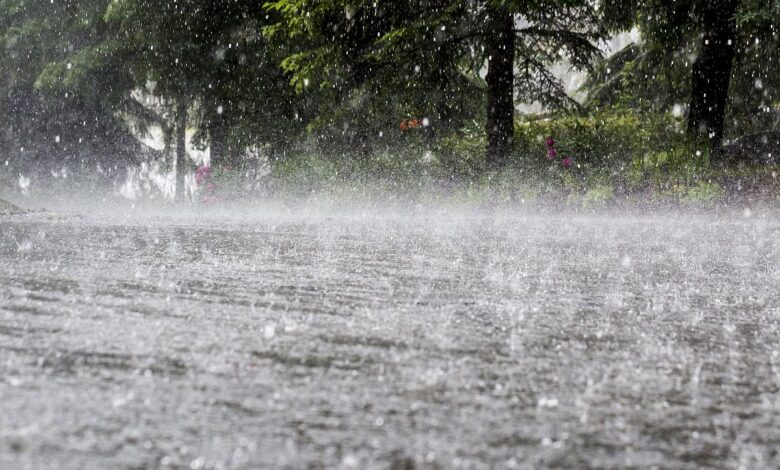
This is happening after a few drops of rain fell signalling the imminent down of the rainy season. Normally the first rains are received with joy as it brings down the excruciating heat.
This year, the case has been different. After the rains in Abuja, the gutters have been blocked with the debris decomposing sending out pungent stench and making the environment dangerous in some locations.
This is the same with slums that have developed rapidly in parts of the FCT.
In Area 1 in the city centre, just near the popular Area 1 roundabout the location smells. From Kurudu to Jikwoyi, Karu Market area to the mosque area, not to talk of the refuse dump site at the St Mary’s Catholic Church area. The stretch of the road around these areas experiences a very offensive odour and makes movement uncomfortable.
At the Nyanya interchange, the experience is terrible as the popular El -Rufai Park hazardously smells. The green areas beside the interchange which are supposed to be beautiful green parks and possibly relaxation spots are littered with human faeces and other wastes. The areas do not just smell, but an eye saw and not befitting for a major gateway into the nation’s capital.
Traders, and food vendors as well as motor park touts, just like travellers who have no option have learnt to live with the situation.
The fear of an outbreak of a major health epidemic is palpable.
In response to the health implications of the polluted environment, the FCT Health and Human Services Secretariat through a very senior civil servant who craved anonymity for obvious reasons said it was not their mandate to clean up the city.
She accepts that the secretariat is at the receiving end of the outcome and the aftermath of the filth.
She, however, noted that as medical professionals and as secretariat they are supposed to be always prepared for any health eventuality, but specific preparedness remains a challenge because full preparedness would depend on the specific disease outbreak.
She also confirmed that cases of the thyroid are on the increase in public hospitals, but there was nothing to link it to filth in the environment.
The expert agreed that, ordinarily, cases of cholera should be expected but that there was no unusual upsurge in cases yet, while not underrating any possible outbreak shortly if the conditions precedent continued to persist.
The medical expert said communities like Mpape, Nyanya, Kurudu, Jikwoyi, Dutse, and Piakasa where slums are prevalent are being watched.
She however noted that there were no unusual cases for concern yet and that if it happens, they can contain it.
The mandate to clean up the city centre falls squally under the Abuja Metropolitan Management Council AMMC while the satellite towns’ clean-up is under the purview of the Satellite Towns Development Department, STDD and the Abuja Municipal Area Council, AMAC in the case of the municipal area council. Just like the other remaining five area councils also have to clean up their environment.
The mandate of the Abuja Environments Protection Board, AEPB laps all these but seems to be overwhelmed with the ever-growing refuse in the city and satellite towns.
The AEPB is majorly distracted by the political interest of whose jurisdiction it is to award contracts for refuse collection, this conflict is mainly between AMAC and the FCTA.
When contacted, PRO, AMMC, who only identified herself as Madam Vivian, initially claimed her attention has not been drawn to the situation and that the council would do something about the situation.
She, however, responded later that their staff was already on top of the matter, “Our department of Facilities Maintenance is currently desilting the drains and AEPB is also cleaning the streets, Thank you.”
Despite her response, the effect of the desilting is yet to be felt and the environment continues to stink, making living and movement along some major roads and streets very uncomfortable.
The stench is not just coming from the drains only, the open defecation and urination in some slums are a major concern. The refuse dump near the Karu village mosque, near this St. Mary’s Catholic Church, has remained a perpetual eye saw and source of major pollution. Even when they attempt to evacuate, the unprofessional handling of the decomposed wastes pollutes the entire environment and all through the roads and streets where the refuse is conveyed for disposal.
The ad-hoc staff engaged to sweep major streets in the city centre and parts of satellite town are rather causing more harm as they merely transfer debris from the streets into the gutters and manholes.
What the residents of the FCT are experiencing today, in terms of the environment and its serenity is not the Abuja of their dreams, so also was it not the Abuja of the dream of the founding fathers of the nation’s capital.
When Abuja was conceived in 1976, it was not just for the departure of the hustle and bustle in Lagos which was already overcrowded.
A peaceful serene life with a good environment is devoid of the air pollution that existed in Lagos because of the striving industries and congestion then.
Today, Abuja cannot be said to operate industries that pollute the air, but mere filth and lack of human capacity to manage a modern city in the 21st century.
Apart from other infrastructural deficits in Abuja, the serenity that existed in early Abuja like during the Gen. Sani Abacha era from 1999 to 2008 cannot be said to be what obtains now.
That is easily blamed on the daily influx of people from all walks of life into Abuja. Correctly so, but there is nothing on the ground showing that efforts are in the works to manage the city like a modern city. At least, whatever is done is far not enough, the reason why residents groan under various challenges, including filth.
Civil society and rights activist, Gaiye Gaskiya said Abuja list its dream long ago. He said those who were privileged to live in Abuja through the military era and early days of return to democracy would testify to that.
He said those who are environmentally conscious and the founding fathers if they should see Abuja now would weep to see what their dream had turned into. Where even the city centre smells of mosquitoes and rodents all over. Where open spaces and bushes have been turned into open defecation and urination arena; the environment is far from being healthy, he retorted.
To save Nigeria the embarrassment of a filthy national capital, there must be something the authorities must do to backtrack the city to its original dream.